
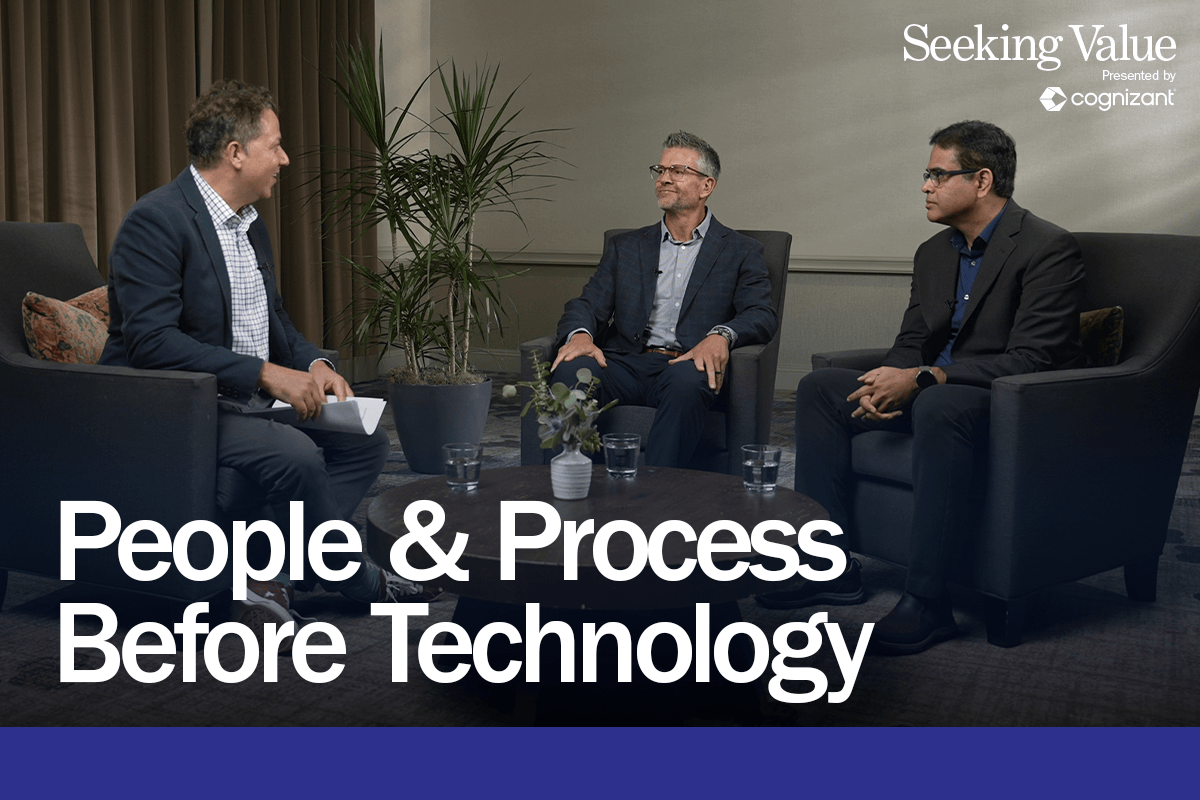
At Toyota Motor North America, managing the supply chain involves a labor-intensive process with over 75 spreadsheets used monthly. This repetitive task demands significant effort, with employees often finding themselves restarting soon after completion. Toyota is addressing this challenge by developing digital tools aimed at easing the burden. Jason Ballard, vice president of digital innovations at Toyota Motor North America, states that the company’s digital transformation initiative, covering various operational and technology advancements, has yielded a return of $3 for every $1 invested over the past five to six years.
In a discussion part of the Seeking Value video series by Cognizant, Ballard, alongside Nishanth Vallabhu from Cognizant, examined the necessity to reassess supply chain operations. Two significant disruptions, the COVID-19 pandemic and the semiconductor shortage, highlighted Toyota’s reliance on experienced employees to maintain operations under pressure. This dependency exposed the need for a more resilient system.
Ballard remarked that during these crises, dealer inventory reduced dramatically from more than 50 days to levels in the teens. This situation highlighted uncertainties about customer preferences and the effectiveness of vehicle distribution to dealerships. A common consumer sentiment reflected the issue: “Why can I track a pizza but not a $50,000 vehicle?” This prompted Toyota to enhance visibility into order tracking and improve planning decisions.
Toyota experimented with various applications to identify effective strategies, leading to a functional platform. The company employed machine learning and optimization to boost demand forecasting and supply planning. They later began incorporating generative AI with plans to integrate more complex tools, utilizing a modular architecture with reliable data, services, and an intelligence layer.
Ballard emphasized flexibility in choosing AI models to avoid being locked into a single provider as technologies evolve. Initial uncertainty regarding financial benefits transformed into strong performance, validating further investment. Adjustments helped optimize vehicle configurations according to customer demands, contributing to increased revenue.
During the semiconductor shortage, Toyota created a digital twin using machine learning to evaluate component availability, allowing continued production. This technology not only facilitated operational decisions but also transformed job roles within planning teams.
“It’s elevating the game for our team members, so they don’t spend a lot of time on the routine work,” Ballard stated. “Now they’re spending a lot of the time thinking and acting on the information that’s been given to them.”
Vallabhu from Cognizant noted that quantifying improvements, such as quality enhancements or inventory reduction, can be direct, but other savings like increased productivity remain more abstract. He affirmed that real economic benefits depend on subsequent actions and demand levels. Vallabhu added that in cases where AI influences customer service, intermediate changes might occur before sales boost.
Toyota’s transformation benefits were quantitatively validated by their finance team. Meanwhile, a two-decade partnership with Cognizant underscored the value of understanding Toyota’s business culture. Vallabhu stressed balancing the introduction of new ideas and capabilities with Toyota’s established practices.
Ballard explained Toyota’s focus on employee involvement and continuous improvement. By integrating experienced workers into redesign efforts, the company leveraged their expertise in identifying operational opportunities.
“It starts with your people, and then the process, and then you follow up with the right technology,” Ballard explained.
The initiative aimed for a fundamental overhaul rather than minor updates. Employee understanding of job implications was crucial, with Ballard advocating for transparent communication about how new tools would support them.
“You don’t want it happening to them. You want everyone to feel like this is happening for us,” he said.