
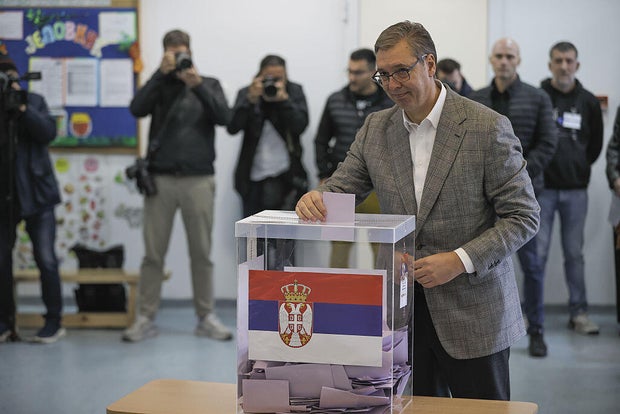
On October 25, 2026, Serbia experienced a significant political change when long-serving leader Aleksandar Vucic admitted defeat in a parliamentary election. Vucic’s right-wing party, backed by Russian President Vladimir Putin, faced off against an opposition movement led by university students. These students had spent two years criticizing the government for corruption and undermining democracy.
High turnout and mounting tensions characterized the election. Serbia’s 6.4 million voters chose lawmakers for the 250-member Parliament. In conceding, Vucic acknowledged that the opposition, known as the Students’ List, would secure between 135 and 140 seats, while his Serbian Progressive Party (SNS) would hold around 105.
“The Students’ List has won,” Vucic announced at his party’s event. He attributed the loss to Serbia’s independent media and alleged interference from unnamed European nations and an “American deep state.”
Vucic reported that his SNS party received approximately 1.7 million votes, while the Students’ List garnered around 2.2 million. Supporters of the Students’ List celebrated the result in the streets of Belgrade and other cities, chanting and honking car horns.
The election outcome was announced shortly after the polls closed, amid rising tensions throughout the voting process. Police in riot gear had cordoned off central Belgrade around the election commission headquarters. Special police vehicles were present near a park where Vucic’s loyalists had been camping for a year.
Vucic had aimed to transition from president to prime minister after resigning last month to lead his campaign. His support waned following the collapse of a train station canopy in Novi Sad in 2024, resulting in 16 deaths. The incident sparked protests alleging corruption and cronyism during renovation work.
Despite these protests, Vucic retained backing from many voters, who viewed him as a capable leader amidst global uncertainties, an image bolstered by mainstream media. However, the students’ movement challenged his grip on power, bringing fresh energy to Serbia’s political landscape.
The Students’ List, composed of experts, athletes, farmers, and artists, sought to restore democracy and economic vitality, engaging rural voters traditionally loyal to Vucic. The movement’s success paralleled the recent electoral defeat of Viktor Orbán in Hungary, driven by youth participation.
Election monitors anticipated a turnout of nearly 70%, unmatched since 2000. Despite irregular voting conditions for the Serbian diaspora, enthusiasm remained high, prompting scrutiny from the EU. Observers reported instances of voter pressure and attempted vote buying.
Concerns about election integrity persisted, with reports of surveillance and cyberattacks against activists. Earlier this year, local elections in Serbia were marred by violent incidents. The previous parliamentary elections saw opposition protests alleging fraud.