
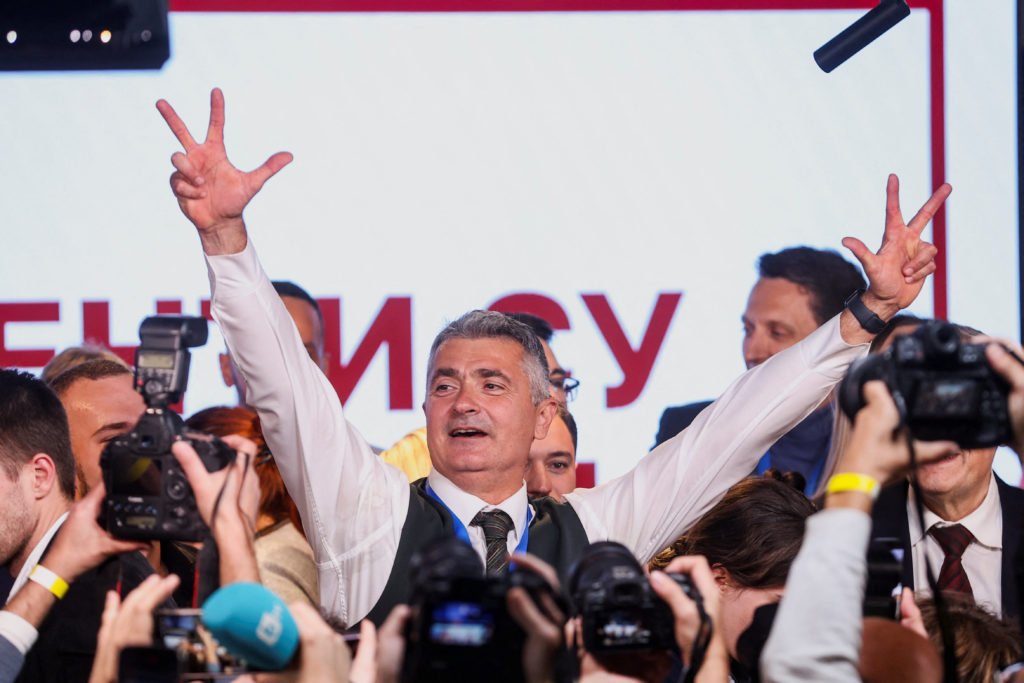
The long-standing leader of Serbia, Aleksandar Vucic, conceded defeat following an election dominated by a student-led opposition. This event marked a significant political change in Serbia, where Vucic had held strong influence for 14 years. Serbian citizens saw a dramatic shift as Vucic’s right-wing Serbian Progressive Party fell to a diverse coalition driven by student protests against corruption and the decline of democracy.
Vucic, endorsed by Russian President Vladimir Putin, lost to the Students’ List, a movement powered by young activists. Despite Vucic’s claims of foreign interference influencing the outcome, election results indicated a major victory for the opposition. The Students’ List is set to take between 135 and 140 seats in parliament, leaving Vucic’s party with about 105 seats.
“The Students’ List has won,” Vucic declared, blaming external media and certain European countries for his loss.
The outcome prompted celebrations throughout Belgrade, with supporters of the student movement taking to the streets. Voters dismantled barriers near Vucic’s camp as anti-Vucic sentiment flooded the city. Vucic’s loyalists had camped there for over a year, a stark contrast to the vibrant celebrations of their opponents.
The election was characterized by high tensions and an increased police presence around central Belgrade. Riot police and special units were deployed as concerns about potential unrest loomed over the vote count.
Vucic had sought to become prime minister after two presidential terms, but support dwindled following a tragic incident in 2024. A collapse at a train station fueled accusations of government corruption, igniting youth protests across the country. Victims’ families, like Dijana Hrka, expressed hope for accountability and change.
Despite continued support from some Serbian citizens who viewed him as a capable leader, Vucic’s grip on power weakened against the relentless student movement. This movement opposed his authoritarian style and sought transparency and democracy. Comprising experts, athletes, and artists, the Students’ List emerged in response to Vucic’s single-man rule, aspiring to foster community values.
The shifting political landscape in Serbia reflected wider regional dynamics. The student-led victory mirrored a similar scenario in Hungary, where youth participation disrupted the reign of a Vucic ally, Viktor Orbán.
The election process was monitored closely by international observers, as previous Serbian elections had faced allegations of irregularities and fraud. Reports indicated cases of voter intimidation and vote-buying attempts, raising concerns about election integrity. Observers noted instances of media control, surveillance, and cyberattacks against activists, highlighting the challenges faced by the opposition.
Turnout was projected to reach around 70%, a figure unseen since 2000, demonstrating significant public engagement. These elections and their conduct were of notable interest to the European Union, considering Serbia’s potential candidacy for EU membership.