
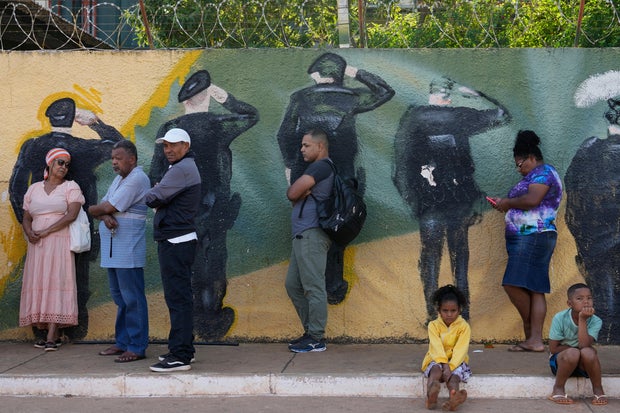
Brazilians are set to make a crucial decision in the presidential runoff election between incumbent President Luiz Inácio Lula da Silva and challenger Flávio Bolsonaro. This election follows a close first round where over 33 million voters stayed home. The high-stakes contest will determine the next leader as both candidates vie for more than 50% of the votes needed for victory.
Competing Ideologies
The election presents a clear choice between differing visions for Brazil. Lula, a left-of-center politician, contrasts sharply with Bolsonaro, who aligns with former U.S. President Trump. They offer opposing views on U.S.-Brazil relations, climate change, and social welfare. While Lula appeals to those who value his history of supporting marginalized communities, Bolsonaro promises a turn towards a tough-on-crime stance and economic reforms.
An Economic and Security Focus
Both candidates face scrutiny. Lula’s past administration saw progress for the poor, but current concerns about security and the cost of living linger. Bolsonaro’s campaign centers around reducing crime and food costs, but several investigations, including one involving a film funded by a disgraced banker, complicate his candidacy. Lula’s corruption convictions were overturned, adding further complexity to the political landscape.
“Brazil can’t continue on its current path for another four years,” Bolsonaro stated.
In contrast, Lula works to appeal to those undecided by supporting small businesses and offering free public transportation on weekends.
Public Sentiment and Voter Influence
Lula’s supporters, like Luzia da Souza, cite his dedication to aiding the poor as a motivating factor for voting. Conversely, Bolsonaro’s supporters, such as Fabianne Borges Santoro, express their desire for change due to high costs and taxes associated with Lula’s party.
Third-party voters and those who abstained in the first round play a pivotal role. Kelvin Gomes Pimental, a data analyst, switched his support to Lula, concerned about the broader implications of another Bolsonaro administration. Others like Diogo Furtado remain undecided, voicing a need for different leadership.
Bureaucratic Challenges on Election Day
Transport difficulties in Bahia, a Lula stronghold, pose challenges with reports of public buses restricted, possibly affecting voter turnout. The mobility issues prompted legal action and intense blame-shifting between political allies and opposition, emphasizing the tensions surrounding the election.
U.S. and Global Perspectives
The Trump administration’s past actions, imposing tariffs and framing narratives around crime, have influenced Brazilian perceptions. Flávio Bolsonaro promotes closer ties with the U.S., pointing to economic opportunities, while denying any foreign government influence. President Trump has not endorsed a candidate but has indicated he is monitoring the situation.
As voting concludes and electronic results are processed, Brazil awaits what could be a historic outcome.