
The Pentagon confirms the deployment of US weapons in space, marking a significant revelation. Peter Doocy reports on this development, while former NASA astronaut Butch Wilmore shares insights into the growing space arms race. Wilmore emphasizes the strategic importance of controlling space and the challenges posed by kinetic and non-kinetic weaponry as nations like Russia and China expand their capabilities.
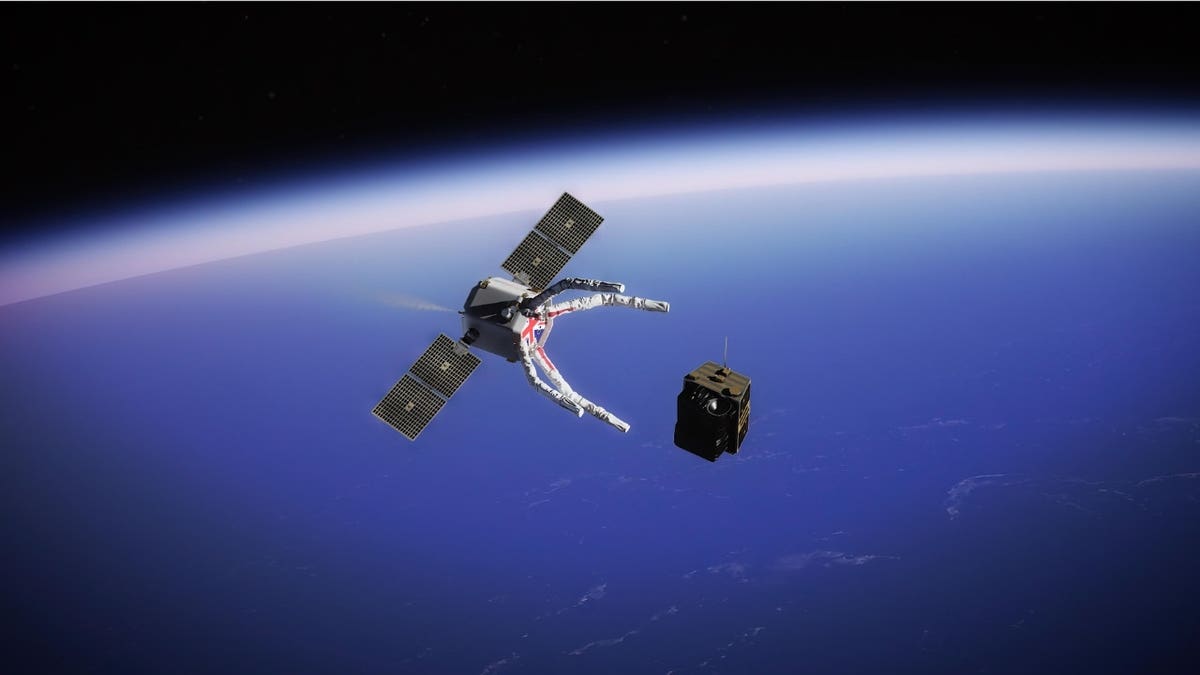
Space is increasingly cluttered with debris, including defunct satellites and rocket fragments, orbiting Earth at high speeds. This growing congestion poses risks to operational spacecraft. The United Kingdom proposes a solution with an $81 million project involving a robotic spacecraft that can capture and deorbit dead satellites. This mission, part of the UK’s Active Debris Removal initiative, aims to tackle space junk without sacrificing the cleanup vehicle after each mission.
The UK Space Agency selected ClearSpace UK to design a spacecraft specifically for removing inactive satellites. Scheduled for a 2029 launch from SaxaVord Spaceport in Scotland, its initial task is to eliminate two old UK-registered satellites by 2032. The goal is to prove a single spacecraft can handle multiple debris-clearance missions, potentially making future operations more feasible.
Grabbing satellites in orbit is complex, given the high speeds and possible tumbling of the targets. ClearSpace’s technology involves a sophisticated capture system to approach and secure defunct satellites. The spacecraft then moves them into a lower orbit for reentry and destruction. This approach could keep the cleanup spacecraft operational for future missions, offering a sustainable solution.
The problem of space debris extends beyond operational setbacks. According to the European Space Agency (ESA), over 47,140 objects are tracked in Earth’s orbit, coupled with numerous smaller particles, all of which pose collision risks. The Kessler syndrome describes a chain reaction where collisions produce further debris, complicating the orbital environment.
In November 2021, astronauts on the International Space Station took shelter due to debris from a Russian military test. Such incidents highlight the threat to human-operated space missions. Proactive measures are necessary to protect spacecraft and prevent further debris proliferation.
Space debris reentry onto Earth is another concern. While most of it burns up, larger, heat-resistant objects can survive, impacting safety. Studies by researchers like Ewan Wright underscore the cumulative risk of falling debris. Effective orbital debris management requires thorough planning and international cooperation.
Emerging missions, like the UK’s, signify a shift toward a new industry focused on space cleanup. Such initiatives could reshape satellite life-cycle strategies and foster commercial opportunities in debris management. The UK’s mission, although still under development, highlights this potential if the technology performs as proposed.
For the public, awareness of space technology’s influence on daily life is key. Satellites underpin communication, navigation, weather forecasting, and emergency responses. Ensuring the integrity of this infrastructure involves proactive management of space debris.
While British initiatives won’t solve the problem instantly, they demonstrate useful approaches. Persistent efforts are essential as satellite numbers increase. Moving forward, satellite operators might need to bear more responsibility for debris created by their systems.
Kurt ‘CyberGuy’ Knutsson finds the idea of robotic debris removal intriguing, particularly its potential for routine service. The challenge remains whether efforts are advancing rapidly enough. Increasing satellite launches demand greater accountability and effective cleanup measures to preserve Earth’s orbital environment.