
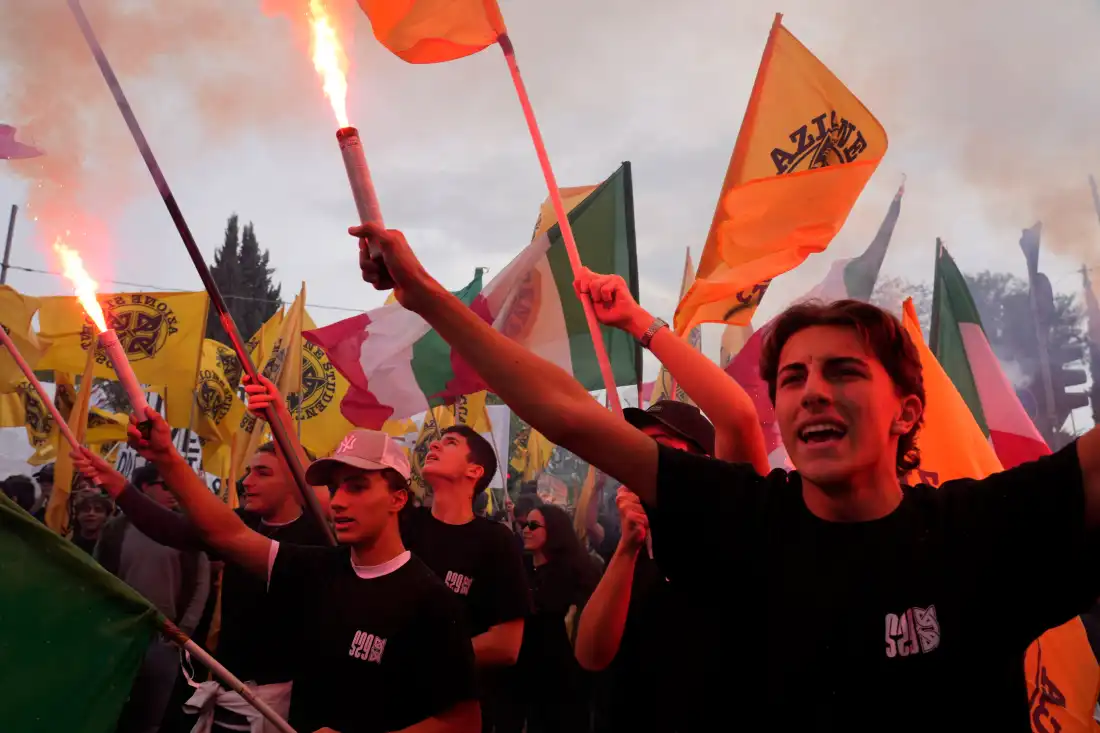
On Saturday, October 24, 2026, several European cities, including Milan, Rome, and Turin, witnessed large-scale protests. These events drew thousands of young participants, with authorities deploying a significant number of police and soldiers. In Milan, measures included boarding up luxury boutiques and deploying 500 extra soldiers to prevent a recurrence of previous violent clashes and looting.
Premier Giorgia Meloni announced stricter penalties for minors, citing their involvement in prior unrest. In Milan, several minors were detained preemptively. Although the Milan demonstration remained peaceful, brief clashes occurred in Rome and Turin. Broader protests rocked cities like Madrid and Lisbon on issues ranging from education to housing.
The protests spanned various themes, addressing education, corruption, anti-war sentiments, pensions, and housing concerns. In Milan, young protesters voiced their dissatisfaction with Premier Meloni, engaging in symbolic protests like dumping manure at energy regulators or burning oversized electricity bills. Security measures included drone surveillance and rapid-response units.
Mayor hopeful Pierfrancesco Majorino remarked on the peaceful nature of the protests as Milan’s stores reopened later in the day. Pierfrancesco announced his candidacy for the center-left primary in early 2027. Regarding safety precautions, stores such as Omega, Tiffany, and Gucci boarded their windows, while others like the Apple store remained closed.
Violence from earlier protests involved about 2,000 young people, mainly minors and second-generation Italians, as reported by Milan police. Authorities arrested 34 minors and 45 individuals over two days. A group of far-right activists linked to Inter Milan soccer club briefly appeared, chanting anti-immigrant slogans, and were isolated by police.
In Rome, security heightened around luxury shopping areas and near landmarks like the Colosseum, where a few protesters attempted entry but were removed by guards. Riccardo Ponzio of a far-right student association condemned previous week’s violence, fearing it misrepresents peaceful students.
An anti-war march in Rome faced similar challenges, clashing briefly with police despite organizers encouraging peaceful conduct. Authorities intervened using water cannons to disperse crowds.
Albania’s capital, Tirana, witnessed severe clashes with protesters setting government buildings on fire while demanding educational reforms. About 2,500 officers patrolled the streets, using water cannons and tear gas against projectiles thrown by protesters. High school and university students demanded lower tuition fees and protested corruption.
Prime Minister Edi Rama addressed protesters, showcasing willingness for dialogue while warning of penalties for violent demonstrations. Elsewhere, Madrid saw retirees demanding protection against pension privatization ahead of a snap election. In Lisbon, protesters marched for affordable housing, criticizing recent government measures as harmful to tenants.
Prime Minister Luis Montenegro’s policies were defended as creating trust and boosting the rental market, though protesters considered them detrimental to tenant security.