
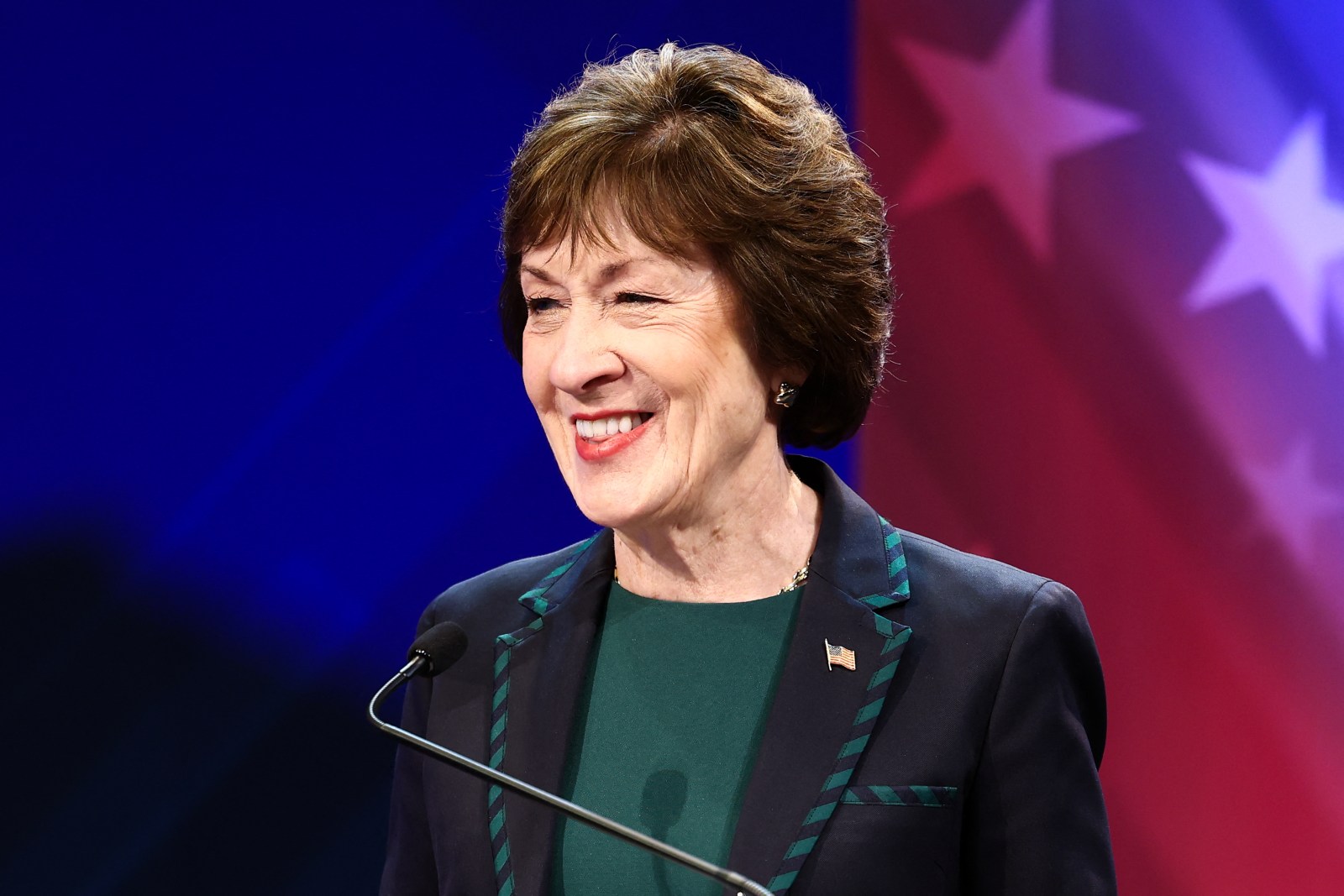
The Maine Senate race is drawing attention as a pivotal contest in the November 3 elections, where the balance of power in the Senate is at stake. Republican Senator Susan Collins faces Democratic challenger Troy Jackson. Voter support for both candidates could depend on individuals who have supported Collins in the past but also backed Kamala Harris in 2024. These ticket-splitters may be decisive in the outcome.
Maine, typically Democratic-leaning, has seen Collins maintain her position thanks to her moderate reputation and personal appeal. However, the broader national challenges for Republicans, partly due to Donald Trump’s unpopularity, may make this election challenging for Collins. Collins stands out in the Senate as the only Republican representing a state won by Harris in the 2024 presidential race. Her situation is unique, as she’s the sole senator from either party representing a state with a history of voting against their party at the presidential level.
The Electorate’s Shifting Dynamics
Midterm elections often see higher turnout from the party not holding the White House. This trend, combined with Maine’s partisan leanings, means Collins must secure substantial support from Harris voters. Pro-choice women, a crucial demographic for Collins in the past, might not be as supportive following her vote to confirm Brett Kavanaugh, who played a role in overturning Roe v. Wade. James Melcher, a political science professor at the University of Maine at Farmington, noted that Collins’ winning margin was reduced from a more than 30-point victory in 2014 to just 9 points in 2020. He expects the 2026 race to resemble 2020 more than 2014.
“This race will look far more like 2020 than 2014. Collins lost a lot of Democrats and independents,” Melcher stated.
Influential Groups and Polling Insights
Polling indicates a tight race, with ticket-splitters as a potentially influential force. Collins may need to appeal to voters also supporting Democrat Hannah Pingree in the gubernatorial race, where Pingree is expected to win against Republican Bobby Charles and independent Rick Bennett. Political science professor Mark Brewer suggests that these voters might be moderates, disenchanted with extreme political factions, and responsive to competence and effectiveness in leadership.
Polling data reveals that partisan voters are firmly backing their parties, with independents playing a decisive role. In a recent YouGov/CBS poll, Jackson led independents by 7 points, while Suffolk University polling showed Collins slightly ahead among independents. Women voters, a critical bloc, are also crucial. In 2020, Collins narrowly won women voters over Democrat Sara Gideon despite former President Joe Biden winning the demographic by a larger margin. Current polling suggests Collins is losing ground among women to Jackson, but she outperforms other Republicans.
Analysis of the Current Race
The Maine Senate race is highly competitive. Suffolk University polls indicate a slight lead for Jackson, while YouGov/CBS polls show a tie. Another poll by The Washington Post and George Mason University indicates Jackson leading by 4 points. Past polling underestimated Collins in 2020, which leaves open the possibility of polling errors again. Experts, like those from the Cook Political Report and Sabato’s Crystal Ball, classify the race as a toss-up.
The National Significance of the Maine Senate Race
The outcome of the Maine Senate race could dramatically impact the national political landscape. Democrats need to overturn four Republican-held seats to secure Senate control. With Maine’s Democratic tendencies and a favorable national climate, this race offers a promising opportunity for Democrats. Failing to secure a win in Maine could compel Democrats to target states with stronger Republican support, posing greater challenges.
Market Predictions and Campaign Dynamics
On prediction markets like Kalshi and Polymarket, Jackson has a slight edge over Collins. These platforms reflect trader sentiments based on polling, fundraising, and political developments, though their accuracy in predicting outcomes remains uncertain. Recent campaign activities include debates where a protest incident generated tension. Jackson, meeting criticism from Collins over an offhand remark, declined to apologize, emphasizing his commitment to Maine voters.
Financial disclosures reveal that Jackson has raised more funds than Collins in a recent quarter, yet remains behind in overall fundraising. His campaign gains support from figures like former President Barack Obama and Senator Bernie Sanders. Meanwhile, Collins has indicated that Trump is unlikely to visit Maine, citing a lack of communication with his office.
Voting Information for Mainers
In-person absentee voting commenced on October 5 and will continue until October 29. As of October 2, over 70,000 Mainers had requested absentee ballots. Polling places in Maine open between 6 a.m. and 8 p.m., depending on the population of the town.