
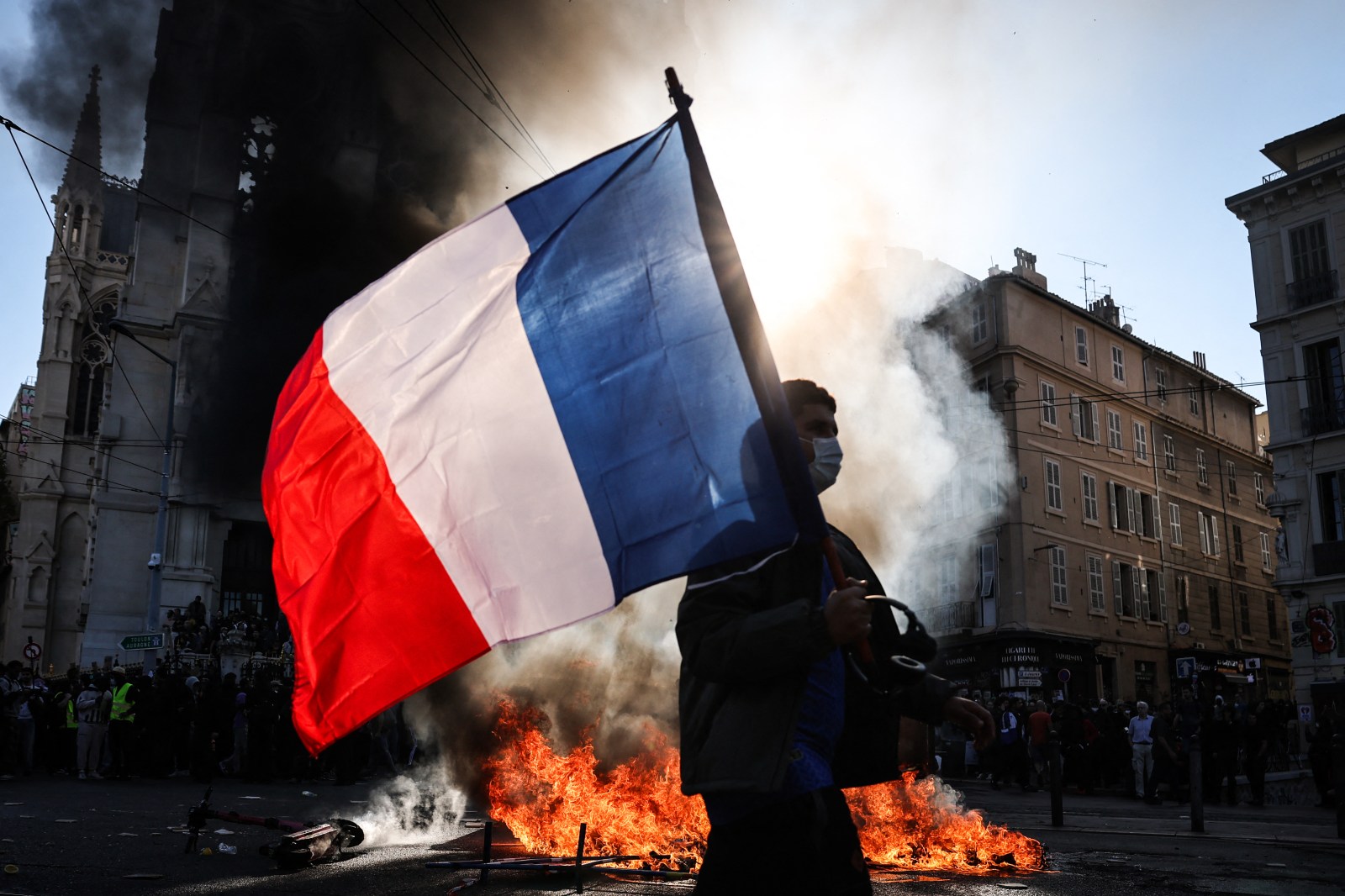
France is experiencing significant social and fiscal stress as the nation grapples with a set of issues that threaten to alter its course. Since September, widespread protests have erupted across the country, initially triggered by concerns over school staffing and funding. Now, they reflect broader economic grievances and generational discomfort.
According to Antonio Fatás, an economics professor at INSEAD in Fontainebleau, there is a growing feeling of dissatisfaction among the populace. He notes a perception that life is not progressing as anticipated, with many believing that current systems are failing them. This political disruption coincides with budgetary discussions and an upcoming presidential election, intensifying confrontations between protesters and riot police as well as competing visions for France’s future.
Labels like “on the brink” and “eye of the storm” have been applied to France by outside observers. This mirrors sentiments from a scene in Succession season 4, where a character questions France’s ability to survive its challenges.
The current unrest is distinguished by its blend of social, economic, and political stimuli, says Fatás. Initially a student movement in Paris’s suburbs, the protests have since spread nationwide, encompassing concerns over teacher shortages and overcrowded classrooms. These have merged with broader dissatisfaction over social inequality and rising living costs.
There is clear evidence that the social contract is failing portions of French society. Youth unemployment stands at 20.6% as of August, showing a decline but still high, compared to lower rates in Germany, the U.S., and the U.K. Participants from the 2018 Yellow Vest movement have joined the protests, framing school-related issues alongside their objections to regional and class inequality and the policies of President Emmanuel Macron.
Fiscal Challenges
Mujtaba Rahman, managing director for Europe at Eurasia Group, highlights the significant fiscal crisis underlying the unrest. Rahman attributes this to years of budgetary mismanagement, noting that France’s debt-to-GDP ratio and borrowing costs are concerning. The nation spends approximately $100 billion annually on education, with a sizeable portion allocated to retired teachers’ pensions. Nobel laureate Paul Krugman has criticized the country’s financial trajectory, suggesting France is on an unsustainable fiscal path.
The spending plan introduced by Prime Minister Sébastien Lecornu on October 1 aims to save €54 billion ($60.5 billion), yet may face hurdles due to the fractured parliament and public discontent over budget allocations. Fatás indicates resource allocation to education is restricted by France’s fiscal circumstances, which are more complicated than in previous years.
A report from Allianz points out that France has been significantly impacted by the global bond sell-off, exacerbated by the ongoing protests. Zsolt Darvas from Bruegel warns that a budget impasse could unsettle bond markets further, increasing yields.
Political Tensions
The protests connect with political volatility as the election cycle adds pressure. The 2024 election produced a divided parliament, complicating governance and financial reform. Macron’s exit in May leaves a void in the political center, with riots signaling a possible rise of France’s far right.
The EU-skeptic National Rally, formerly the National Front, currently leads polls for the 2027 presidential election. Marine Le Pen holds an 18-point advantage over rivals, as noted by Darvas, suggesting that upcoming policy choices will determine France’s fiscal future. However, the upcoming election hinders compromise, according to Fatás.
National Rally President Jordan Bardella calls for awakening ahead of the elections, emphasizing readiness to restore order.
Protests rooted in educational issues have expanded into a national movement involving various groups. The unrest has crossed borders, impacting Spain, Portugal, and Italy.
Whether these challenges represent a transient storm or a pivotal crisis for France remains uncertain. Current indicators suggest the latter is more likely.