
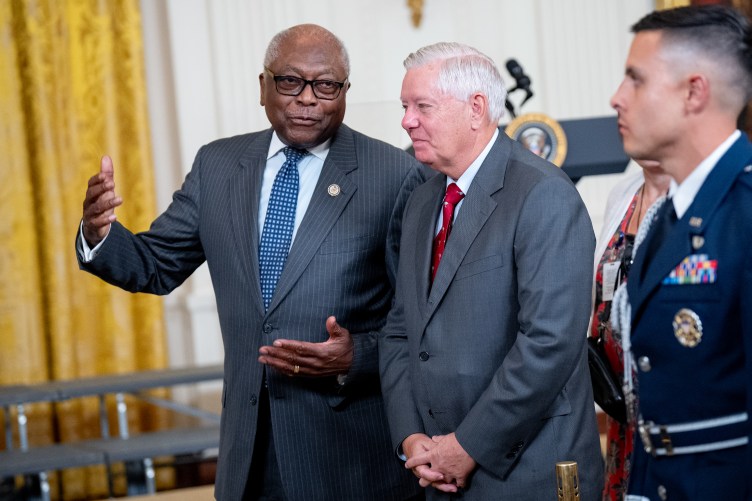
Reports have surfaced about campaign fund contributions by a Hawaiian naval firm, Navatek, to South Carolina politicians, securing federal contracts. Sen. Lindsey Graham and Rep. James Clyburn played significant roles in facilitating these transactions, directing funding to Navatek in South Carolina.
Senator Graham’s Involvement
On March 3, 2020, Sen. Lindsey Graham attended a private dinner in Washington, D.C., with Navatek executives. This 45-minute meeting reportedly required $40,000 in campaign contributions. Martin Kao, Navatek’s CEO, was involved, seeking Graham’s assistance in securing a $10 million government contract. Graham allegedly demanded $100,000 in campaign donations in return.
Navatek’s Business Model and Federal Investigation
The FBI launched an investigation in early 2025 into Navatek’s operations after Kao admitted his bribery-based business model. He confessed that the research provided to the government was often substandard. The investigation, however, faced challenges due to recent Supreme Court rulings complicating corruption case prosecutions.
“The whole thing is a grand lie,” said the former CEO.
Impact of Political Shake-Ups
President Trump’s administration dissolved anti-corruption units within the FBI and DOJ. The purge affected the Navatek investigation, including the removal of key agents like Michelle Ball. The probe’s focus included Navatek executives, while Lindsey Graham, James Clyburn, and Joe Wilson were actively investigated.
Navatek’s Strategy and Congressional Influence
Navatek aimed to secure government contracts through campaign donations and strategic alliances with congressional members. The company worked closely with lawmakers from smaller states on key committees, exploiting their sway over budgets. For instance, South Carolina politicians Graham, Clyburn, and Wilson were targeted due to their influence in Congress.
Kao planned an ambitious expansion with help from politicians. Navatek opened offices in key districts, partnering with local universities to propose federally funded research projects. Politicians would help allocate the necessary funds.
Consequences and Ongoing Developments
Following his arrest, Kao faced fraud charges and was sentenced to 87 months in prison. Meanwhile, Navatek’s fortunes shifted as executives like Duke Hartman founded Integer Technologies, which profited from Navatek’s dealings.
Integer’s operations flourished, securing numerous contracts, with Hartman fostering new political connections. The former Navatek CEO, from prison, called the entire affair corrupt, yet Namtek sank under Kao’s leadership.
The report indicates systemic issues in Washington’s campaign finance and federal contracting landscape. Lawmakers allegedly exchanged political favors for donations while high-stakes defense contracts were distributed without full merit consideration.