
The Iranian military reported the downing of a U.S. MQ-9 Reaper drone and the halting of two tankers in the Strait of Hormuz due to sea mines. Iran’s Islamic Revolutionary Guard Corps (IRGC) claimed responsibility, stating that the tankers, following a route promoted by the former U.S. administration but not accepted by Tehran, were targeted by sea mines, causing onboard fires.
Since the onset of the U.S.-Iran conflict, a reported 24 American MQ-9 Reapers, alongside other drone models, have been lost, equating to financial damages exceeding $800 million, as outlined by the Congressional Budget Office.
The IRGC’s actions contribute to heightened tensions, as vessels in and around the strait face frequent targeting, challenging American claims of safeguarding commercial passageways and exercising full control over the waterway.
Amid the tensions, Pakistan’s army chief Asim Munir was anticipated to visit Tehran. However, Iran downplays expectations of broad peace talks, focusing mainly on bilateral collaborations, as suggested by Iranian Foreign Ministry spokesman Esmaeil Baqaei.
Meanwhile, amid escalating regional hostility, Saudi forces intercepted a ballistic missile targeting Riyadh, attributed to the Iran-supported Houthi rebels from Yemen. The kingdom continues to face numerous missile attacks directed at its capital in recent weeks.
Israeli military accusations pointed towards collaboration between Lebanon’s army and Hezbollah, alleging that Lebanese forces assist Hezbollah in activities in the south of the country, violating a prior ceasefire agreement aimed at demilitarizing southern Lebanon.
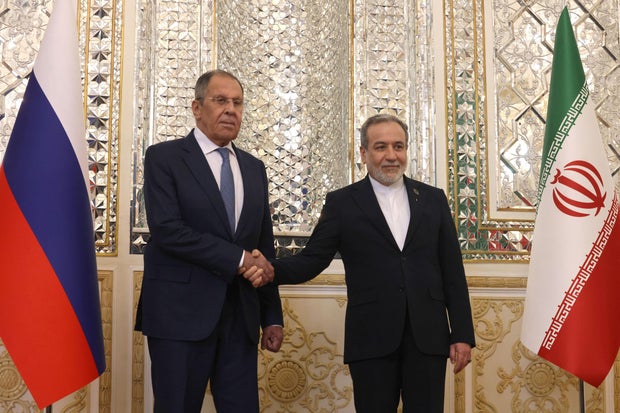
Iran signaled strengthening bonds with Russia, with Iranian Foreign Minister Abbas Araghchi highlighting unprecedented collaboration during Russian Foreign Minister Sergey Lavrov’s visit. The discussions covered diverse areas from economic to nuclear cooperation.
In a separate development, an unannounced visit by U.S. Defense Secretary Pete Hegseth to Israel was revealed. The visit intensified following discussions about renewing military actions against Iran after American midterm elections.
Lavrov’s Tehran visit, described as a measure to prevent large-scale conflict, coincided with ongoing U.S.-Israel military operations against Iran, pushing Moscow to mediate in the Middle Eastern conflict.
Houthi rebels launched numerous military operations across Saudi Arabia within two days, intensifying ongoing hostilities with the kingdom. Saudi retaliations and the Houthis’ continuous missile assaults underscore the relentless escalation in Yemen’s civil war.
In Yemen, a deadly Houthi missile attack resulted in substantial casualties at a military camp, highlighting the severe consequences of the prolonged conflict intertwined with U.S.-Iran tensions.
Iran blames the United States for instability in the Strait of Hormuz, associating ongoing conflict with the American-imposed naval blockade, alongside economic sanctions, aggravating regional insecurity.
Oil prices experienced a temporary drop following shifts in U.S. sanctions on Russia, yet ongoing regional instability keeps energy markets on edge, with recent attacks causing a five-month spike in crude oil prices.