
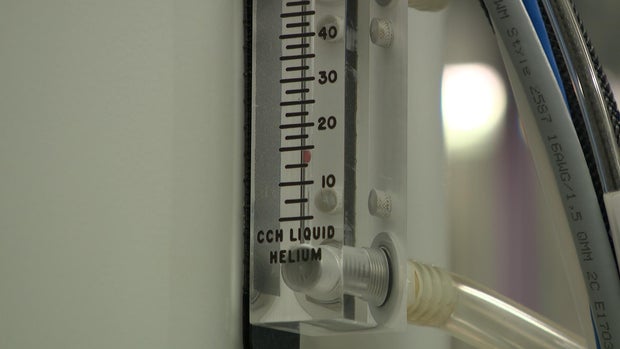
The world is facing a significant helium shortage following Iranian strikes on a Qatari gas facility and the closure of the Strait of Hormuz. This has affected various industries worldwide, without a clear resolution in sight.
Critical Role of Helium
While many people link helium to party balloons, its importance goes far beyond entertainment. Helium is vital for the production of smartphones, cars, MRI machines, rockets, and missiles. Its extraction and transportation are complex processes. Helium must be kept at an extremely low temperature of 452 degrees below zero Fahrenheit during transit. Once released into the atmosphere, helium can’t be reclaimed.
“I’ve been warning for decades that the helium supply chain is vulnerable due to limited locations,” said Cliff Cain, president of a helium exploration company.
The Connection to Geopolitical Tensions
In February, the closure of the Strait of Hormuz trapped a third of the global helium supply within the Persian Gulf. Subsequent Iranian strikes on Qatar’s Ras Laffan facility in March further damaged supply chains. Ras Laffan is crucial for the production of helium. Repairs at Ras Laffan are estimated to take three years.
The United States, a major helium producer, is trying to fill the gap. U.S. helium exports have risen by 70% since the conflict began. Companies in South Korea, Taiwan, and Singapore now depend on the U.S. supply, uncertain of how long it can be maintained.
Rich Brooke, ex-executive at Air Liquide, explained, “Spot prices on helium have tripled.”
Impact on Defense and Technology
Helium is crucial for modern warfare, affecting weapons development. The Pentagon has requested defense contractors to increase production. Helium is needed for fiber optics, electronics, and munitions manufacturing.
Scientific research also heavily relies on helium. Joe Sachleben’s lab at the University of Chicago uses helium in nuclear magnetic resonance machines. Helium stabilizes magnets at extreme temperatures to develop medical therapies.
The semiconductor industry consumes a significant portion of helium for chip manufacturing. Polar Semiconductors, a Minneapolis-based company, uses helium in many chip production processes. The global demand for semiconductors, driven by AI data centers and electrification, means growing pressure on helium supplies.
Mitigation Efforts
Companies like Polar Semiconductors are rationing their helium supplies to weather the shortage. Sachleben’s lab faces similar rationing restrictions, having to prioritize which machines to operate.
“We have to choose which machines to sacrifice,” Sachleben stated, dealing with reduced helium availability.
Though alternative suppliers have been sourced, they cannot ensure reliable deliveries of helium.
Sachleben expressed concern, “I don’t see an end to the current conflict affecting helium supply lines.”