
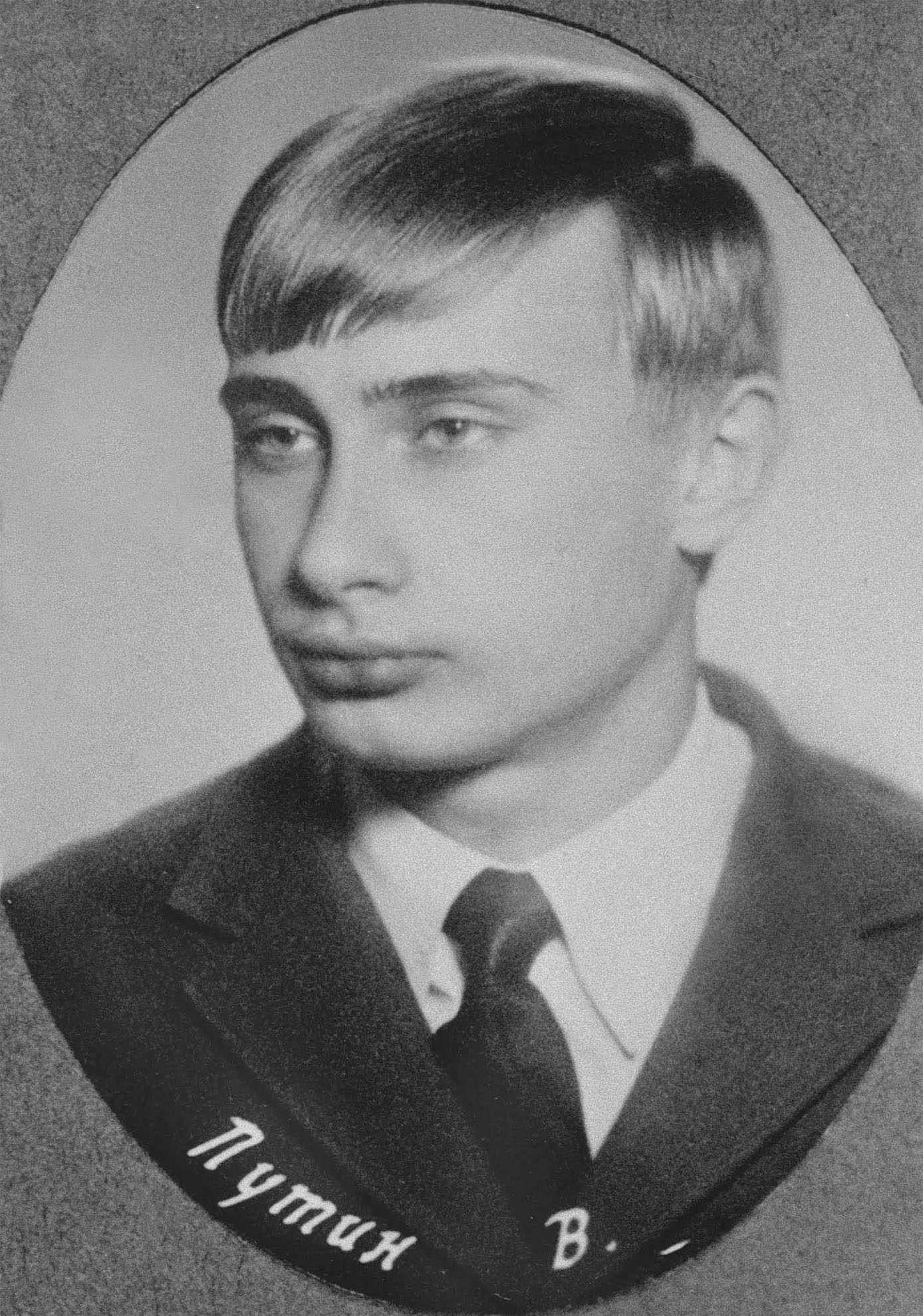
Bryan Adams’ “Summer of ’69” evokes nostalgia, celebrating a youthful era filled with romance and endless possibilities. In contrast, Vladimir Putin’s adolescence in 1969 was marked by a vastly different experience. At 16, Putin had already shown interest in joining the KGB, balancing this with his life in a communal apartment. It’s plausible that he also looks back on this period with fondness.
Global Power Play
Recently, Putin proposed a meeting with China’s Xi Jinping and Donald Trump in Shenzhen to discuss the ongoing conflict in Ukraine. Notably, Ukrainian President Volodymyr Zelensky and other European leaders were not included. This suggests Putin’s perspective, shaped during the peak of Soviet power.
Trump faces risks in accepting Putin’s terms. The conflict involves a sovereign state, yet its leader is excluded from negotiations. To observers, this might seem illogical, but Putin views global politics as a field dominated by major powers, where smaller nations have limited agency.
Historical Context of Power
The Soviet Union’s interventions in Hungary (1956) and Czechoslovakia (1968) highlight this mindset. In both instances, Soviet forces quelled movements aiming for political autonomy. Putin’s stance today echoes this approach. Before Russian military actions in Ukraine, Moscow demanded NATO cease its expansion and exclude Ukraine, trying to control geopolitics without Ukraine’s participation.
Russian analyst Alexander Baunov compares Putin’s desire to engage in talks with the U.S. to a modern ‘Yalta Conference’ scenario. In Putin’s view, great powers should shape historical decisions, excluding smaller states like Ukraine.
Russia’s Current Standing
Challenges exist within this framework, particularly the belief that Russia remains a great power. In 2005, Putin mourned the Soviet Union’s fall as a geopolitical catastrophe, not for its communist ideology, but for Russia’s diminished global standing.
Despite possessing nuclear capabilities and a U.N. Security Council seat, Russia’s economic stature lags. The World Bank estimates Russia’s economy at $2.6 trillion compared to America’s $30.8 trillion.
If Trump accepts a meeting with Putin and Xi, Russia likely won’t be the dominant force in discussions. Russia’s foreign policy experts acknowledge the unequal dynamic between Russia, China, and the U.S. Ivan Timofeev highlights Russia’s reliance on China amid Western sanctions.
Shifting Alliances
In 1969, tensions between Soviet and Chinese forces were high. Presently, China is crucial to Russia both economically and geopolitically.
Identity and Sovereignty
In July 2021, Putin released an essay on Russian-Ukrainian unity, recognizing Ukrainian culture while undermining its sovereignty. Putin claimed Ukraine’s true independence aligned with Russian partnership.
Today, after multiple years of conflict, such acknowledgments have vanished. Putin recently asserted that Russians and Ukrainians are one, claiming any territory entered by Russian troops as theirs.
Trump has indicated a willingness to meet with Xi and Putin irrespective of Zelensky’s presence, focusing on nuclear issues. However, for Putin, enticing Trump to a trilateral meeting aligns with reestablishing Russia as a great power broker.
Putin’s vision reflects a belief in reshaping global order via great power consensus, dismissing smaller nations’ agency.