
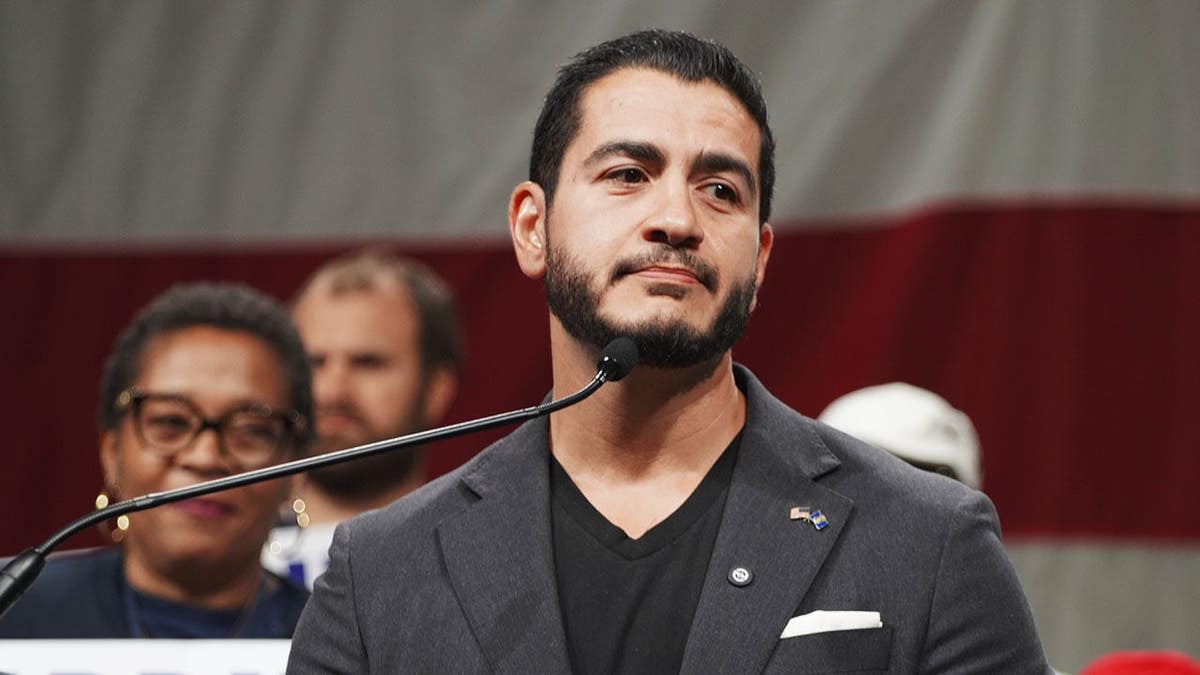
Former Obama staffers from the “Pod Save America” podcast discussed Michigan Senate candidate Abdul El-Sayed’s response to queries regarding his family’s alleged links to the Muslim Brotherhood. The conversation highlighted the challenge politicians face in handling sensitive questions.
Tommy Vietor and his co-hosts expressed support for El-Sayed, labeling some of the questions he received as “bigoted.” However, Jon Favreau stressed the importance of considering the concerns of voters who might be genuinely worried about the Muslim Brotherhood.
The source of the controversy stemmed from a report by the Washington Free Beacon. It mentioned social media posts by El-Sayed’s half-sister, Eman Abdelhadi, discussing family connections to the organization, involving both her and El-Sayed’s mother.
During an October 17 town hall, El-Sayed faced direct questions about disavowing the Muslim Brotherhood. After doing so, he questioned the intent behind the inquiry, suggesting assumptions about dual loyalties. El-Sayed asked, “You’re asking the question because implicitly, you assume that I’ll have dual loyalties, right?”
Favreau critiqued Republican strategists for using the issue to influence voters. He described the tactic as presenting the Brotherhood as a “new piece of information” that might appear threatening due to its ties to Egypt and El-Sayed’s Egyptian family background.
“To respond to that, as bulls — as it is, and of course, he like knocked it down,” Favreau explained, “you’ve got to forget about the a–hole asking you the question.” He advised treating the question as coming from someone with genuine concerns, rather than condescendingly dismissing them.
Vietor agreed El-Sayed’s tone could be more empathetic. Co-host Jon Lovett advised focusing on broader audiences rather than individual provocateurs.
El-Sayed’s comparison of himself to JFK when facing scrutiny over alleged Brotherhood ties was highlighted. Favreau reiterated that public figures must be conscious of tone and rhetoric. He recalled the pressure faced by Barack Obama and others in similar situations.
Favreau acknowledged the frustration El-Sayed might feel when facing such allegations, noting, “It’s not fair that what he has to do in response is to eat s— and just give a nice answer with a smile.” Yet, he stressed the necessity of maintaining composure to win an election, accepting the “double standard” involved.
Jesse Arm of the Manhattan Institute commented on El-Sayed’s approach. He suggested the candidate’s confrontational tone might contribute to his lagging behind his Republican opponent, compared to better-performing Democratic candidates in Michigan.
El-Sayed’s campaign did not immediately comment on the situation. The ongoing debate showcases the complexities candidates face in balancing personal defense and public relations.