
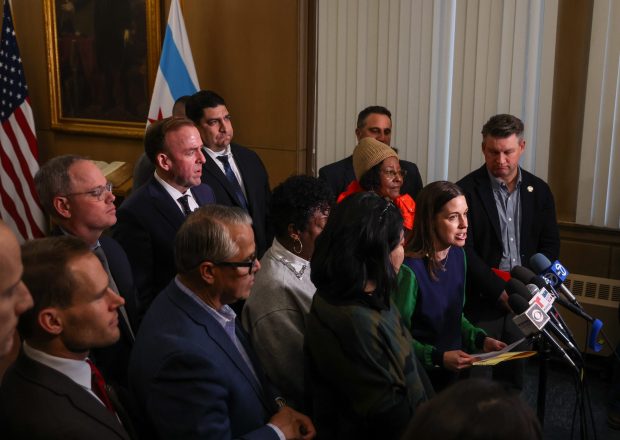
Mayor Brandon Johnson intends to reintroduce a proposal for an employee head tax on large corporations when he reveals his budget on Wednesday. This move includes an exemption for businesses in less wealthy Chicago areas. The plan aims to avoid directly taxing residents while focusing on large corporations to balance the city’s budget.
Additionally, Johnson proposes borrowing $480 million to settle police-related lawsuits and raising personal property lease transaction taxes from 15% to 20%. This is expected to impact large businesses the most and generate an estimated $234 million. Johnson strives to implement these measures without increasing property taxes or laying off workers, emphasizing his commitment to making wealthy entities pay more.
The plan includes a $25 monthly charge per employee at companies with over 125 full-time staff. Businesses in socioeconomically disadvantaged areas will receive a tax rebate, encouraging them to operate in these regions. This head tax is projected to generate $102 million, affecting about 3% of Chicago businesses.
Johnson’s previous attempt at a head tax failed last year. The City Council opposed the measure and formed their own budget plan, leaving Johnson politically weakened. Despite this, he remains focused on taxing wealthy corporations and reiterating the need for businesses to contribute their fair share.
The proposal also suggests increasing the personal property leasing tax, particularly affecting cloud computing technologies used by large companies. Aldermen are scrutinizing the borrowing plan for police settlements, which contributes to unsettling the City Council.
Residents might face new fees and taxes if the budget passes. Johnson plans to increase sportsbook betting taxes to 20%, generating $37 million. The expansion of the Smart Streets program and higher liquor taxes will also bring additional revenue. A new $0.15 package tax is expected to raise $9 million.
With a projected $882.4 million budget gap for 2027, mainly due to pension liabilities and settlements, Chicago requires these revenue measures to stabilize finances. The debt service will increase significantly in 2027, adding more pressure on balancing the budget.
Ultimately, securing enough City Council votes presents a challenge for Johnson. However, his resolve remains unchanged, as he seeks to ensure that wealthy corporations contribute more towards city funding.