
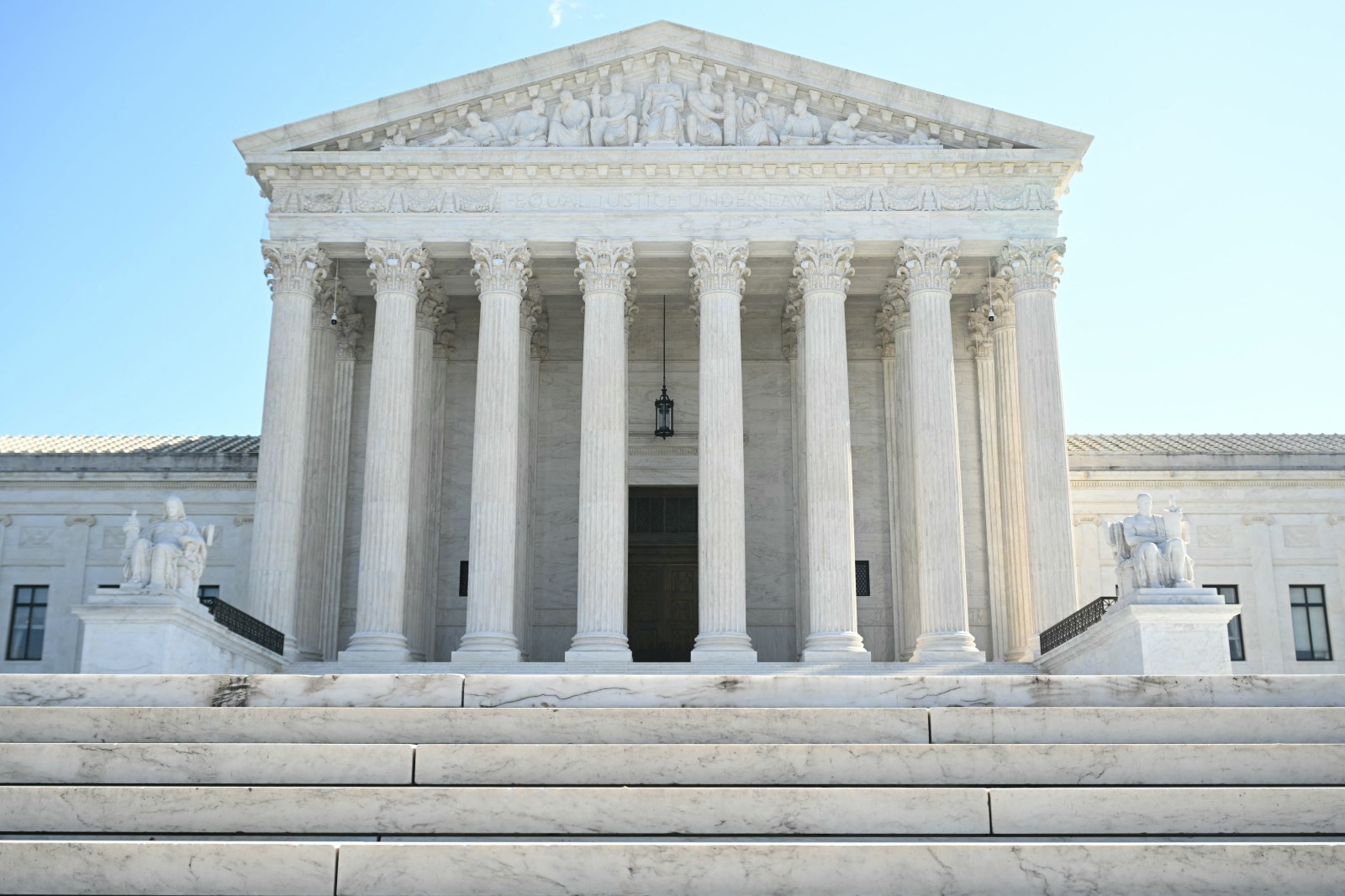
The Supreme Court has delivered a significant decision for the Trump administration concerning discounted political advertising rates ahead of the midterm elections. In an unsigned order, the Court blocked a ruling from the Fourth Circuit that required the Federal Communications Commission (FCC) to make a decision on its political advertising policy within 48 hours.
This dispute is centered around the FCC’s ‘lowest unit charge’ rules, which mandate broadcasters to offer discounted advertising rates in the weeks preceding an election. Four Democratic candidates contested FCC guidance that extended these discounts beyond candidates to include political parties engaged in coordinated spending and some joint fundraising committees. The candidates involved are Sherrod Brown, Jon Ossoff, Roy Cooper, and Kristen McDonald Rivet.
The Supreme Court criticized the Fourth Circuit’s decision, stating that the order to issue an ‘extraordinary’ writ was inappropriate. Federal law does require the FCC to rule on applications, but it does not demand action within a specific timeframe. Justices Sonia Sotomayor and Ketanji Brown Jackson opposed the stay.
FCC guidance from March outlined that discounts could also apply to political parties and joint fundraising committees engaging in coordinated political activities. The Democratic candidates contended that Congress reserved the discount solely for candidates. Their legal team requested a review of this guidance by the full FCC.
While the administrative challenge was underway, the candidates appealed to the Fourth Circuit. In August, a divided Fourth Circuit panel sided with the candidates and set the FCC guidance aside, determining that the statute limits the discounts to candidates.
The Supreme Court intervened on September 4, staying the prior Fourth Circuit ruling. The Court stated that the Communications Act appeared to necessitate FCC’s resolution of the administrative challenge before seeking federal court review.
In October, the Fourth Circuit ordered the FCC to resolve the dispute within 48 hours, prompting the FCC to seek relief from the Supreme Court again. The justices agreed that the appeals court improperly interfered with the FCC’s deliberation process.
The Court emphasized that a writ of mandamus is an uncommon remedy, noting that the Communications Act requires FCC action but does not stipulate a timeline. Forcing the FCC to finalize within 48 hours infringed constitutional boundaries and would cause irreparable harm by interrupting the deliberation process.
The Supreme Court’s decision permits the FCC to defer its ruling on the Fourth Circuit’s expedited timeline. It means political parties and qualifying committees can avail discounted rates alongside candidates until a legal resolution is achieved.
Republican groups support the FCC’s interpretation while Campaign Legal Center supports Democratic candidates, arguing that extending candidate discounts to committees could allow super PAC financial benefit from rates intended solely for candidates.
The ruling does not resolve who is entitled to the lowest political advertising rates, leaving this wider legal question open. It specifically addresses whether the Fourth Circuit could compel the FCC to expedite its review process.