
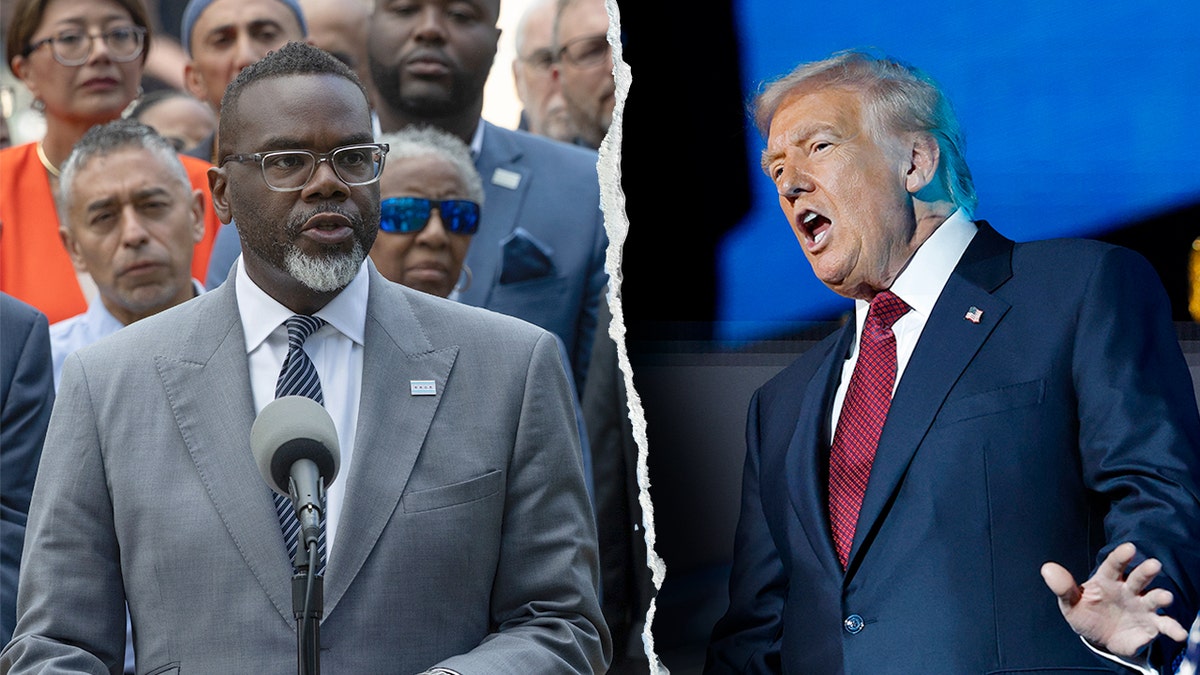
The White House responded strongly to Chicago Mayor Brandon Johnson’s recent comments about former President Donald Trump. Johnson accused Trump of ignoring the compensation claims for descendants of formerly enslaved Black Americans while benefiting the wealthy. These remarks were made during Johnson’s appearance on the ‘Native Land Pod’ podcast, where he discussed his administration’s crime-reduction efforts. Data from the Johnson administration and the Chicago Police Department indicate a significant decline in violent crime rates in the city.
Johnson emphasized that public safety should encompass more than policing. He highlighted investments in mental and behavioral healthcare, promoting detectives, and expanding community violence intervention initiatives. The podcast hosts referenced a recent post by Trump on Truth Social, criticizing Illinois leadership for its handling of crime. Trump stated that Chicago is experiencing an unprecedented and violent crime wave, which he believes can be addressed if local authorities ask for federal help. Johnson countered Trump’s claims, alleging that Trump favored the wealthy while neglecting the needs of descendants of the formerly enslaved. Johnson accused Trump of cutting crucial budgets related to violence prevention and criticized the focus on border issues while illegal weapons flood into Chicago.
The White House dismissed Johnson’s allegations and stressed the importance of local public safety efforts.
According to a White House spokesperson, government programs distributing funds based on race are illegal. They urged Mayor Johnson to focus on reducing Chicago’s homicide rate. Johnson’s office reported significant declines in violent crime since he took office in May 2023, with drops in homicides, shootings, and robberies. While the term ‘reparations’ was not explicitly used, Johnson’s spokesperson pointed to Chicago’s reparations initiatives, including a 40-member task force aimed at addressing historical harms against Black Chicagoans. The ‘Repair Chicago’ initiative seeks to gather experiences from Black residents to inform future policies and equity measures.
Meanwhile, the federal government is increasing legal scrutiny of local reparations programs. In Evanston, Illinois, a reparations program for Black residents began in 2021, funded by local taxes on legal marijuana sales. Though successful in distributing funds, the program faces challenges from the federal government. Federal intervention is expected in other locations as well, such as in Buncombe County, North Carolina. The Department of Justice (DOJ) is signaling plans to challenge race-conscious distribution models. Assistant Attorney General Harmeet K. Dhillon stated that these measures are seen as political moves to gain votes.
White House spokesperson Allison Schuster reiterated the administration’s stance against race-based initiatives. She emphasized that President Trump’s election signaled a desire to end divisive and discriminatory policies and promote equal treatment under the law.