
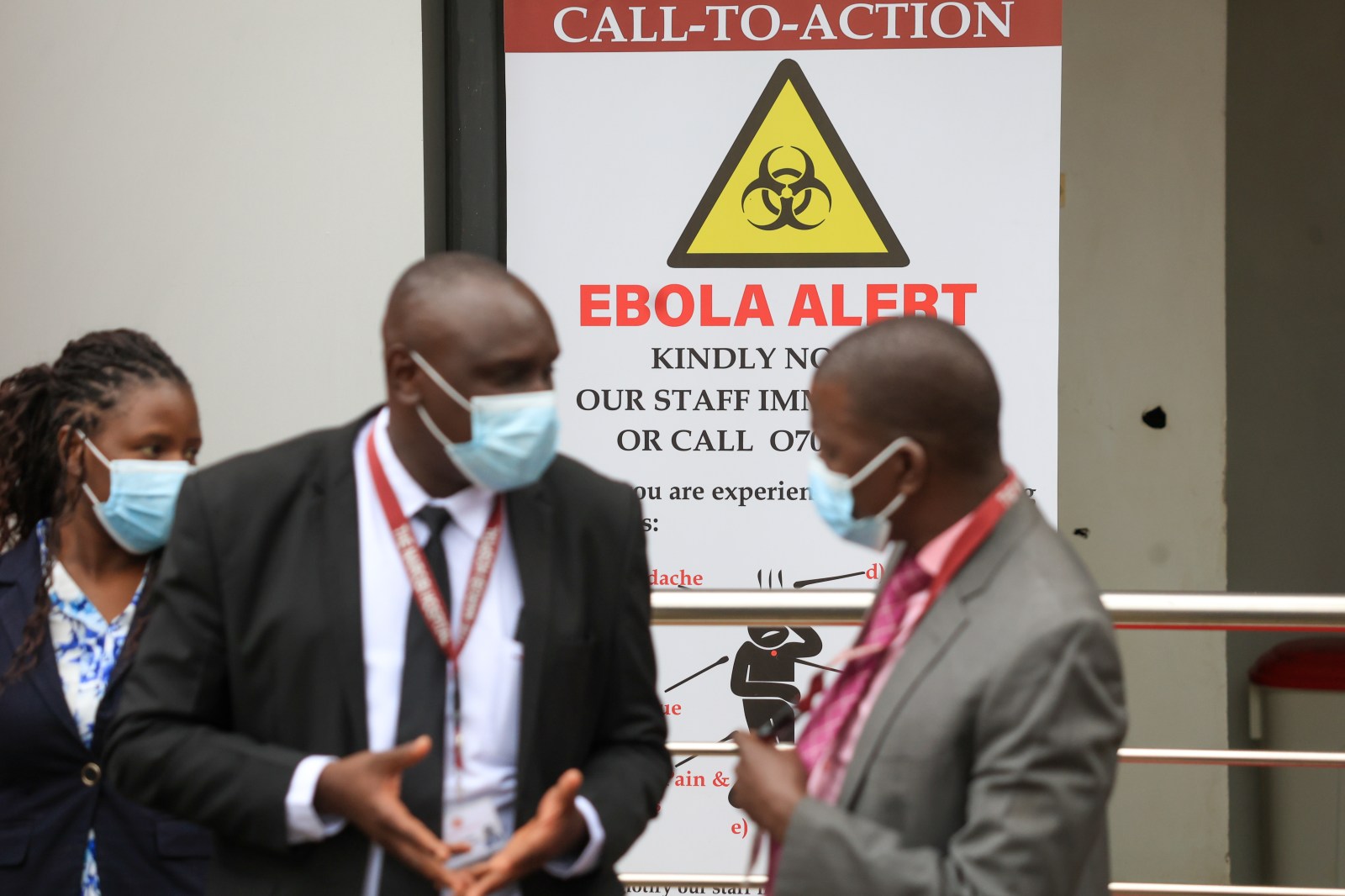
An Ebola outbreak, with a case-fatality rate close to 50 percent, has reached Kenya. Health authorities confirmed the nation’s second infection on Wednesday, connected to the outbreak focused in the Democratic Republic of the Congo (DRC). The recent patient is a 39-year-old relative of Kenya’s first confirmed case and exhibited symptoms on Tuesday while already in quarantine, according to a statement by Kenya’s Health Ministry issued on Wednesday.
The two cases are linked, and authorities report no evidence of community spread. The situation unfolds during efforts to control what the CDC identifies as the second-largest Ebola outbreak recorded to date. Recent surveillance data show 9,144 confirmed cases and 4,410 deaths in the DRC as of October 12, revealing a case-fatality rate of about 48 percent.
The detection of Ebola in Kenya highlights the risk of cross-border transmission as health officials endeavor to manage an outbreak that the CDC says is spreading faster than prior events. Uganda has also reported cases tied to this outbreak, with additional incidents in France involving an imported case from the DRC. The CDC indicates Uganda has recorded 21 confirmed and probable cases along with three deaths.
The outbreak exceeded 1,000 confirmed cases within 40 days of the response activation, compared to roughly 235 days for the 2018 outbreak in the DRC to reach similar numbers. As of now, the CDC assesses the chance of the outbreak spreading to the United States as very low, with no American cases reported.
Kenya Cases
Kenya’s Health Ministry has confirmed the country’s second Ebola case, involving a 39-year-old who developed symptoms in quarantine. The first case was a 40-year-old Kenyan residing in the DRC, where he contracted the virus and received treatment before entering Uganda and then flying to Kenya. He was hospitalized in Kenya, tested positive for Ebola, and died on October 5.
Authorities have identified about 128 contacts linked to the first patient; 108 of these are quarantined in Kenya, with five situated abroad and informed. The second patient was among those quarantined. The ministry noted that early detection improves the recovery prospects for affected individuals. Officials affirmed the two cases are connected, with no evidence of community spread when the announcement was made.
The Kenyan government has increased screening at airports and borders since announcing their first case.
Congo Outbreak
The DRC remains the epicenter of the epidemic. The CDC reports this as the country’s 17th Ebola outbreak, marking the second-largest recorded. As of October 12, the country logged 9,144 cases with 4,410 deaths, with a case-fatality rate of around 48 percent according to the European Center for Disease Prevention and Control.
This outbreak is attributed to the Bundibugyo virus, a type of Ebola virus. Confirmed cases span seven provinces: Bas-Uele, Haut-Uele, Ituri, North Kivu, South Kivu, South Ubangi, and Tshopo. WHO noted ongoing intense transmission nationwide, although the intensity varies by location. By October 6, they reported a crude case-fatality ratio of 48.2 percent.
The CDC highlights the accelerated nature of the current outbreak, reaching over 1,000 confirmed cases in 40 days compared to around 235 days during the 2018 outbreak.
What Happens Next
Kenya continues contact tracing and monitoring following the confirmation of its second case. As of October 13, 108 contacts are in quarantine with daily checks for 21 days after last exposure, according to reports referencing the Kenyan Ministry of Health. Authorities are locating 15 additional contacts.
Officials examine those who interacted with the second patient post-symptoms, including quarantine staff and health workers. Those contacts developing symptoms will undergo isolation and testing. Infection control measures have been enhanced at quarantine and treatment facilities.
The World Health Organization cites the response in the DRC as inclusive of strengthened surveillance, contact tracing, clinical preparedness, supply delivery, community engagement, and readiness for cross-border issues. The Bundibugyo virus complicates efforts, lacking a licensed vaccine or specific treatment, yet work is underway on potential candidates.
The CDC continues to consider the outbreak’s spread to the U.S. as unlikely, with no U.S. cases reported up to October 13.