
The recent announcement by the Royal Swedish Academy of Sciences regarding the Nobel Prize in Economics unfolded with a unique and informative twist. Robert Hall and Michael Woodford received this year’s honor for their contributions to the microeconomic foundations of macroeconomic stabilization.
Sticky Prices Explained
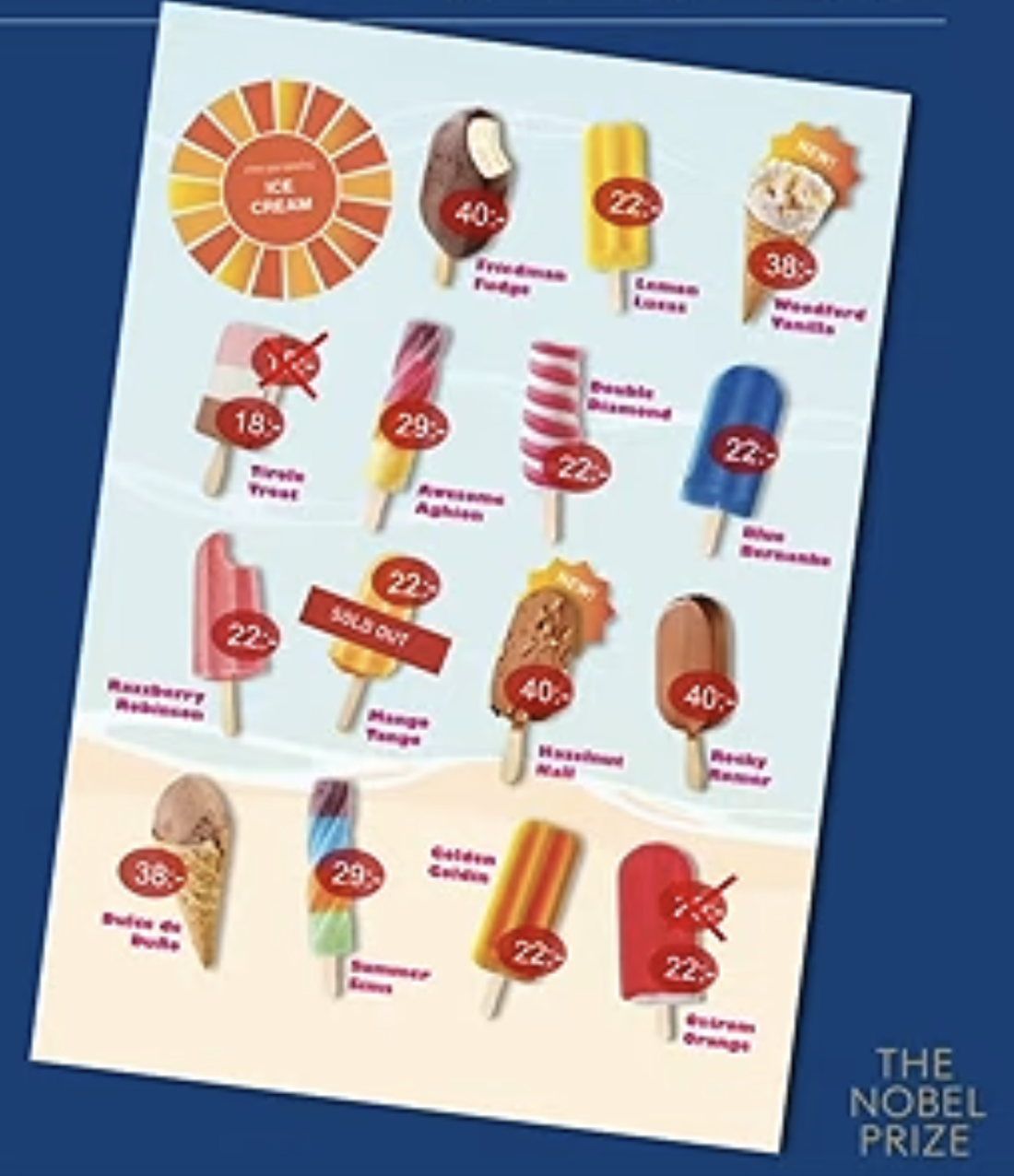
During the announcement, Timo Boppart from Stockholm University presented an ice cream menu to shed light on how firms set prices. The example illustrated that prices do not continuously adjust, instead businesses tend to fix them for longer periods, like a season. This phenomenon is known as ‘sticky prices.’
Sticky prices have significant implications for the economy. They are central to ‘New Keynesian economics,’ a framework influencing how governments address recessions and inflation.
The Role of Keynes Today
John Maynard Keynes revolutionized macroeconomics during the Great Depression, emphasizing the need for government intervention to jumpstart slumped economies.
Though Keynes’ models saw widespread influence, they faced challenges during the 1970s. The advent of stagflation—a mix of rising inflation and unemployment—cast doubt on his theories.
Renowned economists, like Robert Lucas and Edward Prescott, criticized Keynesian models for relying too much on historical data insights without explaining individual decisions.
New Keynesian Economics Revival
Economists, including Hall and Woodford, aimed to revamp macroeconomic models by integrating individual decision-making processes. They emphasized how future expectations influence current spending.
The ice cream analogy illustrates how sticky prices can reduce spending, impacting employment and production negatively during economic downturns.
Price rigidity extends beyond consumer goods, affecting wages—highlighting why labor costs don’t fluctuate rapidly, further deepening recession impacts.
For governments, understanding these dynamics reaffirms the need for policy interventions to bolster economic recovery.
Modern Applications
Woodford’s research on sticky prices underpins the strategy of ‘forward guidance,’ used by the Federal Reserve during the Great Recession. By committing to low-interest rates long-term, the Fed aimed to boost spending.
Despite past criticisms, many economists align with New Keynesian principles today. They accept sticky prices as a critical factor, blending critiques into a refined model promoting economic vitality.
Commenting on the evolution, Gregory Mankiw, a Harvard economist, rephrased Milton Friedman’s famous statement: “We’re all New Keynesians now.”
Note: The Economics Prize technically has a longer, less concise name than the traditional Nobel awards, as it was established posthumously in honor of Alfred Nobel.