
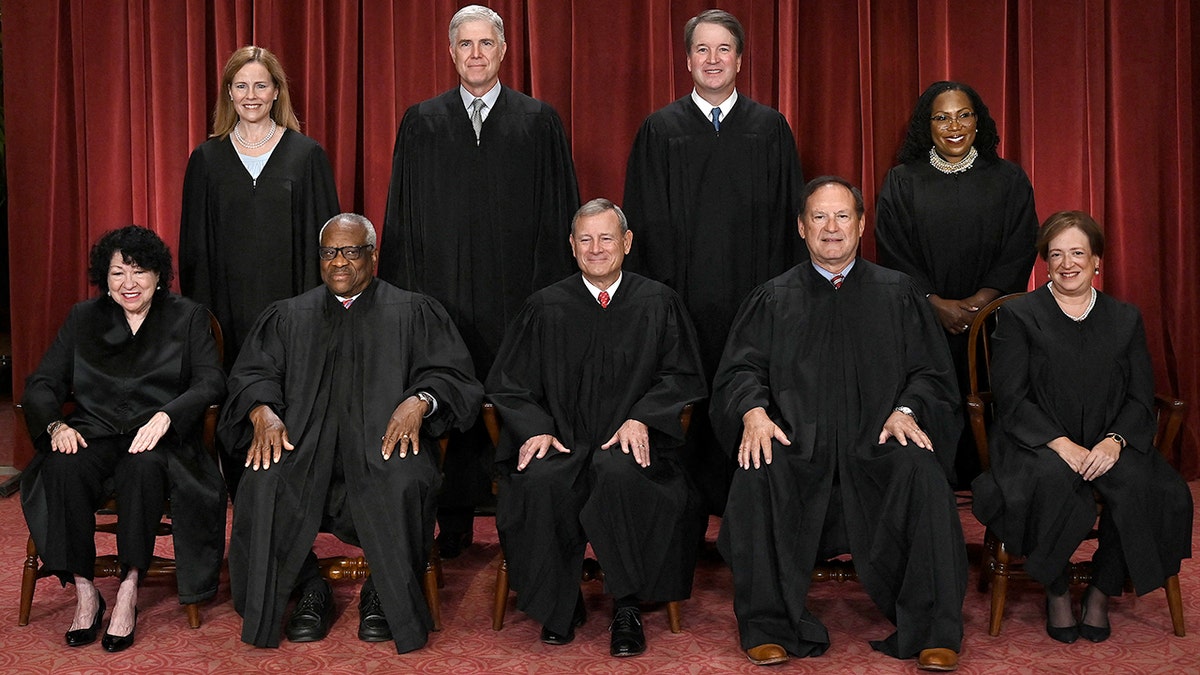
As discussions continue about expanding the U.S. Supreme Court beyond nine justices, opinions remain divided. In interviews conducted by Fox News Digital on Capitol Hill, some Americans expressed contrasting views on whether changes are necessary.
Diverse Perspectives
Tim from Washington, D.C., believes the current structure works well. He stated, “If it’s not broken, don’t fix it.” In contrast, Derek, also from Washington, posits that more justices could bring diverse viewpoints. “You’d have to have more of a consensus on whatever they’re voting on,” he explained.
Legislative Efforts and Proposals
Recently, a Republican-backed constitutional amendment to keep the court at nine justices fell short in the House. Meanwhile, Democratic lawmakers have proposed reshaping the court in various ways, including increasing its members, setting term limits, and applying stricter ethical rules.
Carl from Texas commented, “If we’re gonna change the size, we need to do it now.” He felt urgency to adjust the court’s composition.
I think those who want to increase the size, have a bias to it, if it be Republican or Democrat,” Tim said about the expansion motivations.
Some Democrats criticize the court’s decisions, alleging that politics sway its rulings.
Considerations on Court Expansion
One interviewee mentioned that broader participation could yield more accurate decisions. Derek noted that the impact of adding justices depends on the number, cautioning against significant increases.
Rep. Al Green (D-Texas) proposed expanding the bench from nine to 13 justices. Meanwhile, Rep. Ro Khanna (D-Calif.) suggested 18-year term limits for new appointees.
Mark from Washington, D.C., views term limits as a more impactful change, offering presidents more opportunities to appoint justices without altering the court’s political orientation significantly.
Ethics and Transparency
Other proposals from Democrats aim to establish enforceable ethics standards and enhance transparency in the court’s emergency rulings, often called the “shadow docket.”
Republican Response
Republicans argue that Democratic proposals stem from dissatisfaction with recent court rulings. They attempted to pass a constitutional amendment to keep the court at nine justices, but it failed to achieve the necessary two-thirds majority in the House.
For an amendment to proceed, it would also need Senate approval by a two-thirds majority and ratification by three-fourths of the states.
Historical Context
The size of the Supreme Court is not specified in the Constitution, leaving Congress to decide. Initially set at six seats by the Judiciary Act of 1789, the number changed throughout the 19th century before settling at nine justices in 1869.
Hannah, a Production Assistant for the Politics team at Fox News Digital, contributed to this report.