
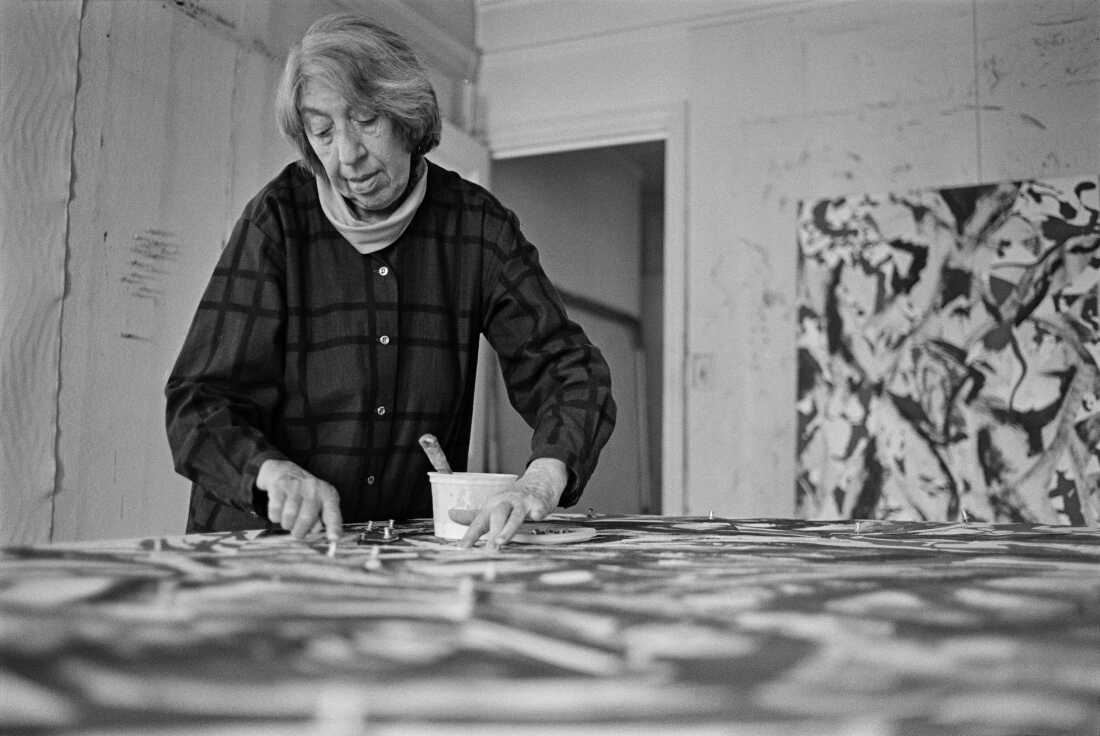
In a 1978 interview, Lee Krasner mentioned her continuous work efforts while Jackson Pollock gained fame. The Metropolitan Museum of Art now highlights Krasner’s contributions alongside Pollock in a new major exhibition, Past Continuous.
This exhibition showcases over 120 works, including 74 by Krasner. It focuses on her importance as an Abstract Expressionist artist. A key piece on display is the 1955 collage, ‘Bald Eagle,’ a vibrant composition made from Pollock’s discarded pieces. Curator Brinda Kumar notes that Krasner’s collage work was transformative during significant periods of her life.
The exhibition presents Krasner’s art alongside Pollock’s, offering a new perspective on their individual and collective histories. An example is Pollock’s 1952 ‘Convergence,’ a vivid drip painting highlighted by natural light, adding contemporary flair.
This show challenges perceptions of Pollock as the sole genius and Krasner as merely a support figure. Krasner was aware of gender dynamics affecting her career. She strategically chose their Long Island home for Pollock to avoid Manhattan’s pressures, painting in modest spaces.
Born Lena Krassner to Orthodox Jewish immigrants from Ukraine, Krasner reinvented herself as a bold artist involved in New York’s art scene. Author Mary Gabriel notes Krasner’s continuous artistic evolution, embracing change regularly. Her ‘Little Images’ series from the 1940s and post-Pollock crash artworks exhibit this perennial experimentation.
Following Pollock’s 1956 death, Krasner rose as a savvy marketer, significantly raising Pollock’s work values. Her piece, ‘Autumn Rhythm,’ was notably repositioned in the Met’s display, demonstrating the evolving appreciation of modern art.
Krasner’s personal and professional renewal post-Pollock’s death is evident in works like ‘The Seasons,’ created in Pollock’s former studio. This painting, almost 17 feet wide, bursts with life, vegetation, and vivid colors. David Breslin, another Met curator, mentions this period marked a shift toward vibrant and expansive pieces for Krasner.
The exhibition, running until January, emphasizes Krasner’s newfound recognition and space in the art world.