
Iconic Landmark Living
The Woolworth Building, designed by renowned architect Cass Gilbert, offers a rare opportunity for individuals to own a piece of New York City’s history. Completed in 1913, it was celebrated as the tallest building in the world, standing at 792 feet. Set in the Tribeca neighborhood, the Gothic-style skyscraper now features luxury residences, including the remarkable Residence 40.
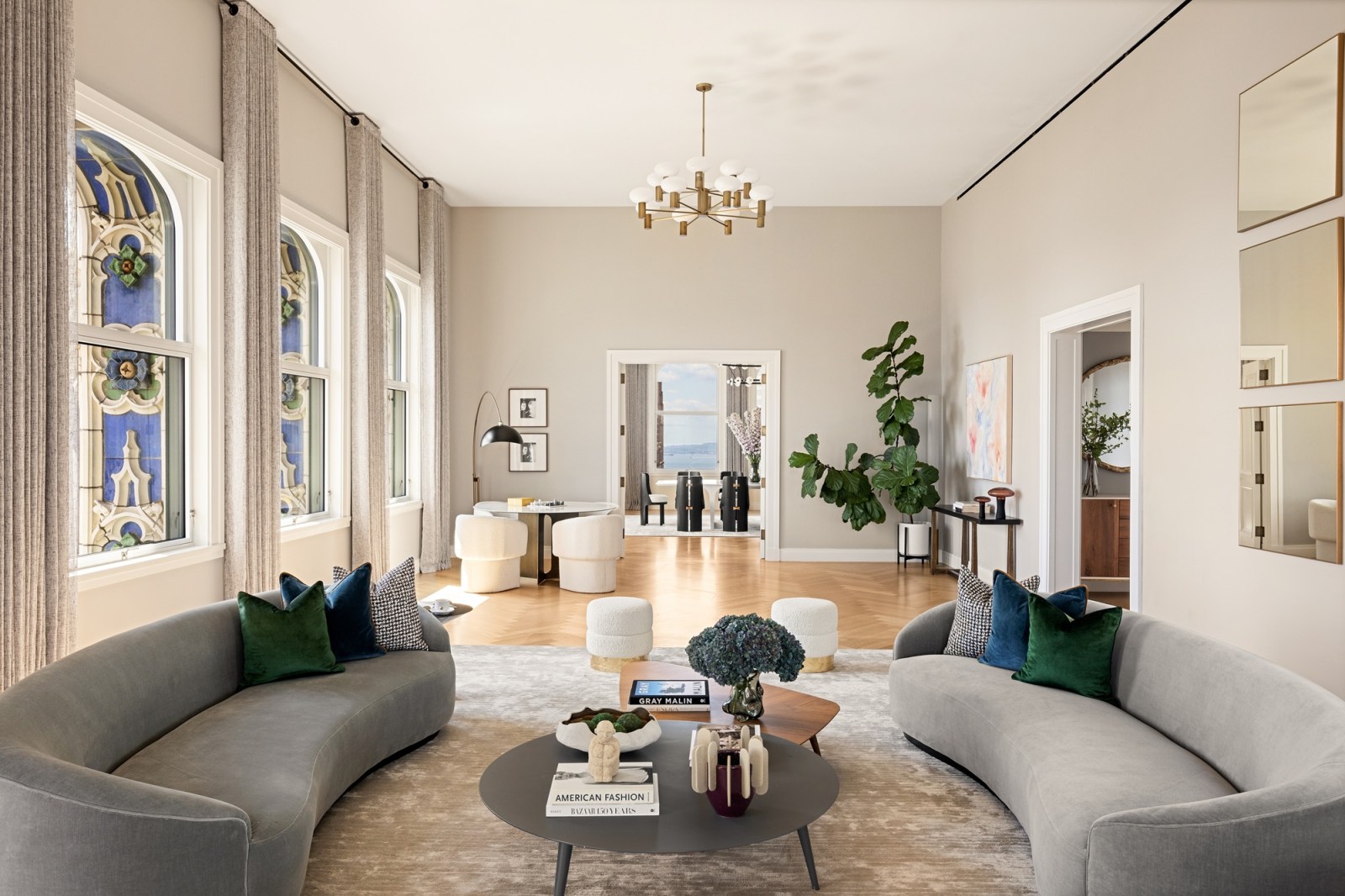
Priced at $18.5 million, Residence 40 is a full-floor home spanning over 6,000 square feet. Originally the private office of Frank W. Woolworth, it has been transformed into a spacious 4-bedroom residence with views from 516 feet above City Hall Park. It is the only apartment within the building that boasts 15-foot ceilings and original terra-cotta detailing.
“What makes Residence 40 truly special is its blend of historical significance with modern luxury,” said Catherine Juracich from The Corcoran Group.
Adaptive Reuse Trends
The sale of the Woolworth Building residence aligns with the growing trend of converting historic buildings in New York City. Iconic structures like the Flatiron Building and Brooklyn’s Hotel Bossert are undergoing similar transformations. RentCafe reports nearly 25,000 apartments have been created from repurposed buildings in 2024, marking a significant year-over-year increase.
Gordon Gill, an influential architect, commented on the potential for innovation by reimagining existing structures. The American Institute of Architects notes that nearly half of America’s buildings are over 50 years old, emphasizing the vast opportunities for adaptive reuse. Such conversions are environmentally beneficial, reducing carbon emissions associated with new construction.
Historic Residences in Demand
There is a growing demand for homes within historically significant properties. Buyers are drawn to buildings like the Woolworth and Flatiron for their craftsmanship and architectural uniqueness. Juracich highlights that today’s luxury buyers seek homes that combine modern comforts with historical charm.
Architect Eric Robinson concurs, emphasizing that older buildings provide a rich environment with historical details and quality construction. RODE Architects, co-founded by Robinson, is revitalizing a Boston building originally used as a stable and blacksmith shop into 44 residences, carrying its history forward with a new purpose.
Robinson also points out the appeal of downtown locations near amenities. Cities like Boston encourage conversions through streamlined permits and tax incentives, enabling developers to repurpose existing structures.
The conversions are attractive to discerning buyers for their singularity and historical importance. Michelle Griffith describes them as a chance to own part of a legend, blending prestige with practical, modern living.