
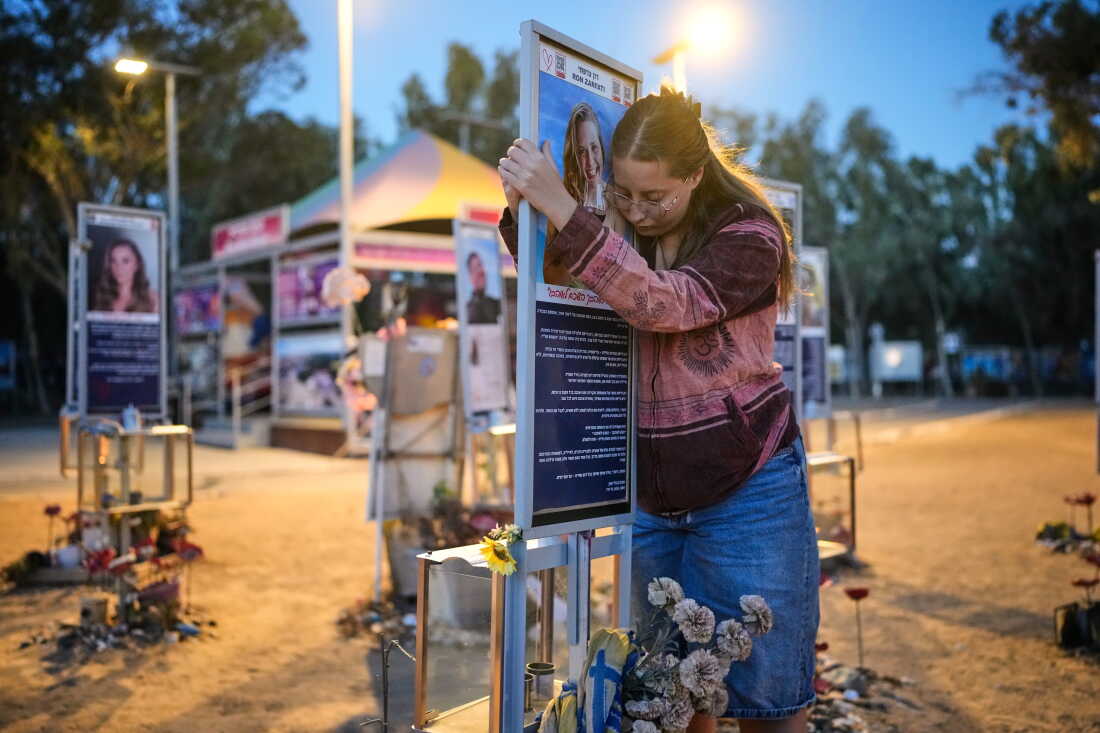
In Netanya, Israel, people are coming together to remember the tragic events of October 7, 2023. On that day, a violent attack led by Hamas claimed 1,200 lives, and 251 individuals were taken hostage. This attack sparked a devastating war in Gaza, whose repercussions are still deeply felt by Palestinians struggling with ongoing hardships.
In the southern regions of Israel, families gather to mourn at locations such as intersections, bomb shelters, and the site of a music festival where Hamas-led militants executed the deadliest strike against Israel. This year holds particular significance as it marks the first anniversary since all hostages have returned to their families, reshaping the collective process of mourning.
For Palestinians, this anniversary is a stark reminder of Israel’s response that has caused severe destruction in Gaza. Tens of thousands of lives have been lost, and a significant portion of the Gaza population, roughly 2 million, resides in overcrowded tent camps. The ongoing military presence and frequent Israeli airstrikes continue despite a ceasefire agreement reached nearly a year ago.
The day underscores the dramatic shifts across the region over the past three years. Israeli forces now occupy areas in southern Lebanon, entangled in a conflict with Hezbollah. This situation escalated when Hezbollah backed Hamas’s actions in 2023. The conflict also involves Iran and the United States, whose tensions have triggered attacks across Arab Gulf countries, affecting the global economy. Although Israel helped initiate this confrontation, the Gaza war serves as a backdrop to broader regional instability.
A Former Hostage’s First Commemoration
Elkana Bohbot, aged 37, is marking this anniversary in Israel for the first time since his release from 738 days in captivity. During his confinement, Bohbot was kept underground in a damp tunnel, often sharing a small cell with others. Basic needs were seldom met, including food and hygiene.
Since his return, Bohbot has undertaken significant personal rehabilitation. He authored a book, began public speaking, and enjoyed long-awaited moments with his family. A promise he made to himself during captivity has come true—his wife gave birth to their daughter, Michele, in August. Bohbot views Michele not simply as a family joy but as a statement of resilience.
Palestinian Struggles in Gaza
No official events are scheduled in Gaza on this anniversary. The impact of Israel’s military offensive remains severe, displacing a vast majority of the population. Strictures on the entry of goods exacerbate an already dire hunger crisis. The Health Ministry of the Hamas-led government reports over 74,000 Palestinian casualties, approximately half being women and children. These figures are supported by U.N. agencies as credible.
Although the fighting’s intensity has lessened with the ceasefire from October 10, Israeli airstrikes persist, as Israel targets alleged Hamas positions. The ministry reports that 1,145 Palestinians have died since the ceasefire, while Israel has lost seven soldiers. Hamas justifies its initial attack as a response to Israel’s longstanding military presence and settlement policies, though the objective of Palestinian statehood seems farther away.
A Region in Transformation
This anniversary coincides with significant political tensions within Israel, highlighted by an upcoming contentious election. There are intense debates surrounding Prime Minister Benjamin Netanyahu’s approach to the conflict and the absence of a formal investigation into the attack’s failure. Official memorials were held earlier on October 5, aligning with the Hebrew calendar, showing the division among Israelis regarding the events.
The attack set off a chain of conflicts in the Middle East, involving multiple adversaries like Hamas and Hezbollah, along with Iran. Israel’s occupation of areas in Syria and Lebanon has displaced over 300,000 Lebanese. Concurrently, the U.S. has aligned with Israel in targeting Iranian military and nuclear sites, creating widespread economic shocks globally. Violence continues in the West Bank, spurred by Israel’s far-right government and actions by extremist settlers against Palestinians.