
The Basilica of Saint Francis of Assisi stands as a monumental site in the hills of Umbria, Italy. Built as the resting place for one of Christianity’s revered saints, this 13th-century church has faced numerous challenges over the years, notably from two significant earthquakes in 1997. These quakes resulted in the loss of four lives and left the basilica’s structure severely damaged, with restoration efforts ongoing.
Rebuilding Efforts with Modern Technology
Sergio Fusetti, who has been involved in the basilica’s restoration since the 1970s, highlights the complexity of the task. After the 1997 earthquakes shattered part of the roof and left over 80,000 fragments of the church’s structure, Fusetti struggled to piece it back together. He realized that only artificial intelligence (AI) could assist in reconstructing such a vast puzzle efficiently.
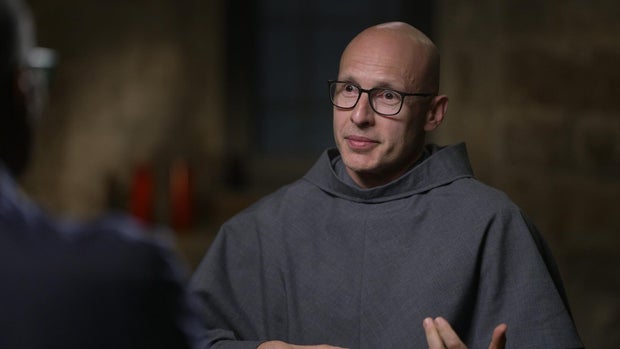
Now, a multidisciplinary team that includes art historians, software engineers, and Franciscan friars is leveraging AI and digital technology to further the restoration. They aim to use these tools to accurately place the thousands of fragments that remain.
The Role of Art in History
Medieval masters, such as Cimabue, Pietro Lorenzetti, Simone Martini, and Giotto, adorned the basilica walls with stunning depictions of Saint Francis’s life. Despite diligent restoration work, some of these artworks still bear visible damage. Artisans are now collaborating with technology company Haltadefinizione to document the basilica while planning for possible future damage.
Creating a Digital Twin
Giovanni Borelli, Chief Technology Officer at Haltadefinizione, is spearheading the creation of a digital twin of the basilica. This detailed virtual model will be crucial for restoration purposes. Borelli’s team uses advanced cameras capable of capturing minute details imperceptible to the human eye. They employ cameras, drones, and lasers to compile countless images that form an ultra-high-resolution 3D blueprint.
The completed digital twin will not only assist in restoration but will also be accessible to the public by next year. This comprehensive model serves as a proactive measure against future seismic events, providing a precise guide for potential repairs.
AI’s Impact on Restoration
Borelli explains that AI will facilitate the reconstruction of missing elements and address issues like cracks and discoloration. Tasks that once took years by hand can now be completed in mere minutes, thanks to AI’s capabilities.
Enhancing Accessibility and Preservation
Beyond restoration, Borelli aims to improve public access to art and history. The same technology used at the basilica has captured other historical sites, such as ancient Roman thermal baths. Virtual reality (VR) further extends this accessibility, allowing users to explore Italy’s past in immersive detail.
While Borelli admits that VR cannot replace the experience of being in front of historical art pieces, he values it as a tool that expands access and shares cultural treasures widely.
Friar Giulio Cesareo sees technology as a means to share the beauty and faith upheld by the basilica. With technology, more people worldwide can engage with this rich history than ever before, making the basilica’s treasure more inclusive and efficiently shared.