
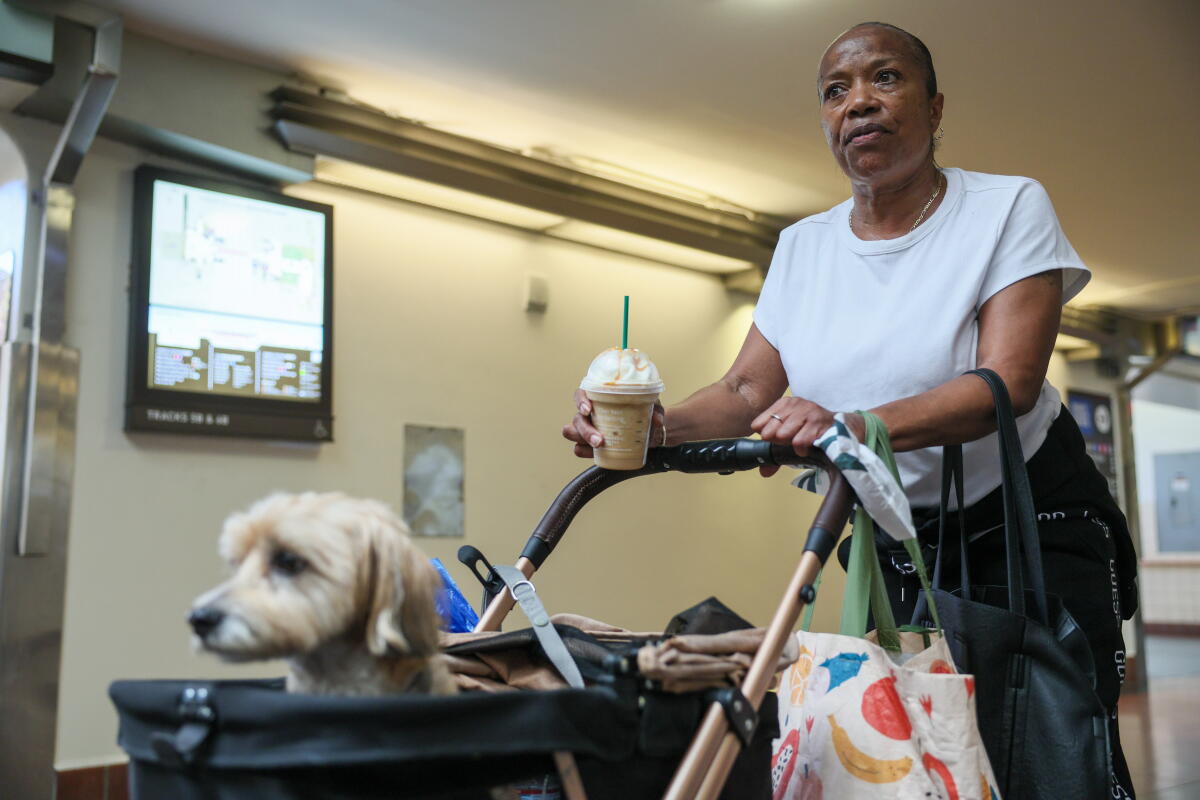
Tonia Jones was unexpectedly informed about the increase in Metrolink fares. She has been a regular passenger of the train system for seven years, often accompanied by her 12-year-old dog. Jones utilizes the train to commute between Montclair and downtown for her job and family visits while saving to buy a car amid soaring gas prices. She expressed surprise at the fare hike but lacks alternative options.
“We can’t afford that! How ridiculous,” Jones, 61, said while waiting at Union Station. “I don’t know what to do — just get out of California when I can.”
On Monday, the Metrolink commuter rail network, which is addressing budget deficits and service cutbacks, will raise its ticket rates significantly for the first time in 13 years, with increases up to 27%. Riders had minimal prior warning about these changes. At Union Station, the ticket kiosks displayed a brief message about a “fare adjustment” with no additional details. There was no signage alerting passengers at the main entrance or within the train depot.
Many frequent train users have expressed their disapproval as one-way fares rise by 14%, daily passes escalate by 27% from $15 to $19, and weekend passes increase by 20% from $10 to $12. Several were unaware of the actual impact on their costs.
Gabriel Frias, 38, has consistently taken Metrolink every day for 20 years to commute to his job at a party rental business in Van Nuys and to visit his children in Fontana over the weekends. He was disheartened to discover the significant fare increase without additional benefits for passengers and questioned the decision.
“Everyone is struggling. For day-to-day commuters, this is another thing they have to worry about,” Frias said. “One-way tickets all the way up to the weekend tickets? That will affect a lot of people. … It’s more money to fork out for the same ride.”
Adriana Rizzo, who represents Californians for Electric Rail and frequently uses transit systems, has voiced her concerns to the Metrolink board regarding recent service and fare decisions.
“These fare increases will not raise enough to fill Metrolink’s budget deficit,” she told The Times. “Instead, riders will face a one-two punch of fare increases and service cuts, making Metrolink harder to ride just as Southern Californians are facing record gas prices.”
Metrolink is run by the Southern California Regional Rail Authority, with oversight from various transit authorities, including those in Los Angeles and Orange counties. The agency has cut services earlier this year and suggested further reductions during recent board meetings.
Chief Executive Darren Kettle of Metrolink stated, “Metrolink has worked hard to keep fares affordable while the cost of operating and maintaining our regional rail system has continued to rise. These pricing adjustments are one step in a broader effort we are taking to responsibly address those pressures and support Metrolink’s long-term financial sustainability.”
The organization is facing legal challenges from a former executive who was dismissed after bringing up train safety concerns earlier this year. The ex-employee claimed that Metrolink has inadequately maintained its components, leading to numerous mechanical failures that threatened the safety of passengers and employees.
Additionally, board members at Metro, a major contributor to Metrolink, have critiqued the agency’s cutbacks and sanctioned an audit of the system.