
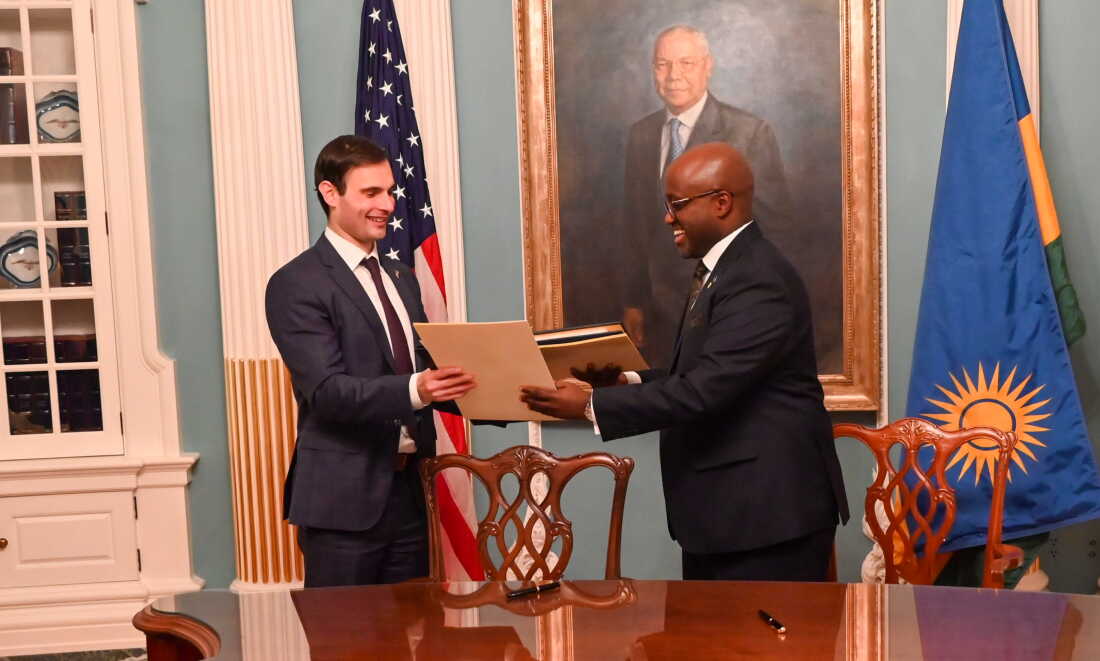
In December, senior State Department official Jeremy Lewin welcomed Rwanda’s Foreign Minister Olivier J.P. Nduhungirehe to sign a multi-year Memorandum of Understanding on global health cooperation. This agreement marks part of the Trump administration’s “America First Global Health Strategy.” Starting October 1, this approach intends to rewrite funding rules for healthcare in low- and middle-income countries.
The New Strategy
The strategy emphasizes that U.S. investments in global health should yield concrete benefits, such as access to minerals and commitment from recipient countries to contribute financially. Countries wishing to receive U.S. funding must sign a Memorandum of Understanding specifying financial commitments.
The goal is to foster self-reliance and reduce dependency on U.S. aid over time.
Jocilyn Estes, a policy analyst at the Center for Global Development, sees merit in this idea but questions the rollout’s pace.
Strategic Objectives
The U.S. remains the largest donor to global health programs, despite reductions in funding and USAID restructuring. Historically, global health spending promoted strong international relationships, aligning with U.S. interests. Tom Bollyky from the Council on Foreign Relations highlights the importance of mutual benefits achieved through improved health in recipient countries.
The State Department describes the new strategy as a way to:
- Prevent infectious disease outbreaks from reaching the U.S.
- Strengthen bilateral ties through multi-year agreements with co-investment requirements.
- Promote American health innovation globally.
This transactional perspective aims to ensure U.S. taxpayer interests are clear, with possible benefits like preferential mineral access or access to patient data.
Participation and Resistance
The U.S. signed MOUs with 35 countries for $14 billion in health investments over five years, including Nigeria, Rwanda, and El Salvador. Countries like Ghana, Namibia, and Zimbabwe have rejected agreements, citing sovereignty concerns. Negotiations with Zambia have stalled over mineral access provisions.
Ghana’s President John Dramani Mahama criticized the proposals as undermining sovereignty, and the U.S. paused health funding to Zimbabwe due to refusal to sign. Pamela Tremont, U.S. Ambassador to Zimbabwe, emphasized a shift towards economic investments.
Expert Opinions
Global health specialists see the policy as practical but rapid. Estes notes the risk associated with fast implementation and the potential impact on people if the strategy fails. Stephen Morrison from the Center for Strategic and International Studies points out reduced U.S. aid and the potential for upset in heavily funded nations, such as HIV-affected regions.
Rwanda serves as an example, facing $157 million in U.S. aid commitments over five years versus over $200 million in 2024 alone. Economic challenges like high inflation complicate spending adjustments. Bollyky remarks that swift rollout leaves countries with little time for financial alignment.
Looking Forward
Despite criticisms, the State Department supports the strategy for fostering local ownership in health systems. “Rather than investing in ‘forever aid,’ the United States is working directly with recipient nations to advance shared global health goals,” stated the department.