
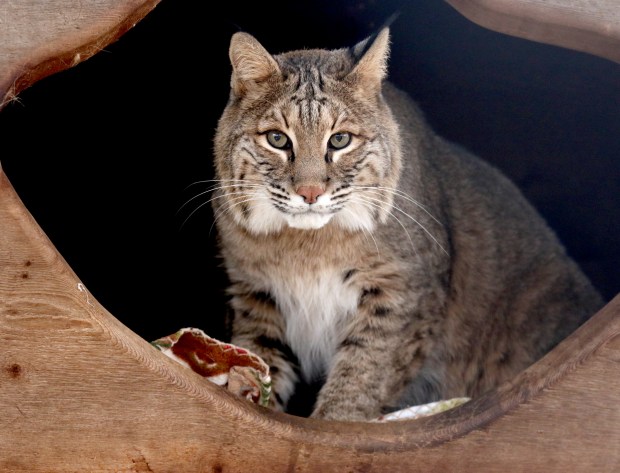
A trail camera in Will County’s forest preserve captured images of two bobcats, revealing that one had a limp. Becky Blankenship, a wildlife ecologist with the Forest Preserve District, noted this same bobcat appeared in footage from 2022. This suggests the animal is recovering and thriving in the wild.
Bobcats, known scientifically as lynx rufus, are native to Illinois. Their population has increased significantly over the past decade. More often, they are caught on film than seen in person. Blankenship reported regular sightings of bobcats in southern Will County. These sightings often rely on trail cameras, although some locals report seeing them occasionally.
Seeing a bobcat firsthand remains a rare experience. Bobcats inhabit areas with wooded bluffs, rolling hills, and bottomland forests. They primarily prey on cottontail rabbits and squirrels.
Guillaume Bastille-Rousseau, associate professor at Southern Illinois University, highlighted that Illinois bobcat numbers have rebounded after previous declines. An adult male bobcat injured by a car in 2005 resides publicly at the Willowbrook Wildlife Center.
The decline in bobcat numbers began in the 1970s, placing them on the threatened list. Legal hunting stopped in 1977 due to the shrinking population. Bobcats mostly existed in southern Illinois with abundant forests. Their resurgence began around 2001, and by 1999, they were removed from the threatened species list.
In 2016, Illinois reintroduced bobcat hunting season, ending a 44-year pause. The upcoming hunting and trapping season runs from Nov. 10 to Feb. 15. Hunters require a valid permit, allowing one bobcat harvest per season. Approximately 2,000 permits are issued per season.
Hunting and trapping are banned in Will County’s forest preserves. Permitted areas are limited to southern and western Illinois. Blankenship emphasized the need for hunters to understand ethical hunting practices. They must complete education courses on responsible harvesting based on scientific data.
Bastille-Rousseau assured that bobcats are not dangerous to humans. Despite their larger size compared to domestic cats, bobcats are shy and avoid people. Weighing between 15 to 30 pounds, they resemble medium-sized dogs.
Bobcats are active at dawn and dusk, though they can be spotted during the day. If you encounter a bobcat, observe it from a distance without interaction. Enjoy these moments while respecting their natural behavior.