
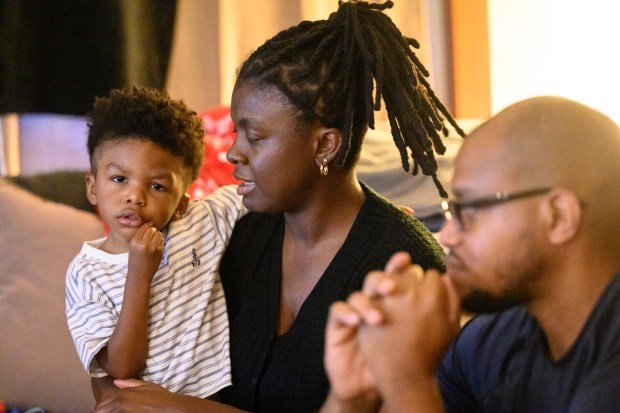
In the warmth of their Hammond living room, three-year-old Eliazer Glover fell while jumping around, injuring his elbow. His mother, Kal Glover, soothed the pain with a kiss, quickly relieving his discomfort. As Kal spoke with her husband, Samuel, she reassured Eliazer, urging him to calm down despite his initial happiness.
The minor elbow injury was easily remedied, yet Eliazer’s sickle cell disease diagnosis presents ongoing challenges. His parents are determined that the condition won’t define him or limit his interactions with other children. ‘I don’t want the stigma to be, ‘Oh, you have sickle cell, you can’t do this with the other kids,’’ Kal emphasized, expressing concern over preconceived notions about his capabilities.
The Glovers learned of Eliazer’s condition during his first pediatrician appointment shortly after birth. Although aware of the potential risk, they anticipated he might inherit the sickle cell trait rather than the disease itself. Eliazer has Hemoglobin SC, considered a milder form of sickle cell disease. Kal explained that the disease stems from genetic traits both she and Samuel carry, which they were previously unaware of.
Samuel recalled his cousin’s daughter having sickle cell disease, providing him some familiarity with treatments and hospital visits she endured. Despite his awareness, Samuel was shocked and in disbelief at Eliazer’s positive test results, questioning the accuracy of the diagnosis initially.
Pediatric hematologist Dr. Laura Tyrrell noted sickle cell disease’s prevalence among individuals with ancestry from regions where malaria was or remains common. These areas include Africa, Latin America, South Asia, the Middle East, and the Mediterranean. Tyrrell explained the trait’s protective nature against malaria, contributing to higher frequencies among these populations. In the U.S., the disease is notably prevalent among African Americans, with around 8%, or one in 13, carrying the trait.
Patients with sickle cell disease experience painful episodes due to obstructed blood flow, prompting frequent emergency room visits, according to Tyrrell. They must also seek medical care if their body temperature exceeds 101 degrees, signaling possible infections. Extreme weather conditions pose further risks, necessitating careful temperature monitoring.
The Glovers remain vigilant in regulating Eliazer’s body temperature, particularly at night when he tends to run hot. Kal mentioned their focus on ensuring he stays cool during sleep. Although managing his temperature isn’t particularly challenging, extreme hot weather limits outdoor activities. Eliazer’s treatment includes additional vaccines and penicillin doses twice daily until age five.
The child’s understanding of his condition remains limited, yet he takes his medication without issue, sometimes reminding his parents when it’s time. Kal admitted it’s unusual, as Eliazer seems to enjoy his medicine.
Data from Indiana reported 1,049 babies born with sickle cell trait and 31 with sickle cell disease statewide annually, with Lake County exhibiting higher occurrences. However, the Glovers initially struggled to find local resources, traveling to Indianapolis for tests and checkups due to a lack of nearby clinics.
While research on sickle cell disease exists, Tyrrell indicated it’s lagging compared to other medical fields due to complex funding issues. The Glovers believe this disparity in resources may be related to the disease’s predominant impact on Black Americans.
Despite initial travel challenges, the family now relies on a clinic in Gary, which provides essential support and community connections. The facility minimizes their need for frequent long trips, offering families various resources and events.
Sickle cell remains a significant aspect of the Glovers’ lives, yet they maintain it doesn’t overshadow their son’s identity. Both parents express relief that it hasn’t restricted his development, describing Eliazer as healthy and happy. ‘He’s special, Kal remarked. ‘You would think he was a normal child until we tell you that he has sickle cell disease,’ Samuel echoed.