
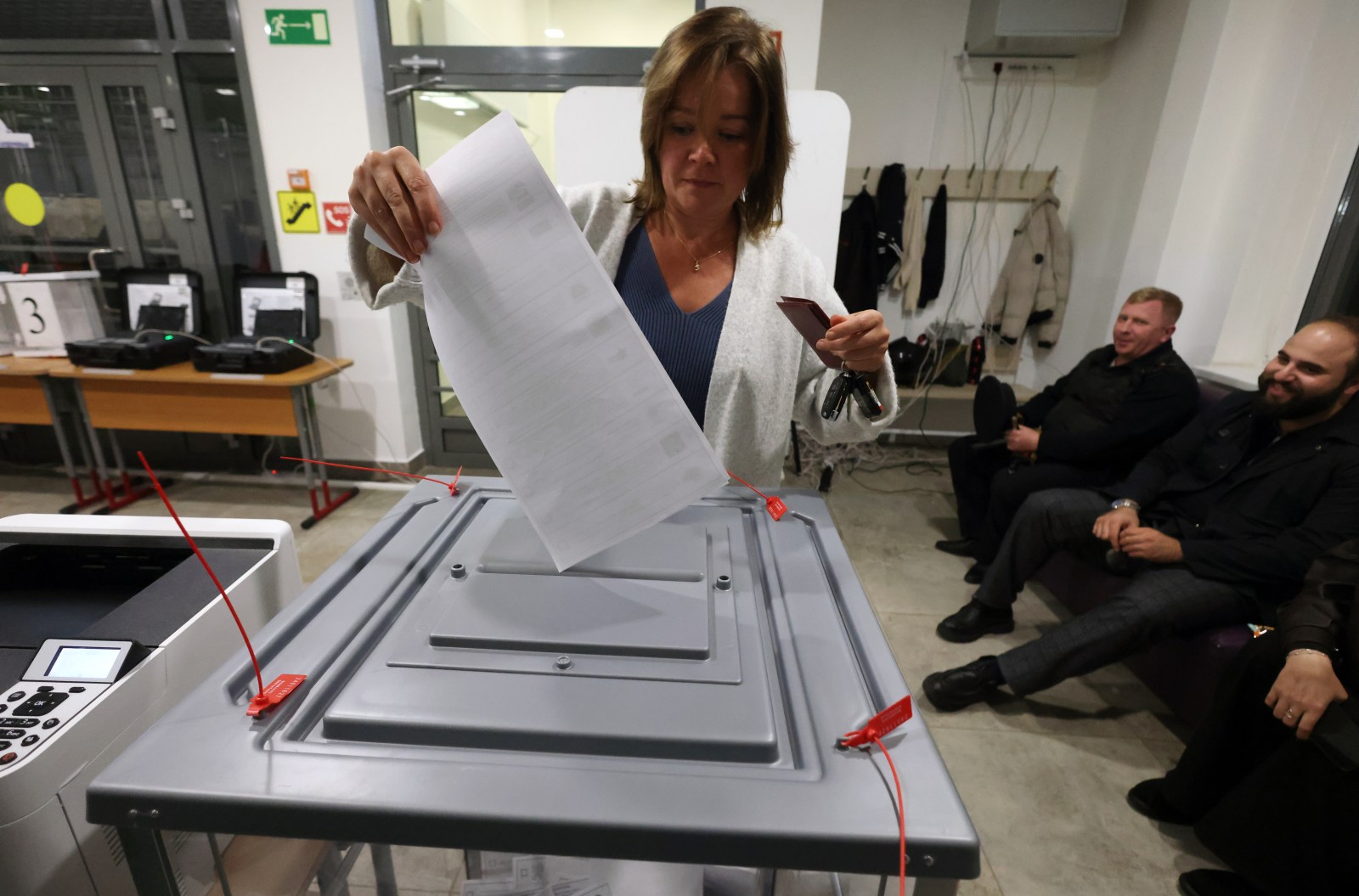
The United Russia party has secured a record number of parliamentary seats. This development follows a controlled election, reflecting a potential mandate for President Vladimir Putin to continue his approach in Ukraine. An economist shared insights with Newsweek, suggesting this election outcome may hint at a military draft in future plans.
The Central Election Commission (CEC) of Russia reported on Monday that United Russia, associated with Putin, will occupy 355 seats in the 450-seat State Duma. This surpasses their past record of 343 seats set in 2016. The party achieved nearly 58 percent of the party-list vote, dominating single-member districts, despite allegations of ballot stuffing and voting machine issues. The election occurred amidst economic challenges, including stubborn inflation, new U.S. sanctions, and a wartime economy.
Sergei Guriev, former rector at Moscow’s New Economic School and current dean of London Business School, noted to Newsweek that Putin might use the election results to demonstrate that Russians can endure economic hardships as efforts in Ukraine continue. Guriev stated, “Putin already said that the war is not free; it is costly.”
Speculation on Military Mobilization
Kyiv warned of potential mobilization with the draft of hundreds of thousands of troops to replenish Moscow’s losses in Ukraine. Despite the Kremlin’s denial of an imminent draft, recent steps might ease troop mobilization, reports suggest.
Reports indicate Russian officials moving assets abroad, urging acquaintances to leave Russia to escape possible military obligations. Guriev pointed out the conflict between political and economic costs in decision-making related to potential mobilization.
Election as a Referendum on War Strategy
The anti-war party Yabloko was excluded from participation by Russia’s Supreme Court, raising concerns about election fairness. United Russia improved its voter percentage compared to 2021, with the highest official turnout since 2003. Yabloko’s removal raises allegations of controlled election conditions.
Five years into the conflict, the Kremlin reportedly seeks a highly controllable parliament to handle unforeseen events. The Duma will include four other parties: the Communist Party, the Liberal Democratic Party, New People, and A Just Russia.
Russian Foreign Minister Sergey Lavrov expressed that the election results would reinforce support for Putin’s foreign policy strategies. Dmitry Medvedev and other officials affirm the party’s continuous alignment with Putin’s foreign objectives.
Economic Pressures Linked to War
The war’s economic toll is seen as a growing political burden for Putin. Russian financial experts like German Gref and Andrei Klepach have faced backlash for warnings and projections related to economic stagnation. Questions around resource allocation during the ongoing conflict are reportedly pressing inside Russia.
Ukrainian drone strikes and fuel shortages illustrate how the war’s repercussions are increasingly felt domestically. The shifting sentiment could affect public and elite support, urging a reevaluation of war strategies by the Kremlin and its allies.
Contacted by Newsweek editors, Matthew Robinson and Shakeema Edwards contributed to the analytical exploration of this significant political development.