
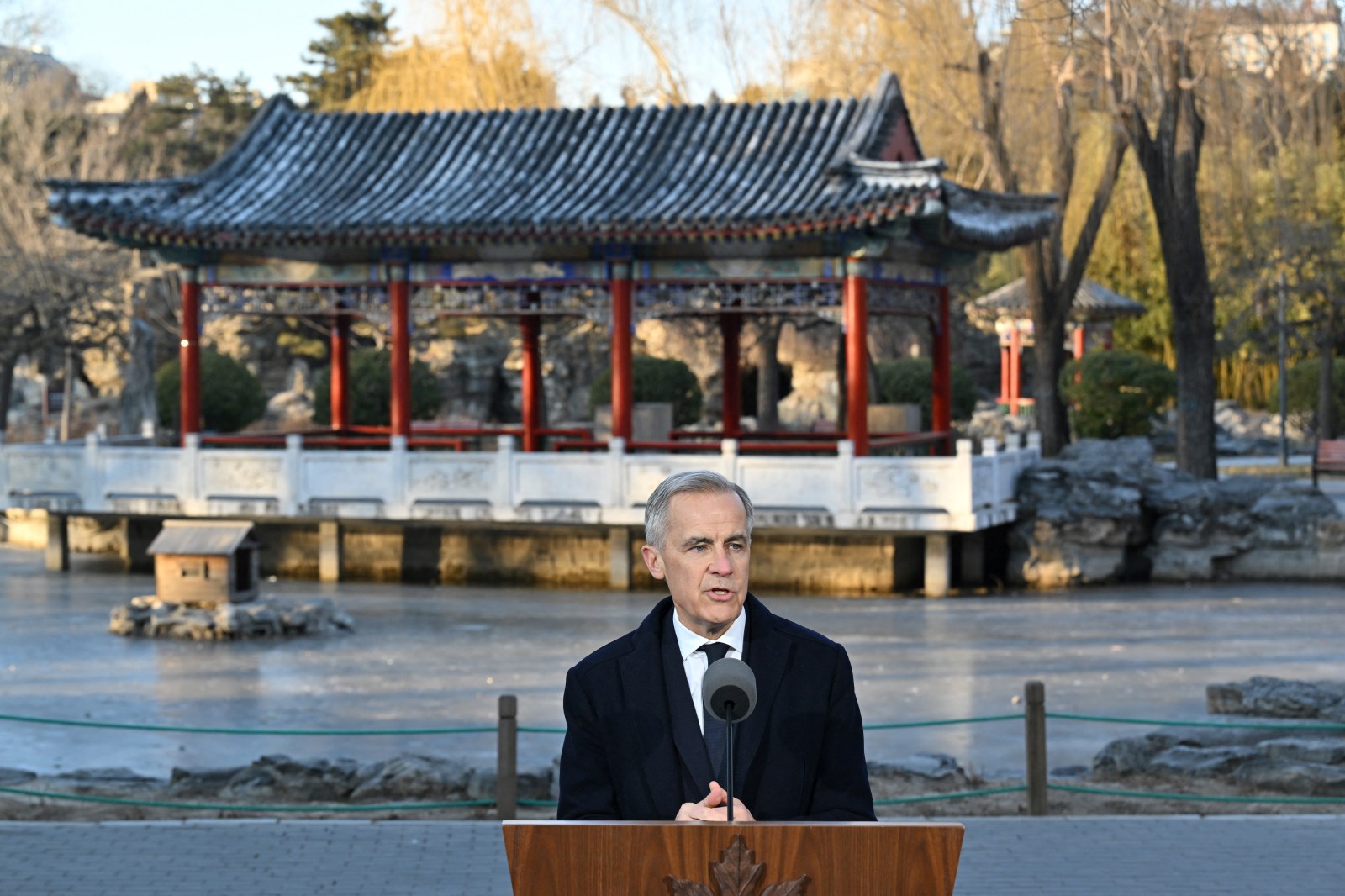
The Canadian government’s decision to significantly cut tariffs on Chinese electric vehicles has sparked new questions. A dossier obtained by Newsweek alleges that a businessman with ties to China’s United Front system submitted a policy proposal to reconsider the levy. This happened just days before Prime Minister Mark Carney reached an agreement with Beijing.
In January, Canada decided to allow 49,000 Chinese-made electric vehicles into the country at a reduced tariff rate of 6.1 percent. This replaced the 100 percent surtax imposed in 2024 under former Prime Minister Justin Trudeau. Announced during Carney’s visit to China in mid-January, this tariff reduction was part of a broader trade agreement that also saw China offer tariff relief on Canadian agricultural exports such as canola oil.
This decision diverged sharply from the United States, which still restricts Chinese electric vehicles. It also intensified national security concerns in North America regarding Chinese automotive technology. A Canadian source, who provided the dossier, indicated that a policy paper seeking a rethink of Canada’s 100% surtax on Chinese electric vehicles was delivered to the Prime Minister’s Office before Carney’s trip to Beijing. The individuals behind the proposal were not registered as lobbyists in Canada’s lobby registry.
Newsweek reached out to the Prime Minister’s Office for confirmation and comment. The Privy Council Office responded and redirected inquiries to Global Affairs Canada. Newsweek has since contacted Global Affairs Canada for a statement.
The dossier names the businessman as Shui Shousong, president of the Sino-Canada Entrepreneurs Association, also called SinoCann. Reports in Chinese media detail Shui’s past membership in the Chinese People’s Political Consultative Conference, a key United Front organization in China.
Attempts by Newsweek to secure comments from both Shui and SinoCann were unsuccessful. The Chinese Communist Party’s United Front Work Department aims to build influence among non-CCP groups and overseas communities. Western governments have increasingly monitored United Front-linked organizations due to concerns about advancing Beijing’s political and economic objectives abroad.
The anonymous Canadian source mentioned Shui’s extensive involvement with the United Front and his appearances at events with Canadian politicians. At one event, a Chinese consular official praised the host organization for its role in advancing ‘reunification’ work, a key political goal related to Taiwan.
In August, Shui organized the launch of a Canada-China EV association and unveiled a service center to foster industrial cooperation between the two countries. The event saw participation from Canadian Parliament members and officials from the Chinese consulate in Toronto.
Newsweek sought comments from the Chinese consulate in Toronto and the embassy in Ottawa but did not receive immediate responses. The source noted a lack of media scrutiny regarding who influenced the Prime Minister’s Office. They described this as a potential influence channel rather than proof of a covert operation.
Issues surrounding Chinese electric vehicles are growing in North American trade and security discussions. The U.S. has barred Chinese EVs, citing concerns over manufacturing strength and potential security vulnerabilities. China’s rapid expansion in the EV sector has raised alarms in Western capitals about supply chains and data security.
In September, U.S. Transportation Secretary Sean P. Duffy expressed concern over Ford Motor Company’s ties to Chinese companies. He highlighted Ford’s use of licensed battery technology from China’s CATL and other partnerships. Ford dismissed the criticism, asserting its commitment to American innovation and manufacturing.