
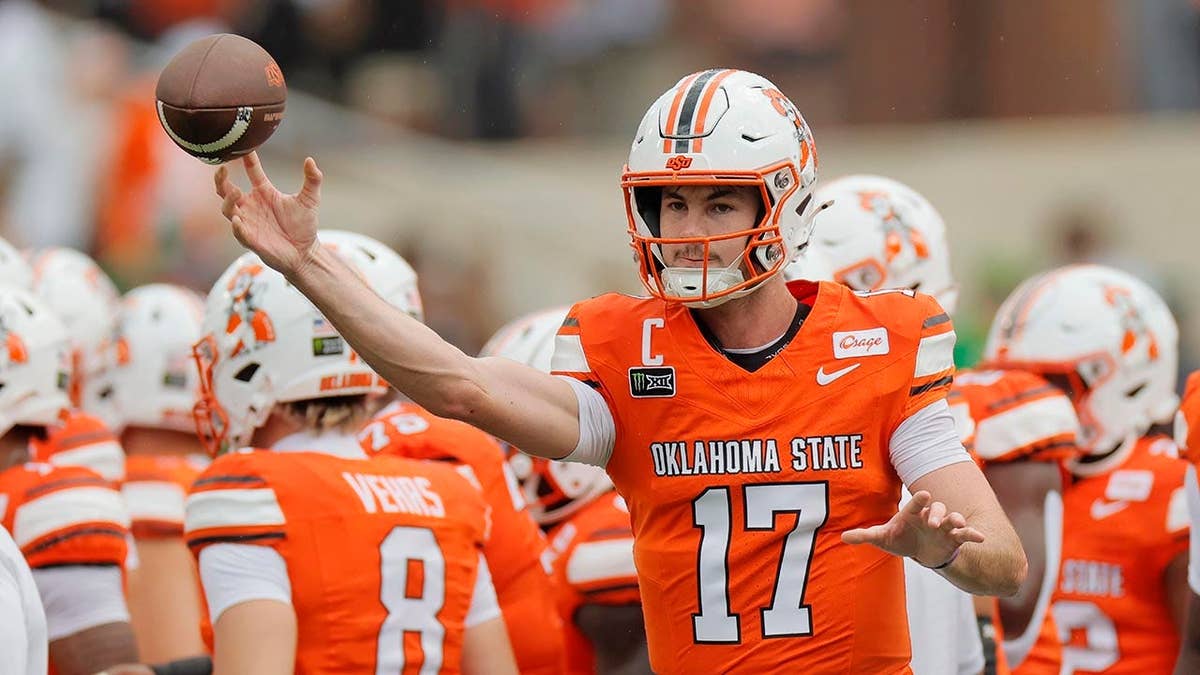
Week 2 of the college football season brought unexpected surprises and intense competition. The standout moment came from Oklahoma State, which secured an unexpected victory against the Oregon Ducks. Prior to the season, experts anticipated Oregon’s strong performance, given their history as a playoff team in 2025.
Their roster was strengthened by a successful recruiting class, including four five-star high school athletes. Additionally, quarterback Dante Moore opted to continue playing for the Ducks, adding to their potential. Head Coach Dan Lanning underwent a change in coordinators but anticipated a smooth transition with internal promotions.
Despite these promising elements, Oregon’s performance fell short in their first games. They had difficulty defeating Boise State in their opening match, narrowly winning 34-27. However, in Week 2, Oklahoma State thoroughly outplayed them.
Oklahoma State demonstrated dominance by executing 83 plays for a total of 554 yards, averaging 6.7 yards per play. Their rushing game was strong, with an average of nearly six yards per carry and a total of 237 rushing yards. In contrast, Oregon struggled offensively, managing only 281 total yards and averaging 4.8 yards per play.
Unlike typical football upsets, where luck plays a role, Oklahoma State earned their victory through superior performance. Despite having lost 12 consecutive games, including a loss to Tulsa in Week 1, they outperformed Oregon, raising questions about the root cause of the Ducks’ struggles.
Oklahoma State linebacker Tate Romney mentioned postgame that their team identified specific tendencies in Oregon’s offensive line, allowing their defense to predict upcoming plays. This strategic awareness provided Oklahoma State with a significant advantage.
Reports suggested that Oregon’s quarterback, Dante Moore, displayed variations in his pre-snap setup, indicating whether the upcoming play was a run or a pass. Such “telegraphing” in sports entails inadvertently giving away one’s next move, similar to a pitcher unintentionally signaling pitches in baseball.
It remains uncertain if Oklahoma State capitalized fully on Moore’s indicators or if it was primarily the offensive and defensive line movements that informed their strategy. Still, it’s a possibility that Oregon’s difficulties stem from inadvertently aiding the opposition through predictable behavior.
Oregon’s upcoming game against Portland State is unlikely to present a significant challenge due to the disparity in team abilities. However, a subsequent game against the USC Trojans ranks as a crucial test. The Ducks’ coaching staff will need to address their predictability issues as they prepare for future opponents.
Ian Miller reported these insights at OutKick.