
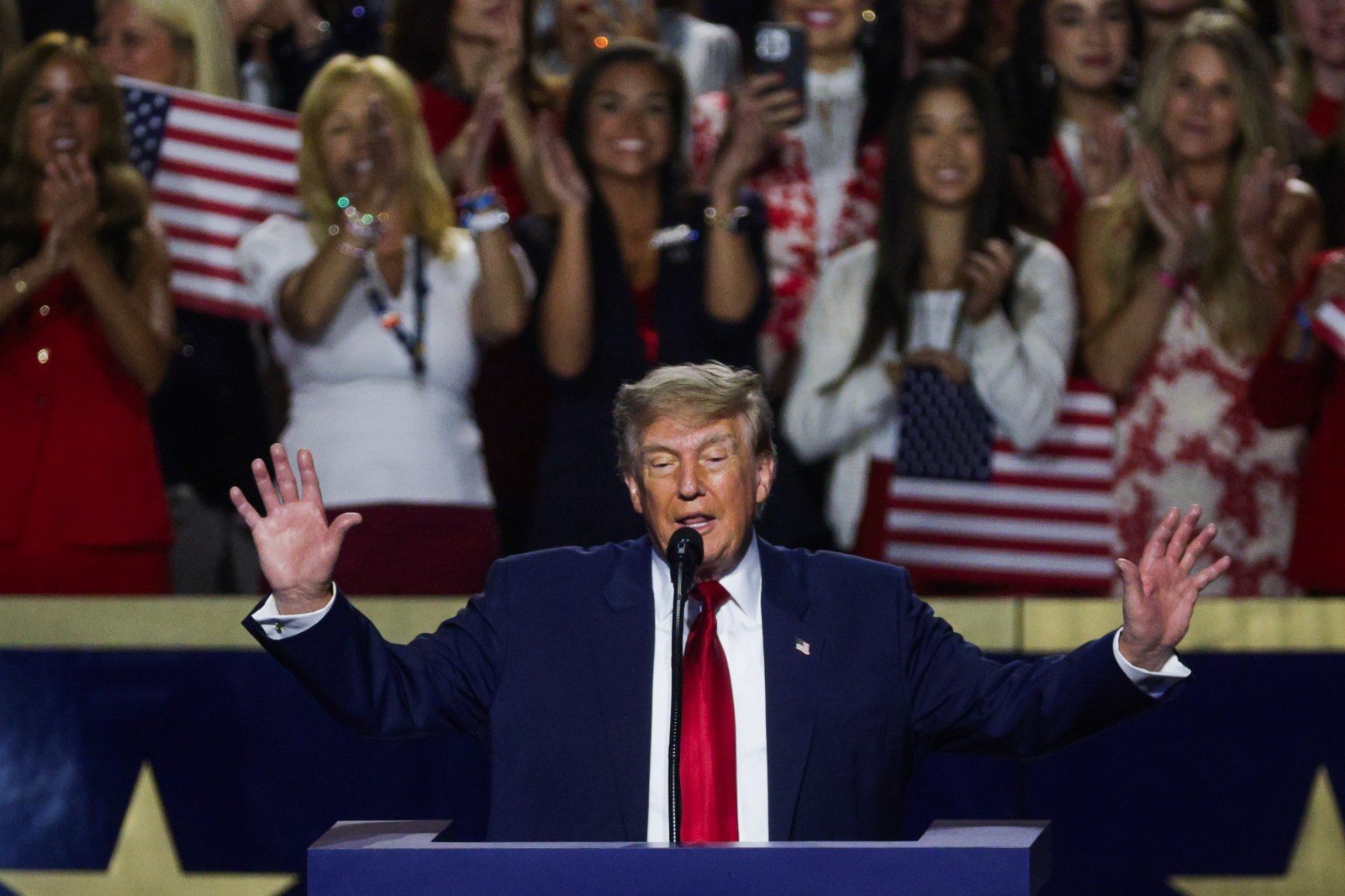
House Speaker Mike Johnson, a Louisiana Republican, recently did not assure that Americans would receive the $5,000 payments proposed by President Donald Trump. This proposal, if the GOP keeps its congressional majority in the midterm elections, has raised doubts about its feasibility.
Trump’s Announcement and Johnson’s Response
At the first Republican National Committee midterm convention in Dallas, Trump declared a $5,000 payment for each adult citizen if Republicans maintain control of Congress. He compared it to a company’s cash distribution to shareholders.
During NBC News’ Meet the Press, Johnson was asked about the certainty of these payments. He chose not to promise, stating, “I commit that Congress will work through it and find consensus on that like they have to do everything else.” Johnson’s response highlights the necessity of congressional approval for such nationwide payment programs.
Expert Opinions on the Proposal’s Viability
Constitutional experts assert Trump cannot direct the U.S. Treasury to send over $1 trillion without Congress’s authorization. Marc Goldwein from the Committee for a Responsible Federal Budget emphasized that such dividends generally stem from a surplus, while the U.S. runs $2 trillion deficits and has $40 trillion debt.
Appearing later on the same program, former Transportation Secretary Pete Buttigieg remarked that Johnson’s hesitation implies the proposal may not materialize. Buttigieg noted, “Even he can’t endorse what President Trump has been saying like this idea that everybody’s going to get $5,000.”
Details and Criticism of the Plan
Trump suggested vague eligibility for the dividend, stating every adult citizen would qualify. Senator Bernie Moreno mentioned bill preparations for a swift passage if Republicans win. The requirement for spending within the U.S. adds complexity to monitoring.
Critics question funding sources and potential costs. Vice President JD Vance and Commerce Secretary Howard Lutnick offered different funding methods—tariff revenue and a Trump Platinum Card program. However, many, including Senate Minority Leader Chuck Schumer, view it as a vote-buying tactic.
Representative Thomas Massie and Marjorie Taylor Greene expressed conservative skepticism, citing inflation concerns and ideological inconsistency. Former Republican Justin Amash labeled it as “economically illiterate” while Representative Ralph Norman demanded clear financing details.
Context and Background
This proposal is not the first of its kind from Trump, who previously supported a “DOGE Dividend” and tariff-funded payments without achieving implementation.
Current Political Climate and Prospects
Current polling gives Democrats a slight lead in national surveys. They need few seat changes to regain the House. Midterm trends often favor the non-presidential party.
Republicans remain competitive, focusing on key issues like economy and immigration. Senate races are tight, with Democrats slightly leading in several key contests. Analysts predict outcomes to hinge on battleground states.