
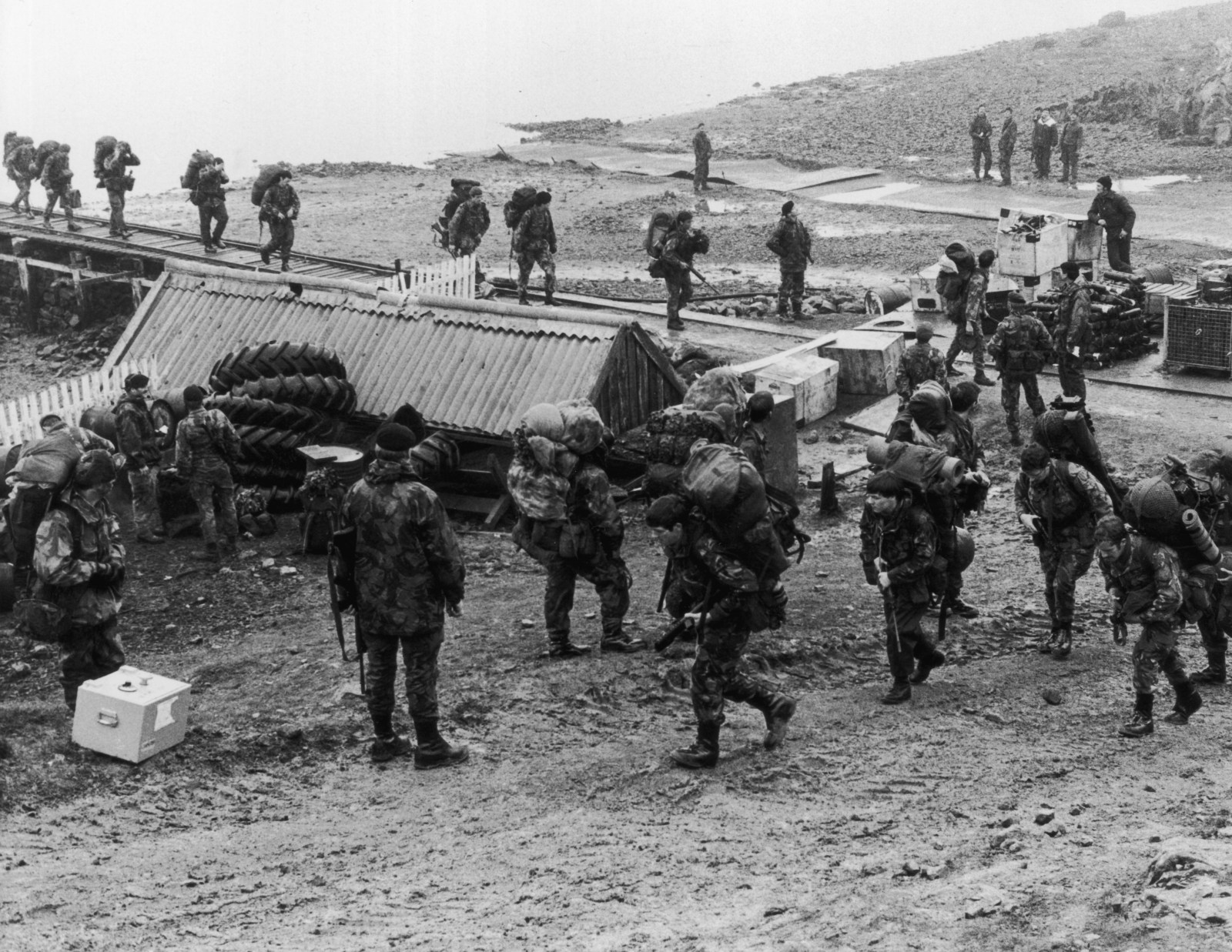
In 1774, Britain departed the Falkland Islands, leaving behind a plaque asserting British claims despite the absence of British citizens. Similarly, Spain left its own marker a few decades later. The islands, situated in the South Atlantic, remained uninhabited, with only the wind and these European claims occupying them. Every person who has lived there arrived by boat, making the colonization relatively mild compared to other instances of European imperialism.
Currently, the islands hold significant importance in international politics, particularly for those aiming to penalize Britain. On a recent Monday, Argentina announced plans for a criminal complaint against companies drilling for oil near the islands, including three divisions of the Israeli firm Navitas Petroleum. Shortly thereafter, Israel’s national security minister called for recognition of Argentine sovereignty over the Falklands, aiming to counteract Britain’s stance on West Bank settlements.
As tensions rose, Britain moved to ban trade in goods from Israeli settlements in the West Bank. Israeli minister Itamar Ben-Gvir, who considers the Falklands “Argentine territory under occupation,” proposed retaliation against London, which would benefit Argentina in its legal battle against Israeli oil ventures.
The U.S. joined the fray, with its ambassador to Israel warning of an American response affecting British businesses. GOP Representative Randy Fine suggested Florida stop doing business with British firms over these Israeli sanctions. The scenario becomes part of a larger geopolitical chess game, with many parties aiming to use the Falklands as leverage.
Meanwhile, President Donald Trump expressed doubts about America’s current stance on the Falklands. A leaked Pentagon email implied a reassessment of U.S. support for European “imperial possessions” like the Falklands, driven by NATO allies’ reluctance to support U.S. actions in Iran. This situation creates new uncertainties about the U.S. position.
While neither the U.S. nor Israel has officially recognized Argentina’s claim to the Falklands, the dynamics are evolving. Statements from Israeli leaders and social media posts, like those from Yair Netanyahu, criticize British positions on international issues, linking them back to the Falklands dispute.
Examining Political and Legal Complexities
This conflict unfolds against the backdrop of a potentially lucrative resource: oil. The Sea Lion oil field, expected to produce 1.7 billion barrels, presents a vital interest. Its development is scheduled for 2028. Argentina, aiming to impose costs on Britain, issued a decree tightening enforcement of its offshore hydrocarbons law. This impacts investors and service providers, with proceedings against 45 entities already in motion. Major firms like SLB, Halliburton, and Baker Hughes declared non-involvement in Sea Lion, reflecting strategic business decisions.
The argument linking Falklands ownership to colonialism holds weight. British claims arise from historical acquisitions far from their shores. The U.N. addressed this in a 1965 resolution, identifying the islands as a colonial issue. Despite an Argentine cause propelled by leftist rhetoric, the irony lies in Argentina’s claim rooted in Spanish colonial continuity. The absence of indigenous displacement complicates the usual colonial narrative.
Historically, Britain’s claim predates Argentina’s existence. Yet, debates over sovereignty continue, with comparisons drawn to cases like the Chagos Islands in Mauritius. The Chagos ruling, however, differs as it dealt with detachment from a British colony on the eve of independence, whereas Argentina seceded from Spain.
Argentina avoids the principle of self-determination in U.N. discussions, as it risks validating the islanders’ overwhelming preference to remain British, shown in a 2013 referendum.
Decolonization and Hypocrisy
The debate extends further into a broader critique of Argentine historical actions. From the late 19th century, campaigns like Julio Argentino Roca’s Conquest of the Desert significantly impacted indigenous populations, yet these actions remain largely unaddressed by modern claims. Argentina’s policies, such as ending suspension on evictions affecting indigenous communities, highlight inconsistencies in their calls for decolonization.
Ultimately, the Falklands dispute blends geopolitics, legal arguments, and historical narratives into a complex tapestry. The dialogue often reflects broader issues of colonialism and national sovereignty, revealing the strategic use of rhetoric across international relations.