
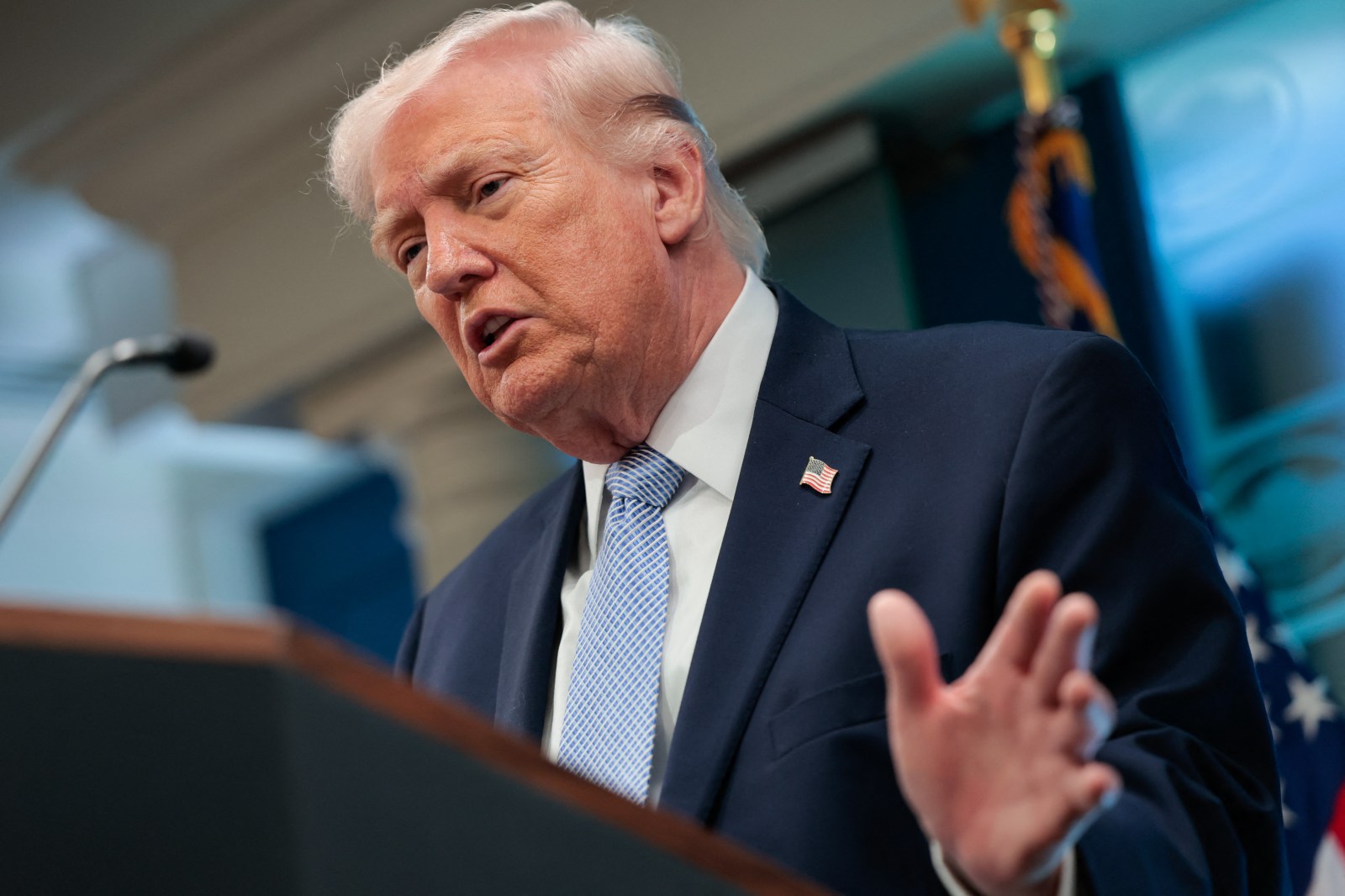
President Donald Trump’s strategy regarding the Iran conflict has seen declining support among Republican voters, a recent NBC News Decision Desk poll reveals. Despite maintaining overall high approval from Republicans, the fervor supporting Trump’s actions in Iran has lessened as the midterm elections draw near.
Shift in Republican Enthusiasm
The survey shows that while 31% of Americans approve of Trump’s handling of the Iran war, a significant majority of 69% disapprove. These figures remain consistent from spring polls. However, among Republicans, there has been a noticeable decline in strong approval. The percentage of Republicans who strongly approve of Trump’s handling of the conflict dropped 18 points since the spring, now at 30%. In addition, among MAGA-supporting Republicans, strong approval decreased by 21 points.
Similarly, approval of Trump’s overall performance as president has declined. The percentage of Republicans who strongly approve fell from 52% in the spring to 41% in the recent survey. This marks the first time that figure has slipped below 50% in NBC News polling.
Despite this downturn in enthusiastic support, Trump retains solid backing from the GOP, with 80% of Republicans approving of his presidency.
Ongoing Tensions with Iran
The continued conflict in Iran poses challenges for Trump’s popularity. An Associated Press-NORC poll from June indicated just 34% of Americans approve of his Iran strategy, while 65% disapprove. A Quinnipiac University survey in July showed similar results; only 34% supported U.S. military action against Iran, and 66% felt the conflict was not worth pursuing further.
Economic concerns intersect with this issue, as Republicans express frustration over increasing gas prices and the broader economic impact due to instability in the Gulf region. Rising energy costs present a potential hurdle for GOP candidates in tight races. Despite criticisms, Trump has defended his approach, arguing that military actions and sanctions have weakened Iran, boosting American security. The White House insists national security decisions are not swayed by polling.
Renewed Escalations Heighten Tensions
Recent developments have seen tensions between the U.S. and Iran rise again. On a Saturday, the U.S. Central Command reported strikes on three Iranian oil tankers following alleged missile launches from Iran’s Islamic Revolutionary Guard Corps at U.S. Navy ships. These tankers were reportedly part of a network supporting the IRGC financially. This action follows renewed clashes after the breakdown of a ceasefire previously linked to a June agreement aimed at defusing tensions, particularly in the strategically crucial Strait of Hormuz.
The Strait of Hormuz remains critical, facilitating a significant portion of the world’s oil trade, making any disruptions a global concern for energy markets and American consumers alike.
In a recent interview on NBC’s Meet the Press, Senator John Kennedy acknowledged the ongoing nature of the conflict, predicting the war will extend beyond the November midterms. He highlighted that voters show dissatisfaction with the ongoing conflict, a concern for Republicans as elections approach. Although Trump’s backing within the GOP is strong, enthusiasm for one of his key foreign policy issues appears to be wavering.