
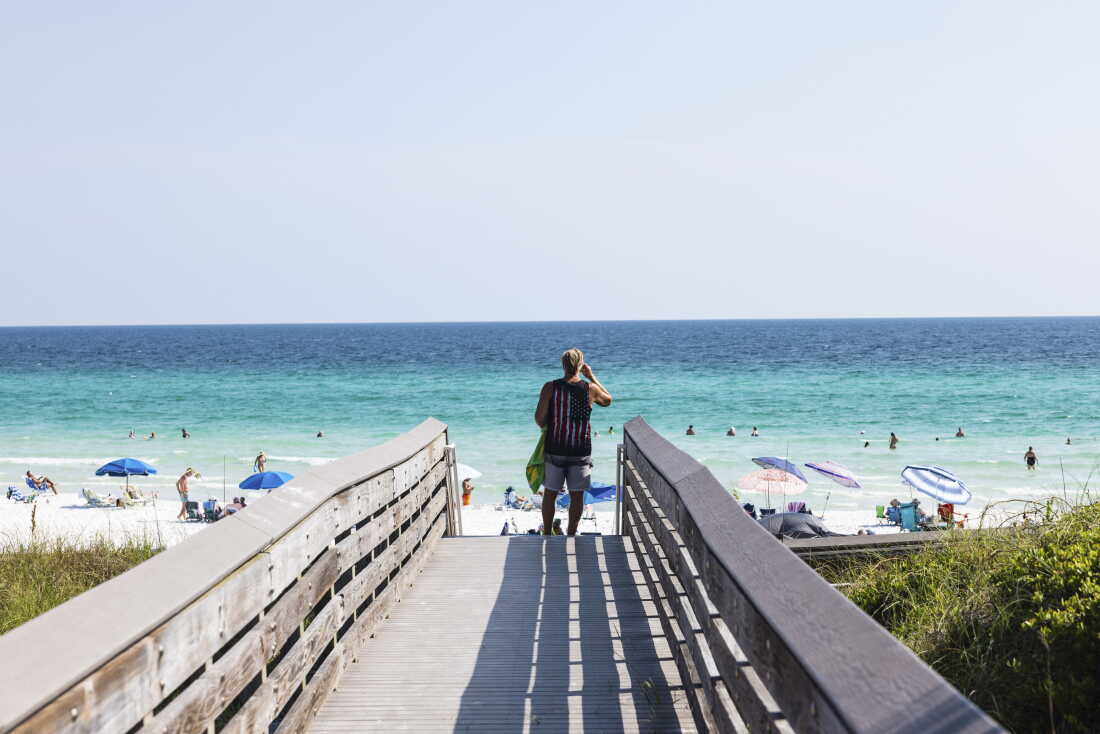
Santa Rosa Beach, Florida — Walton County, with its 26 miles of shoreline, is recognized for its alluring beach towns: Seaside, WaterColor, and Alys Beach along Scenic Highway 30A. The area is famed for its clear emerald waters and soft white sand. However, this picturesque stretch of the Gulf Coast has become a battleground over property rights and public beach access.
A decade-long conflict over this issue is marked by county efforts to keep beaches open to everyone, fluctuating state laws, and numerous landowner lawsuits. This has resulted in a confusing situation for beachgoers trying to access the shoreline. As this issue extends to other coastal areas in Florida, the locals are considering a constitutional amendment to clarify these rights.
Dave Rauschkolb, an advocate for public beaches, believes beaches should be shared as they historically have been. Rauschkolb, who founded Florida Beaches for All, argues that the public should have the freedom to access and enjoy all beaches openly. He points out the contrast between public beaches wedged between luxurious Gulf-front homes and heavily guarded private beaches.
“Our beaches should be public, shared as they have for eons,” Rauschkolb states.
However, homeowners like Eric Wilhelm, a resident in the area, argue this impinges on their private property rights. Wilhelm feels that these rights are fundamental to the country’s freedom, and erosion of them leads to societal disorder.
The area has faced significant growth, increasing demands for public beach space. Homeowners like Wilhelm have faced trespassing issues on their private property. Despite his surveillance efforts, Wilhelm reports unexpected gatherings on his property.
Eric Wilhelm, along with other property owners, successfully challenged Walton County on its customary-use ordinance. This law intended to declare all historically used beaches open for public recreation didn’t sit well with Wilhelm and others who valued their property rights.
The Florida Legislature’s 2018 law, requiring counties to legally prove customary use, resulted in Walton County settling disputes with property owners. This legal back-and-forth has left those trying to access the beach confused.
Walton County Sheriff Michael Adkinson Jr. notes that his department struggles with the ambiguity around property rights. Although there is no clear legal guideline concerning beach access, deputies strive to mediate disputes without forcing arrests.
“In a decade, I don’t think we’ve made an arrest for trespassing on the beach,” Adkinson comments.
High-profile cases, like that of Brian Littrell of the Backstreet Boys, illustrate this ongoing conflict. Littrell’s lawsuit against unauthorized access to his beachfront property shows the personal stakes involved.
Beach activist Sara Day emphasizes the importance of understanding access rights, especially given the growing number of conflicts. Day designed the Shoreline Defender app to assist beachgoers in identifying public sections of sand.
Community conversations are steering toward a Florida constitutional amendment to secure public beach access. Advocates reference similar measures in states like Oregon, Texas, and Hawaii. Rauschkolb asserts that such legislation is vital for Florida, given its vast coastline and beach culture.