
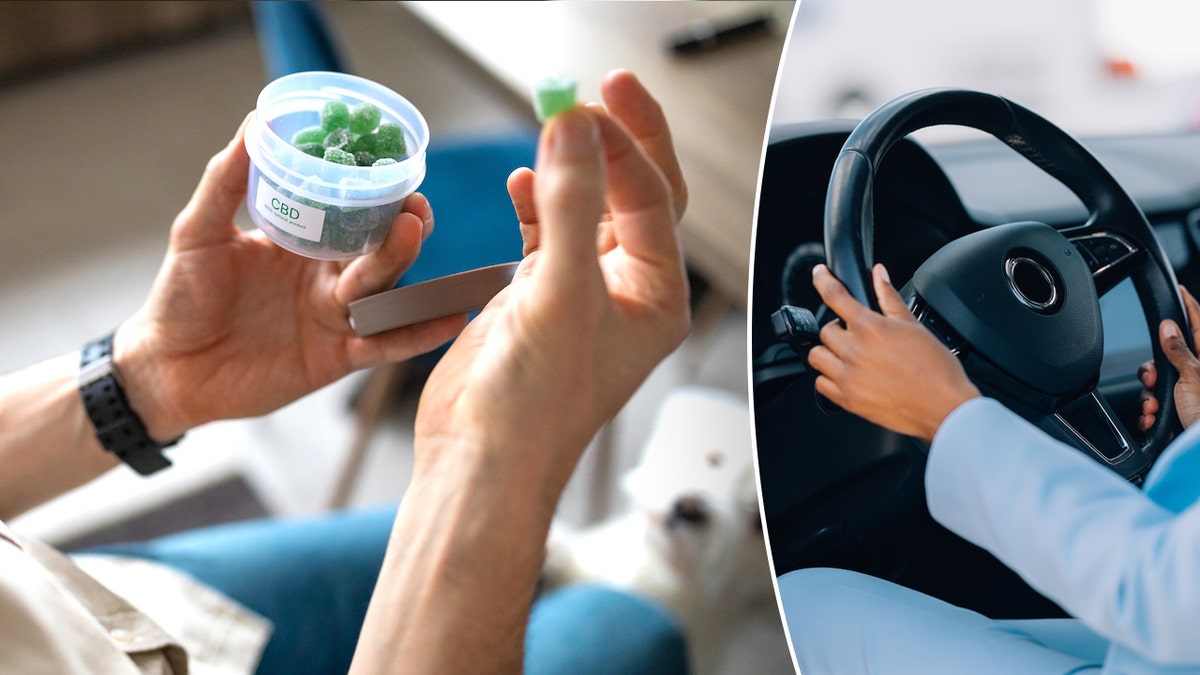
A recent study published in JAMA Network Open highlights a critical issue in impaired-driving enforcement concerning cannabis edibles. The research warns that consuming these edibles can significantly affect road performance and reaction times, despite THC levels in the bloodstream being below legal limits.
Traditionally, most cannabis-driving studies have focused on smoked or inhaled marijuana, which rapidly increases THC (tetrahydrocannabinol) levels in the blood. Conversely, edibles absorb more slowly and can impair driving, even when blood THC levels are relatively low.
Driving after consuming cannabis edibles can impair lane control and reaction times, according to recent findings.
Researchers observed drivers’ performance in terms of lane control, speed consistency, and reaction times after their consumption of edible THC. Notably, these drivers had blood test readings below standard legal thresholds used to gauge impairment during roadside stops.
The study involved 40 adult volunteers from the Centre for Addiction and Mental Health in Toronto, each participating in four sessions consuming gummies containing either 0, 2, 10, or 20 milligrams of THC. Using driving simulators, participants were tested at intervals of two, five, and 24 hours post-consumption.
The findings revealed impairment at two and five hours after ingestion of 10- and 20-milligram gummies. Compared with placebo, these doses resulted in greater lane position variability. Particularly, the 20-milligram dose led to slower reaction times and inconsistent speed control.
Participants also acknowledged their limitations, expressing a reduced willingness to drive and less confidence in their driving abilities after consuming the gummies.
BLOOD TEST RESULTS
After consuming the 10-milligram dose, average blood THC concentrations reached 1.6 nanograms per milliliter, while the 20-milligram dose showed 3.4 nanograms per milliliter. Both levels were below the 5-ng/mL threshold commonly used to indicate impairment, even though individual samples sometimes surpassed this limit.
Notably, a previous study simulating smoked cannabis exhibited similar impairments with blood THC concentrations averaging 30.3 nanograms per milliliter, nearly ten times higher than those encountered with the 20-milligram edibles.
STUDY LIMITATIONS
The study acknowledges some limitations, including reliance on virtual simulators instead of real driving conditions. This approach eliminated physical risk for participants. Additionally, the study focused solely on regular cannabis users, leaving responses from occasional users unexamined.
MINIMAL RESIDUAL EFFECTS
Few residual effects were noted after 24 hours. Participants who consumed 10- and 20-milligram doses showed slight increases in maximum speed, but subjective feelings of intoxication faded entirely.
COMMENTARY INSIGHT
Dr. José Ignacio Nazif-Munoz of the Université de Sherbrooke provided commentary, stating biological differences due to slow edible digestion pose challenges for law enforcement in identifying impaired drivers.
This study’s insights emphasize the need for improved roadside tools to detect impairment, considering the distinct absorption characteristics of edible cannabis compared to smoked or inhaled forms.