
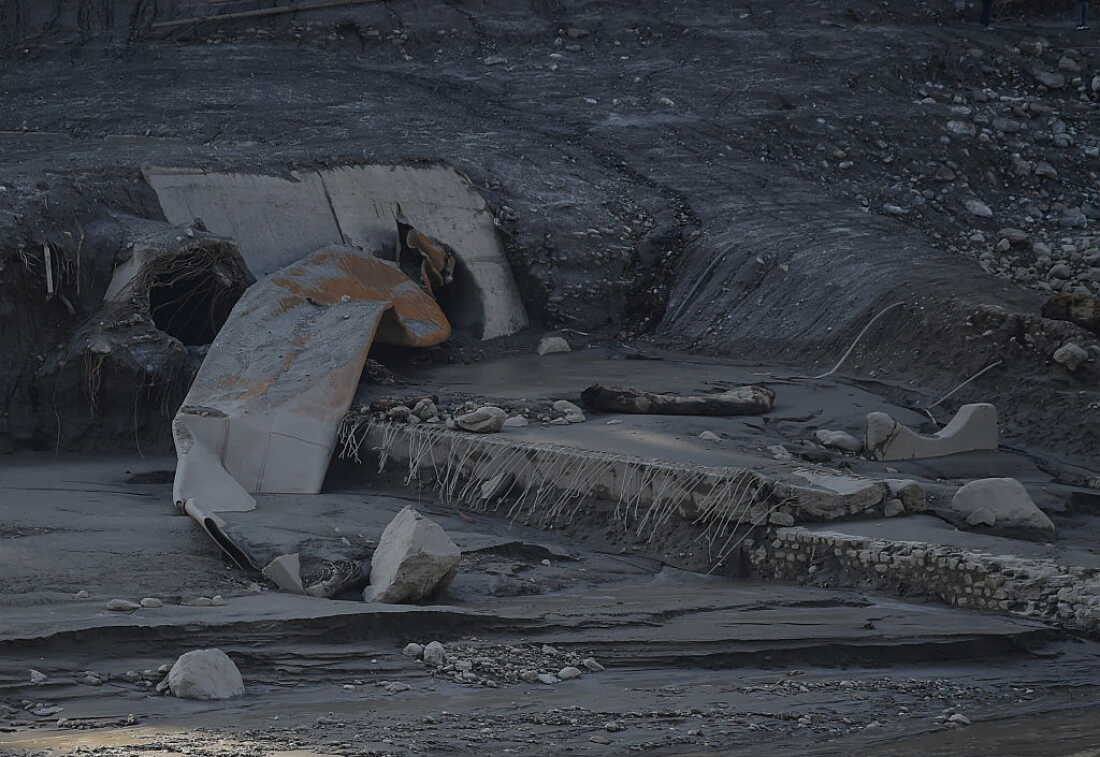
KATHMANDU, Nepal — A destructive flash flood struck the regions of Tibet and Nepal, resulting in over 1,000 fatalities a week ago. Extensive rescue operations are underway to find survivors within hydro-power plants now buried by debris.
The mission to locate individuals trapped inside these plants requires identifying the tunnels where they sought refuge. Arnold Dix, an expert in tunneling, likened the landscape to a battlefield, stating that finding the tunnels is a monumental task.
Rescue endeavors form a part of a large-scale humanitarian effort managed by approximately 21,000 Nepalese security personnel. According to Lok Bahadur Poudel Chhetri, spokesperson for Nepal’s Ministry of Foreign Affairs, floods have resulted in 4,000 people still missing.
Leading the charge are the Nepal Army’s rescue teams. Recently, they shared visuals on X, demonstrating personnel navigating through muddy tunnels. The catastrophic flood was triggered by a glacier, approximately 3,000 feet wide, snapping off and plunging into a river valley, which unleashed water, debris, and ice across the region.
This deluge obliterated riverbank communities and hydropower stations along the Trishuli River. Dix reported that many power stations have vanished or been severely damaged, shifting the riverbed and elevating the ground.
“It’s removed the power stations from the surface, like they’re just not there,” Dix explained.
Technology assists in identifying tunnels leading to turbine houses, where some survivors may be located. In particular, Dix is overseeing the mission at Trishuli 3A, with dozens potentially trapped.
Rescuers identified tunnel entrances under the river and employed explosive measures, breaking through obstructive boulders while trying to prevent water invasion.
Nepal’s Prime Minister Balen Shah announced that nearly 300 people have been rescued, mainly from the under-construction Upper Trishuli-1 site.
Remarkably, Janak Thapaliya recounted escaping death by clambering onto a floating tanker. Nevertheless, he expressed sorrow for his colleagues who lacked similar opportunities.
Criticism arose over Nepal’s acceptance of foreign aid. While some claimed initial rejection, Finance Minister Swarnim Wagle affirmed assistance was accepted, contingent on specific needs.
“I think this government could have maybe done better and certainly the initial hesitation to reach out to outside help was something that they course-corrected on,” Ashish Pradhan remarked, assessing governmental responses amid the complex disaster.
International assistance has arrived, including teams from India, China, and Korea equipped for tunnel rescue operations.