
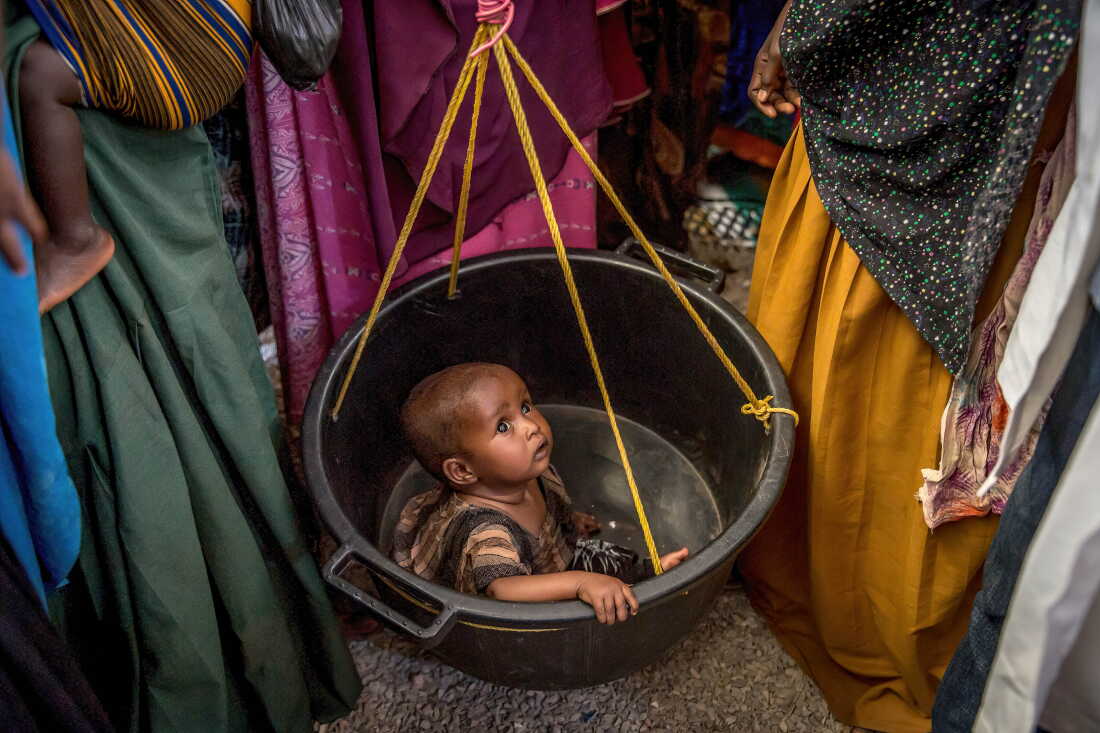
A child is screened for malnutrition at a health clinic in Baidoa, Somalia, amid concerns about famine. In February 2025, reports emerged that a respected U.S. famine warning system was ‘currently unavailable.’ This system, known as FEWS NET, offered a database essential for pinpointing areas at high risk of famine, aiding preparations for relief efforts.
The website, previously a resource for detailed, color-coded maps of hunger hotspots, displayed a stark message indicating the site’s data as ‘currently unavailable.’ Over the following week, a review of past global health and development stories took place, starting with the FEWS NET updates.
In early August, Jeremy Konyndyk, president of Refugees International and a former USAID official, noted a disruption in FEWS NET’s reporting during his flight to Somalia. The map showed a gray outline for Somalia, lacking updates since June, amid worsening food crises affecting 6.5 million people. Additionally, Somalia, Afghanistan, and Yemen were excluded from a ‘Peak Food Assistance Needs Outlook Brief’ published on August 14, 2026, following reduced aid funding to these countries.
FEWS NET has historically focused reporting on Somalia. However, reporting pauses occurred due to shifts in need, policy priorities, and cost-efficiency, as stated by the State Department.
The State Department later confirmed that FEWS NET would resume September reporting on the three countries, emphasizing efficient use of resources aligned with foreign policy priorities.
Before the Trump administration, FEWS NET was privately run and funded by USAID. It faced suspension during Trump’s freeze on foreign assistance. Additionally, FEWS NET stopped reporting on Gaza since last fall.
The Role and Impact of FEWS NET
FEWS NET, created 40 years ago to enhance USAID’s crisis responses, guides international aid organizations in strategic planning. Analysts utilize crop reports, market data, and satellite images to provide localized information, predicting major crises up to nine months ahead.
The FEWS NET data supports governments and aid groups in timely distribution of resources, preventing famines. Yemen and Afghanistan face substantial food insecurity, while Somalia’s crisis left 6.5 million people acutely food insecure.
Doctors Without Borders reported half of children under age 5 in Baidoa camps were malnourished, witnessing distressing malnutrition symptoms in older children. The prolonged drought and insufficient rainfall drove people to seek aid, exacerbating malnutrition.
Reports of aid programs encountering challenges emerged, with the U.S. freezing nearly all aid to Somalia due to accusations against Somali officials. Western countries reduced assistance, leading to a fragmented aid landscape.
U.S. funding previously supported feeding 2 million Somalis monthly. Recently, fewer families received even reduced rations, according to Refugees International. Moreover, UNICEF reported significant closure of clinics aiding malnourished children.
Data’s Essential Role
Future famine thresholds in Somalia depend on the next growing season and food aid success. FEWS NET data becomes crucial at such times. Colin Thomas-Jensen from Aurora Humanitarian Initiative highlighted the importance of accessible data for strategic aid delivery.
FEWS NET previously aided coordinated aid drops in Sudan’s Nuba Mountains, emphasizing the system’s predictive capabilities.
The U.N. and the World Food Program maintain food crisis data, but FEWS NET remains the preferred indicator for aid expertise. Labeling food crises as famine poses economic concerns for governments, affecting investment.
Maintaining credible systems is essential, preventing bias and data manipulation, according to Michelle Jurkovich, a food aid policy expert.
For updates related to global health, NPR’s Global Health newsletter offers relevant stories.