
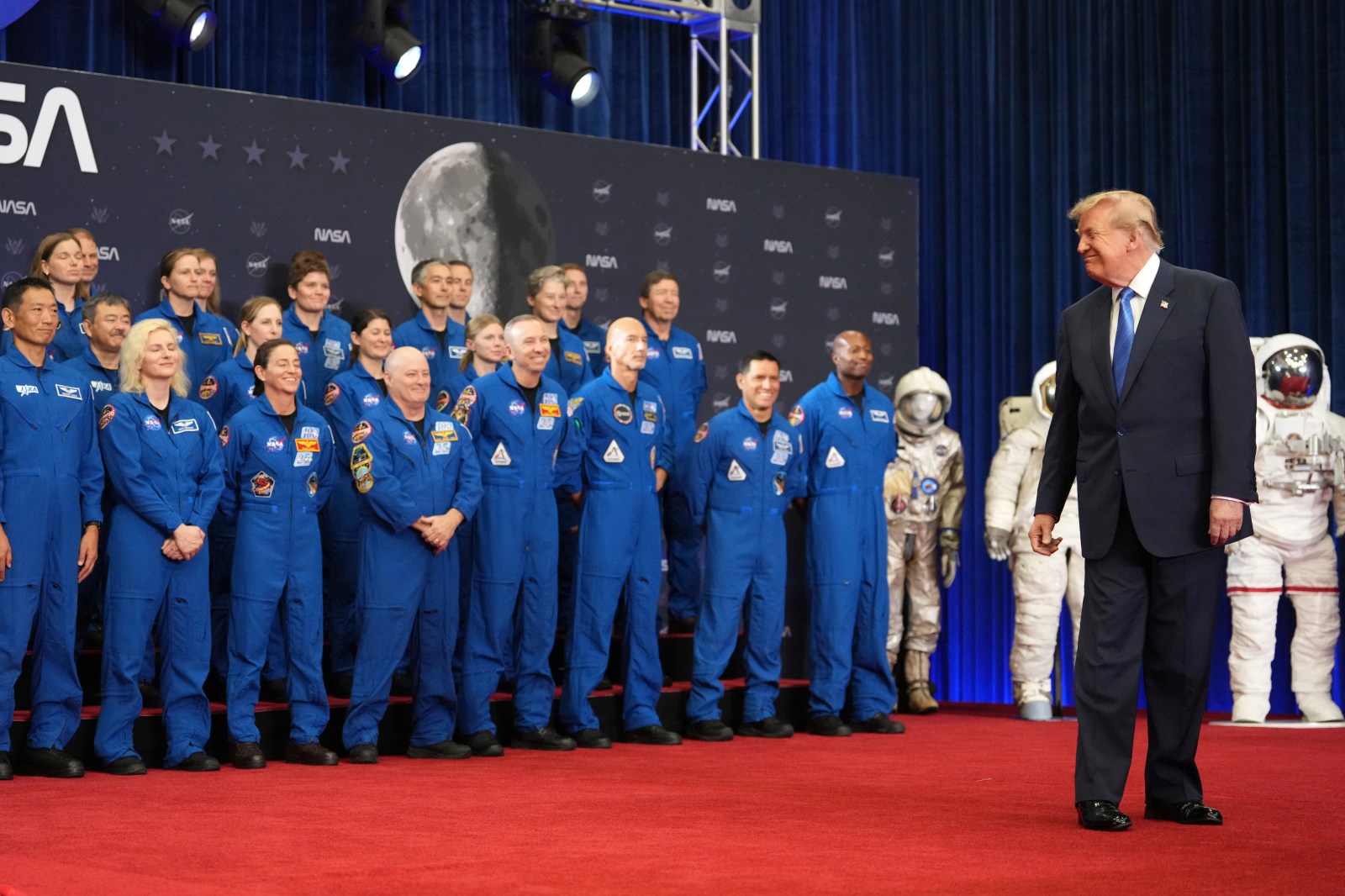
President Donald Trump has unveiled plans to establish a U.S. Space Academy aimed at training future astronauts, engineers, and military personnel for missions to Mars and beyond. During his speech at NASA’s Johnson Space Center in Houston, Trump emphasized the need to prepare a new generation of skilled service members, engineers, and civil operators as the nation sets more ambitious space exploration goals.
Trump stated that the academy would adhere to the same high standards as the country’s leading military institutions, such as West Point and the U.S. Air Force Academy. He added that he will soon decide on a location for the academy, ensuring it matches the prestige of other military academies.
Following his announcement, Trump signed an executive order officially establishing the institution. Michael Kratsios, assistant to the president and director of the White House Office of Science and Technology Policy, provided further insights via social media. He declared that the Presidential Commission on the United States Space Academy would be led by NASA’s Administrator and would design a federal academy combining rigorous technical education with leadership, discipline, and a strong commitment to public service.
Trump has yet to specify the location for the proposed Space Academy. Speculation is already brewing regarding which current space and aerospace hubs might host the academy. Key contenders include Houston, home to NASA’s Johnson Space Center; Colorado Springs, where U.S. Space Command and Space Force units are based; Cape Canaveral, known for its busy launch activities; and Huntsville, Alabama, recognized for its longstanding aerospace industry contributions.
The executive order requires a presidential commission to deliver recommendations on the academy’s structure, mission, and site-selection process within 120 days. This indicates that significant aspects of the project are still being developed. Additionally, the commission is tasked with devising an implementation strategy, encompassing timelines and legislative actions needed to establish the academy. Approval from the president and necessary legislation will pave the way for NASA to collaborate with other federal agencies to execute the plan. Thus, the academy might confront further planning, funding, and potential congressional challenges before establishing a permanent campus and admitting students.
The proposed U.S. Space Academy will differ from NASA’s Space Camp. While Trump’s initiative is envisioned as a federally chartered institution resembling military academies, Space Camp serves as a public educational experience introducing individuals to space science through simulations and hands-on learning. The academy aims to provide formal education and training for careers in the space sector, setting a path for futures in space missions and objectives.
In contrast, Space Camp focuses on inspiring interest in STEM fields without offering degrees or professional qualifications. The Space Academy, as proposed, would resemble a military service academy or specialized university, serving as a pipeline for space professionals and government personnel. Space Camp, however, primarily serves as an educational program providing participants with a glimpse of astronaut training without preparing them for specific careers.
This announcement marks a significant step in shaping the future of U.S. space exploration and education.