
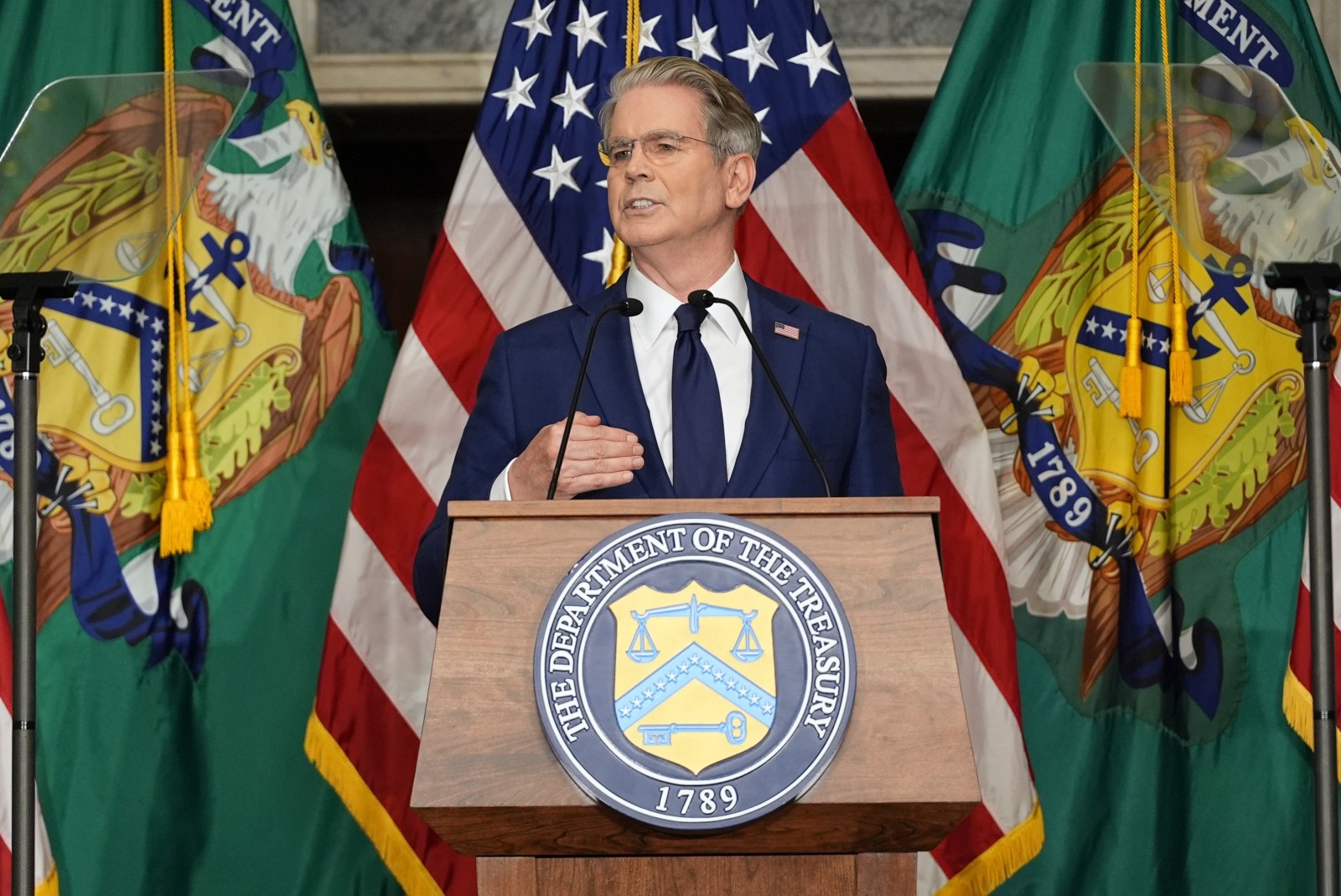
The Trump administration announced a large-scale economic offensive against Iran on Monday. This initiative, termed ‘Operation Economic Outcast,’ aims to isolate Iran financially through sanctions, enforcement measures, and diplomatic efforts.
Treasury Secretary Scott Bessent declared that the United States is committed to stopping any economic interactions with Iran. He warned that countries, companies, and individuals engaging with Iran would be subject to American sanctions.
“Let there be no ambiguity as to the position of the United States: economic engagement of any kind with this murderous regime will expose those responsible to the full reach of American power,” Bessent stated during a press conference.
Objective and Implications
This marks a significant step in President Trump’s strategy to increase economic pressure on Iran, a nation already facing inflation, currency devaluation, and trade restrictions. The goal is to disconnect Iran from its financial support channels, including the Islamic Revolutionary Guard Corps.
Analysts suggest this strategy shifts enforcement tactics rather than introducing a new sanctions framework. Pierre Pahlavi from the Canadian Forces College noted that the enforcement is now more systematic, aggressive, and targeting international networks aiding Iran’s economy.
Iran’s Response
Iran condemned the campaign swiftly. Foreign Ministry spokesperson Esmail Baghaei threatened a strong Iranian response to any expansion of US sanctions.
Iran still exercises influence in the Strait of Hormuz, affecting global energy transit despite recent international setbacks, including the UAE suspending trade with Iran.
Sanctions Expansion
Central to Monday’s announcement is the expansion of sanctions affecting sectors crucial to Iran: digital assets, technology, gold, aviation, and shipping. These measures aim to disrupt Iran’s use of cryptocurrency, gold, and shipping networks to circumvent restrictions.
Iran’s currency, the rial, continues to diminish in value, losing ground against the US dollar amid economic instability. The IMF forecasts a 5% contraction in Iran’s economy this year.
Sanctioned Entities
Treasury’s Office of Foreign Assets Control imposed sanctions on nearly 60 entities, individuals, and vessels involved with Iran’s oil networks, cyber operations, missile development, and procurement schemes. This includes entities based in Hong Kong, UAE, Singapore, and China.
Oil Industry and Maritime Actions
The sanctions focus heavily on Iran’s oil trade and shipping operations. This includes penalties on brokers and vessels involved in shadow fleet operations, transporting Iranian oil in violation of existing restrictions.
Treasury issued guidance on the risks of shipping activities associated with the Strait of Hormuz.
Cyber Attacks and Procurement Networks
The sanctions target Iranian cyber actors linked to operations compromising US agencies and critical infrastructure. The initiative also affects procurement networks across Asia and the Middle East aiding Iran’s missile and nuclear efforts.
Global Outreach and Secondary Sanctions
The initiative includes outreach to foreign governments to cease Iran-related activities. Failing entities might face expanded secondary sanctions and exclusion from the US financial system.
This poses a strategic challenge for China, Iran’s main oil customer. Data shows China’s Iranian oil imports dropped sharply after US-Israeli tensions escalated, signaling a potential impact on China’s economic activities with Iran.
“China is the central question,” Pahlavi explained, emphasizing the importance of using sanctions to decrease Iran’s oil revenue.
Bessent warned that foreign entities facilitating transactions with Iran would also be targeted. “No one is above the reach of US sanctions,” he stated, reinforcing the commitment to isolate Tehran economically.
The initiative is among the Trump administration’s most aggressive efforts against Iran, prompting warnings from Iranian officials about potential retaliatory moves.
Note: Updates and clarifications for this breaking news article will follow as additional information becomes available.