
Texas Governor Greg Abbott responded to President Donald Trump’s criticism regarding his decision to pause data center projects. He also tackled the controversies surrounding a surrogacy case and the decision of Dallas-Fort Worth Airport to cancel plans for Islamic foot-washing stations.
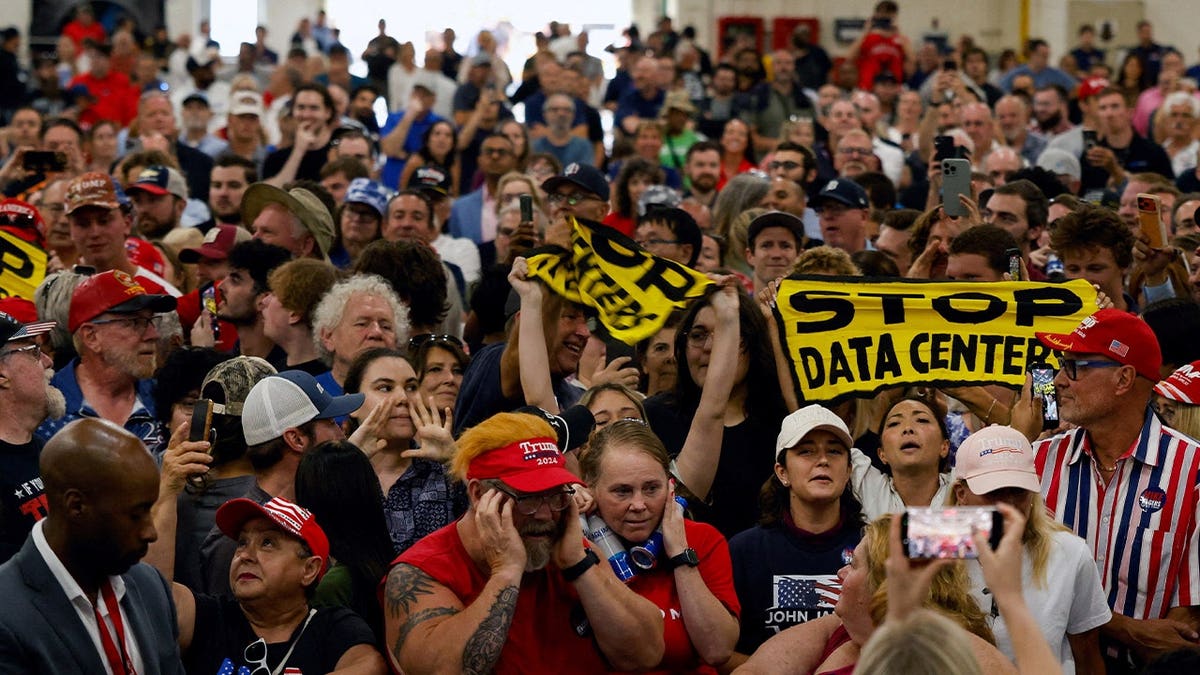
Silicon Valley has long dominated consumer loyalty in America, with products like Apple iPhones and Amazon Alexas becoming household staples. Yet, when it comes to artificial intelligence (AI) and data centers, the industry is facing unprecedented opposition. Americans are growing wary, and protests against data centers are mounting.
The tech industry traditionally focuses its political efforts on issues like content moderation and privacy. However, AI requires support for infrastructure such as power plants, water rights, and land use permits, areas in which the industry is underprepared. This gap is evident as public sentiment sways against data centers.
A Gallup poll highlights that 71% of Americans oppose local data center construction, a sentiment stronger than opposition to nuclear power plants. Local resistance already slowed $64 billion in developments between May 2024 and March 2025.
The challenge isn’t merely communication; it’s structural. Past efforts focused on winning policy battles in Washington. Now, the fight has spread to countless local communities. Activist groups like Food & Water Watch, Greenpeace, and Friends of the Earth are leading organized resistance, demanding a national halt on data centers.
Interestingly, these environmental organizations, fighting against large-scale renewable projects, face scrutiny for potential foreign funding, particularly Chinese influence. The U.S. House Energy and Commerce Committee has launched an investigation into these connections. Failure to improve energy infrastructure, crucial for AI, could give China an advantage.
Looking back, the technology industry can draw lessons from how fracking succeeded by offering direct community benefits, while nuclear power failed politically due to lack of public support. Fracking created local job opportunities and brought in revenue, generating defenders within communities.
In contrast, nuclear energy, despite its zero-emission potential, fell behind due to early political losses. The demand surge from AI now makes nuclear crucial, yet decades of underinvestment linger.
The rapid opposition against data centers uses legal strategies, drafting moratorium language, and spreading claims about resource strain. To avoid setbacks similar to those faced by nuclear energy, the tech industry needs quick, coordinated action.
Leading AI firms have resources to invest back into communities, potentially funding local infrastructure and education, and creating economic opportunities. Hiring those with strong ties in local and state negotiations can shift narratives in favor of development.
With billions invested in AI’s physical infrastructure, Silicon Valley must now secure public backing to advance these projects across America.