
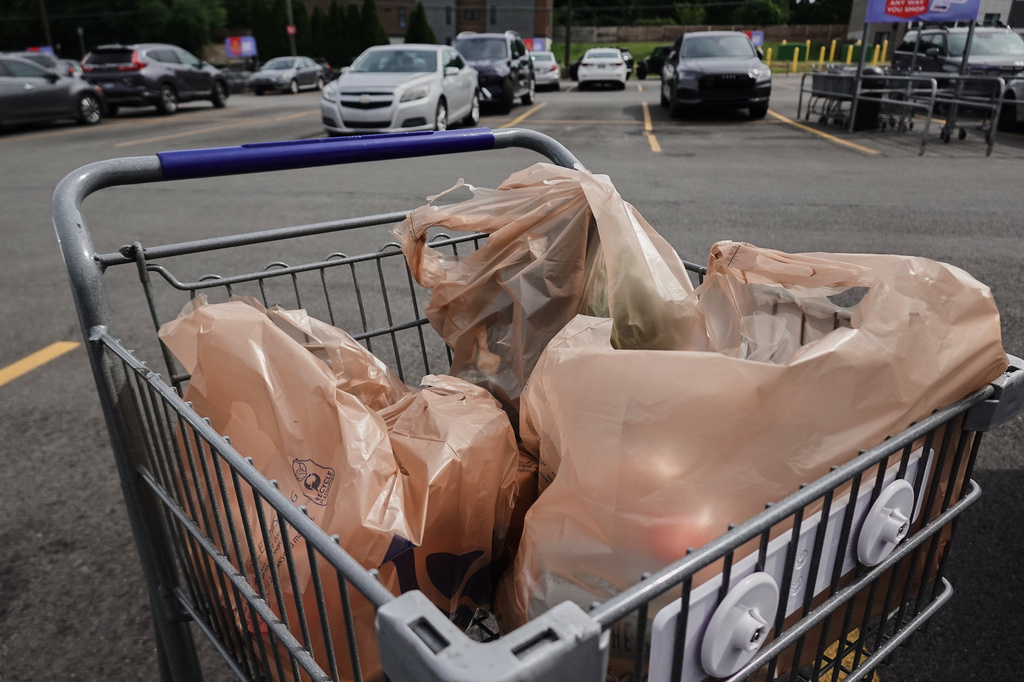
Plastic bags filled with groceries sit in a cart on Monday, May 18, 2026, in Cincinnati. (AP Photo/Joshua A. Bickel) You might recognize the iconic “chasing arrows” symbol on your takeout containers and assume it indicates recyclability. This symbol originated in 1970 as a universal sign for recyclable products. However, by the late 1980s, the Society of the Plastics Industry, now known as the Plastics Industry Association, repurposed it to denote plastic types, regardless of their recycle potential.
The reality is striking. In the U.S., less than 9% of plastics are recycled. Being the leading generator of plastic waste worldwide, the majority of used plastics end up in landfills, exported overseas, or mishandled, often polluting our oceans. Experts estimate that globally, a garbage truck’s worth of plastics is dumped into the ocean every minute. Most plastic debris on beaches is non-recyclable. Even minimal plastic ingestion can be lethal for marine life; for example, just under a sugar cube’s volume can kill one out of two Atlantic puffins.
The discrepancy between the consumer’s perception of the chasing arrows and reality highlights a significant regulatory flaw.
Americans, along with their water bodies and coastlines, deserve improved regulations. Recently, a strategic bill was unveiled, aiming to simplify recycling labels, curbing greenwashing, and limiting contamination in U.S. recycling streams. The Truth in Labeling Act marks a pivotal advancement in American plastics legislation and was long overdue.
Introduced by Sen. Jeff Merkley (D-Ore.) and Rep. Lou Correa (D-Calif.), the Truth in Labeling Act proposes clear federal regulations concerning the labels “recyclable,” “compostable,” or “reusable” on products. For instance, products would only earn a “recyclable” label if they are widely recyclable and have a market for the recycled material. Furthermore, the Act dismisses harmful chemical recycling technologies from being categorized as recycling.
Regarding the chasing arrows, the Act mandates that the symbol cannot adorn non-recyclable materials, guarding consumers against false impressions that their waste is processed appropriately instead of heading to landfills, incinerators, or the ocean.
The call for precise recycling labels in America is so compelling that two other bills have surfaced: the PACK Act and the Recycled Materials Attribution Act. However, these bills lack robust standards, allowing further greenwashing. The latter considers plastics processed into fuels via detrimental chemical recycling methods as recycled, which perpetuates air pollution and hazardous waste production. For example, a plastic bag can be marked “100 percent recycled content” based on credits, even when it’s primarily new plastic.
Intended to clear consumer confusion, the PACK Act falls short. It delegates the recycling review to third-party entities, potentially influenced by the same industry causing the label discord. Like the Recycled Materials Attribution Act, it might block states from improving label clarity further for their citizens.
To combat ocean plastic pollution, reducing overall plastic production is essential. Yet, this must pair with an understandable recycling framework for consumers. The Truth in Labeling Act is the crucial reform needed to enhance America’s recycling system.
Anja Brandon, Ph.D., serves as the director of plastics policy at Ocean Conservancy.