
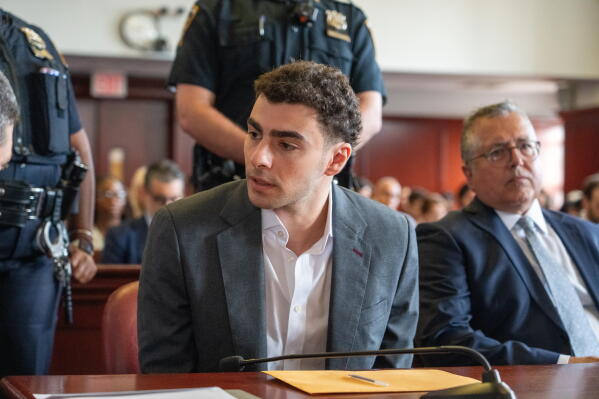
The state murder trial for Luigi Mangione, accused of killing UnitedHealthcare CEO Brian Thompson, has been postponed indefinitely. Mangione’s lawyers seek dismissal of the case on double jeopardy grounds following his recent guilty plea to federal charges.
Judge Gregory Carro cancelled the trial and set a deadline of October 9 for the Manhattan District Attorney’s office to respond to the defense’s claims. A hearing is scheduled for December 10, a week before Mangione’s sentencing in the federal case.
Mangione, 28, acknowledged in federal court his role in stalking and killing Thompson in 2024. He admitted to confronting Thompson at a Manhattan hotel and shooting him. Federal prosecutors plan to seek a life sentence during Mangione’s December 18 sentencing, although guidelines suggest 24 to 30 years.
After Mangione’s guilty plea, his lawyers moved to dismiss the state case, citing double jeopardy and due process. They argue that Mangione faces duplicative punishment by state and federal authorities. Mangione maintains a not guilty plea for the state case, which may also result in a life sentence.
The Manhattan District Attorney’s office opposes efforts to dismiss the state case, given the unknown federal sentence. New York law includes strong protections for defendants facing multiple prosecutions. A state trial can be prevented under certain conditions, such as a federal guilty plea covering the same conduct.
Carro will determine if these protections apply to Mangione’s situation. His decision could be appealed. Mangione’s federal charges involve interstate travel to carry out the attack, highlighting different aspects of the crime. However, his defense claims the actions are part of the same incident.
Assistant District Attorney Joel Seidemann argued against dismissing the state charges, emphasizing the distinct legal and criminal elements involved. Seidemann insisted that the state case addresses the seriousness of Mangione’s actions and the state’s interests in upholding the sanctity of life.