
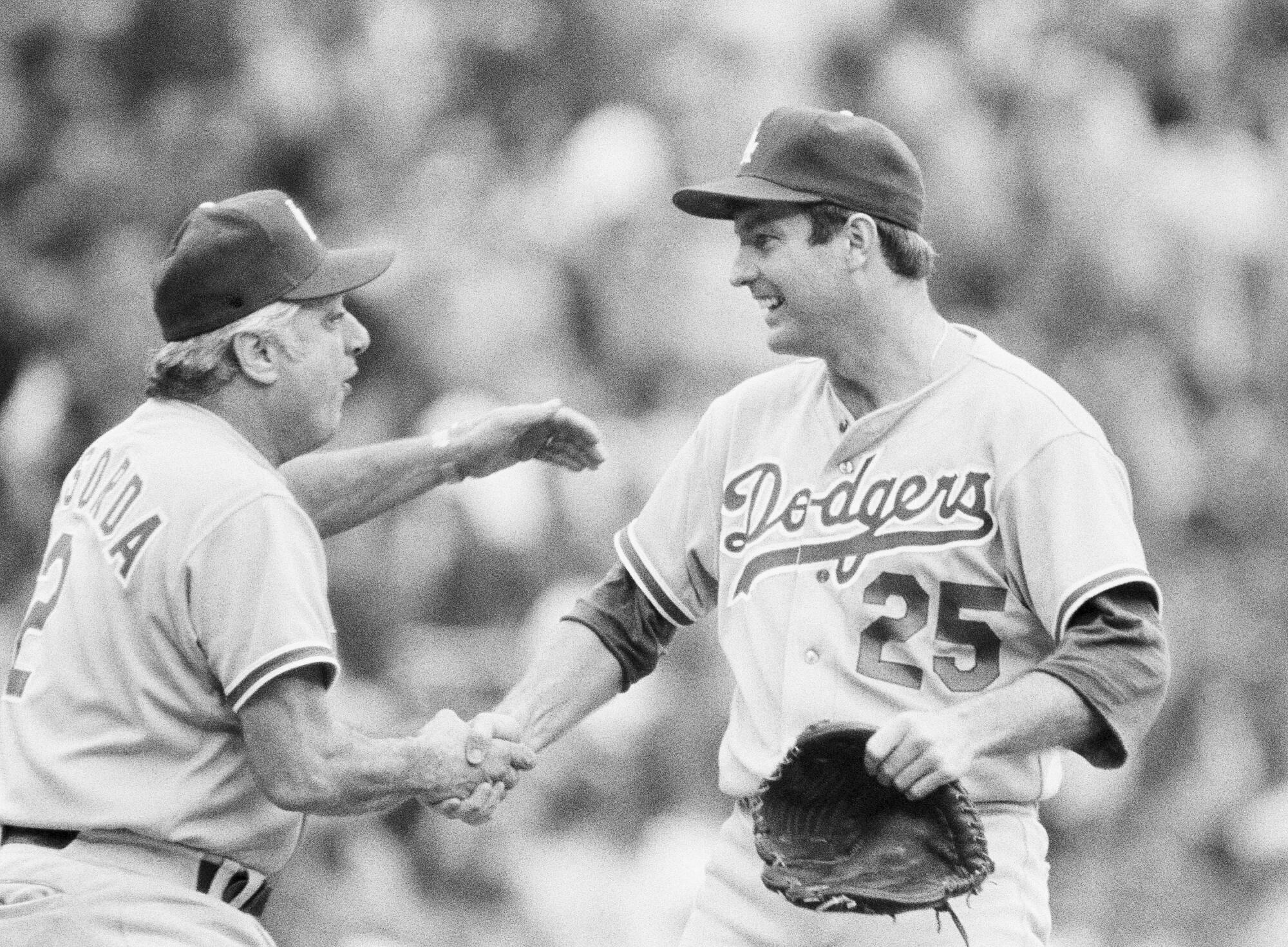
The medical world recognizes Tommy John surgery as ulnar collateral ligament reconstruction, named after a left-handed Dodgers pitcher who faced a career-ending injury. When Tommy John ruptured a ligament in his left elbow in 1974, he faced the possibility of retirement. The surgery, initially considered radical, saved his career and became pivotal for many baseball players like Tom Candiotti, John Smoltz, and Shohei Ohtani.
Tommy John passed away at 83, as announced by the Dodgers. “We are saddened to hear the news of Tommy John’s passing,” said Dodgers president and CEO, Stan Kasten. “…Tommy was an exceptional pitcher throughout his career in Major League Baseball, and his courageous role in becoming the first to have surgery that would bear his name can’t be overstated. His impact both on and off the field has been felt by ballplayers of all ages and will be for generations to come.”
Before the surgery, John already had 124 wins. Post-surgery, he secured 164 more victories, finishing with a 288-231 record and a 3.34 earned-run average. He credited his recovery to Dr. Jobe, stating, “Dr. Jobe made it so I could throw a baseball again.” John never missed a start after the surgery and even pitched out of the bullpen at times.
Innovative Surgery and Career Revival
John first joined the Dodgers after a trade from the Chicago White Sox in 1971. He had a reputation for a good curveball, but a less intimidating fastball. Dodgers’ pitching coach, Red Adams, advised him that precision and ball movement could be more effective than speed. This advice paid off, as John improved significantly after adopting these strategies.
A pivotal moment occurred in 1974. John, now a key player for the Dodgers, experienced sharp pain in his elbow during a pitch. He had ruptured his medial ulnar collateral ligament. Initially, Dr. Frank Jobe recommended rest, but seeing no improvement, he suggested an innovative surgery. Jobe took a tendon from John’s right arm and grafted it into his left elbow. Despite initial setbacks and a second surgery due to nerve damage, John’s rehabilitation began with determination.
By 1975, John’s condition improved and he returned to pitch in late September in an exhibition game. The next year, he rejoined the main rotation and performed admirably, posting a 10-10 record with a 3.09 ERA. In 1977, he had one of his best seasons, winning 20 games with a 2.78 ERA and leading the Dodgers to the National League Championship Series.
A Continued Legacy
John signed with the Yankees in 1979, delivering strong performances, including 21 wins in his first season. However, controversy arose during the 1981 World Series. In Game 6 against the Dodgers, Yankees manager Bob Lemon made a strategic decision to pinch-hit for John, a choice that was widely debated.
Beyond his playing career, John became a vocal advocate for suicide prevention after his son’s tragic death. He also stressed the importance of preventing arm overuse among young pitchers. Orthopedic surgeons continue performing the surgery, often credited for extending players’ careers.
Dr. Neal ElAttrache, a noted orthopedic surgeon, has performed hundreds of these surgeries, demonstrating its widespread success since first being performed by Dr. Frank Jobe. ElAttrache credits Jobe’s work, “It should have been called the Frank Jobe operation,” highlighting Jobe’s focus on patient care.
Tommy John is survived by his wife Cheryl and his children Tommy, Travis, and Tamara. A private celebration of his life will be held in Florida.