
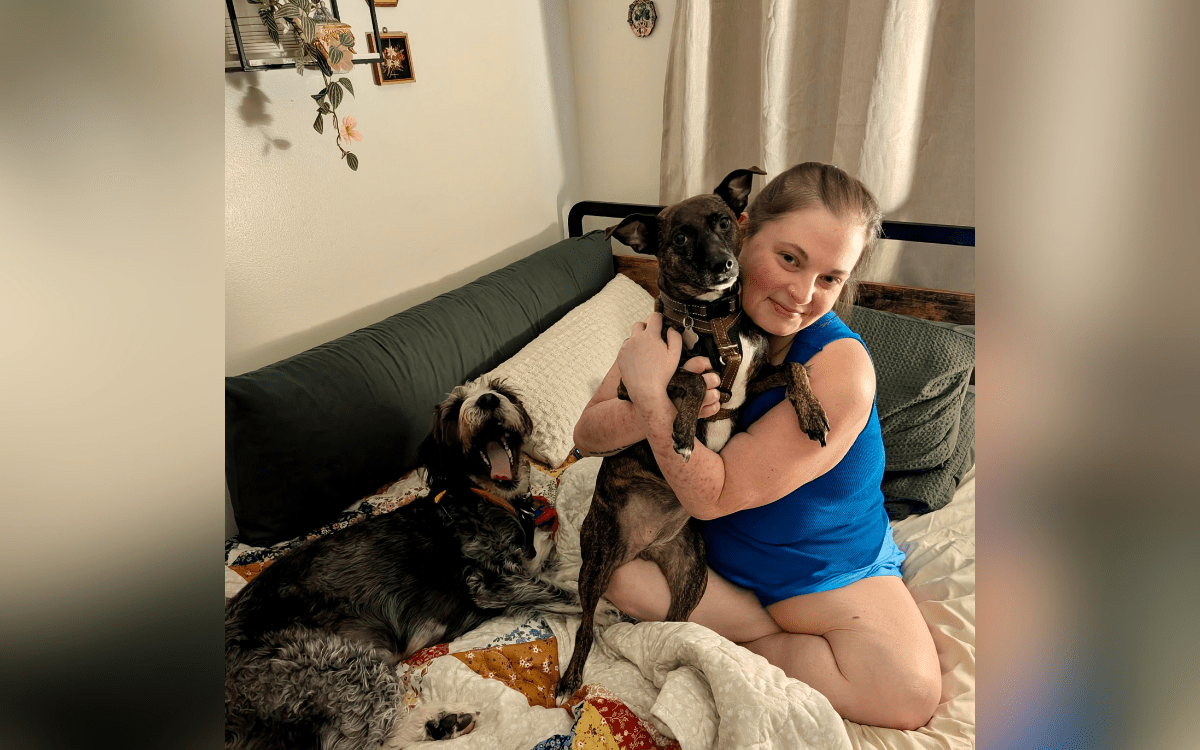
My name is Lizzie, and I grew up in central Indiana. I lived in a loving family with my mom, dad, and older brother. My brother and I were adopted after my mother struggled with autoimmune issues that prevented her from having children. In 2002, my life changed when I lost my mother at the age of 16. After her passing, my brother moved out, leaving my dad and me to manage on our own until I finished high school.
Though I was culturally Christian from a young age, my involvement with the church deepened in my teenage years. This escalated when I met my future husband in 2005. He was raised in a strict evangelical environment, and together we were drawn into that world. We attended church services, joined Bible studies, participated in youth groups, worship teams, and embraced purity culture. We were taught that sex outside marriage was sinful and that it was a woman’s duty to become a wife and mother, with having children as part of God’s plan.
We married in 2008, expecting to start a family where I would stay home with our children. But in 2010, I had my first miscarriage. I was about six weeks pregnant when I began to bleed heavily alone at home. I was in agony, confused and terrified about my body’s reaction. The common response was that it was God’s plan and I needed to continue with life. Outwardly, I did, but inside, I was falling apart.
Preparing for Birth and Death
My past issues with depression, anxiety, and PTSD returned. I became focused on being the best Christian possible, convinced I must have done something wrong. I prayed incessantly through years of infertility treatments, medical tests, and invasive procedures that left me feeling broken.
After six long years, I became pregnant again in 2016. But at 19 weeks and four days, our world turned upside down. During the anatomy scan, we were informed we were having a daughter with defects incompatible with life. She had a giant omphalocele, severe scoliosis, a malformed umbilical cord, and underdeveloped lungs. A maternal-fetal medicine specialist suggested terminating the pregnancy, while another suggested waiting and seeing nature’s course.
Indiana law at the time gave us only three days to decide if we would terminate, which meant traveling out of state, something we couldn’t afford. It was a crushing series of events. This pregnancy was meant to be redemptive after years of loss and infertility. My husband and I were united in our faith and hope, believing in a miracle. So, I continued the pregnancy to term, filled with grief, prayer, and denial.
As the due date approached, we began planning for her death. We asked for Christmas cards because we knew it would be her only Christmas. Many people avoided the tough reality; they stopped asking how I was doing. It seemed easier to ignore her existence because it was painful.
On January 24, 2017, Maggie was born via C-section, weighing 4 pounds and measuring 16.5 inches long. Seeing her was pure love at first sight. Family visited, and she was baptized. We captured the few photographs we’d ever have as a family. Then we cherished the remaining moments alone with her. About five and a half hours later, she died in her father’s arms.
We returned home to the void left behind, an empty apartment and nursery. Maggie was cremated, and we held a memorial service a month later. Life continued with its struggles, and after several more miscarriages in 2019, I decided to stop pursuing motherhood. Realizing this step was vital if I was to survive without sacrificing myself further.
Life After Motherhood
During that period, I pursued a master’s degree and reevaluated the religious beliefs that had previously guided my life. Moving to Iowa provided the physical and emotional space to gain clarity. Over time, I dismantled my evangelical faith and eventually left Christianity.
Now, politically engaged and supportive of LGBTQIA+ rights, I prioritize therapy and advocate for women’s health care. In my 40s, I’ve grown into a compassionate, curious, and informed individual. I began asking questions regarding carrying my daughter to term and whether it truly served her or brought unnecessary suffering.
While my focus was on my unborn child’s best interest, I realized that my well-being was also significant. The trauma experienced had permanent impacts. In addition to existing conditions like polycystic ovary syndrome, depression, anxiety, complex PTSD, and adenomyosis, I now live with additional ailments like inflammatory arthritis, fibromyalgia, lupus-related connective tissue disease, eosinophilic esophagitis, mast cell activation syndrome, hypertension, and diabetes.
Continuing the pregnancy might not have prevented some conditions, but pursuing motherhood nearly destroyed me. After reflection, I wish I had chosen termination, not out of lack of love for Maggie but understanding that abortion can be compassionate. Women deserve the right to dictate their medical choices free from external pressures.
The grief wouldn’t have vanished. I would still hold my love for her. But perhaps, the enduring consequences of a pregnancy with no positive outcome could have been lessened.
Today, I remember Maggie everywhere. My husband and I affectionally refer to ‘Maggie energy’ whenever children behave playfully. I wear her ashes in a Claddagh ring and share her story openly, even if it discomforts others. Recognizing her existence matters.
In memory of Maggie, I advocate for reproductive health care, compassion, and empower women in their medical decisions. While I cannot diminish anyone’s grief, I offer a reminder: people facing loss aren’t alone and deserve the freedom to choose what’s right for them.