
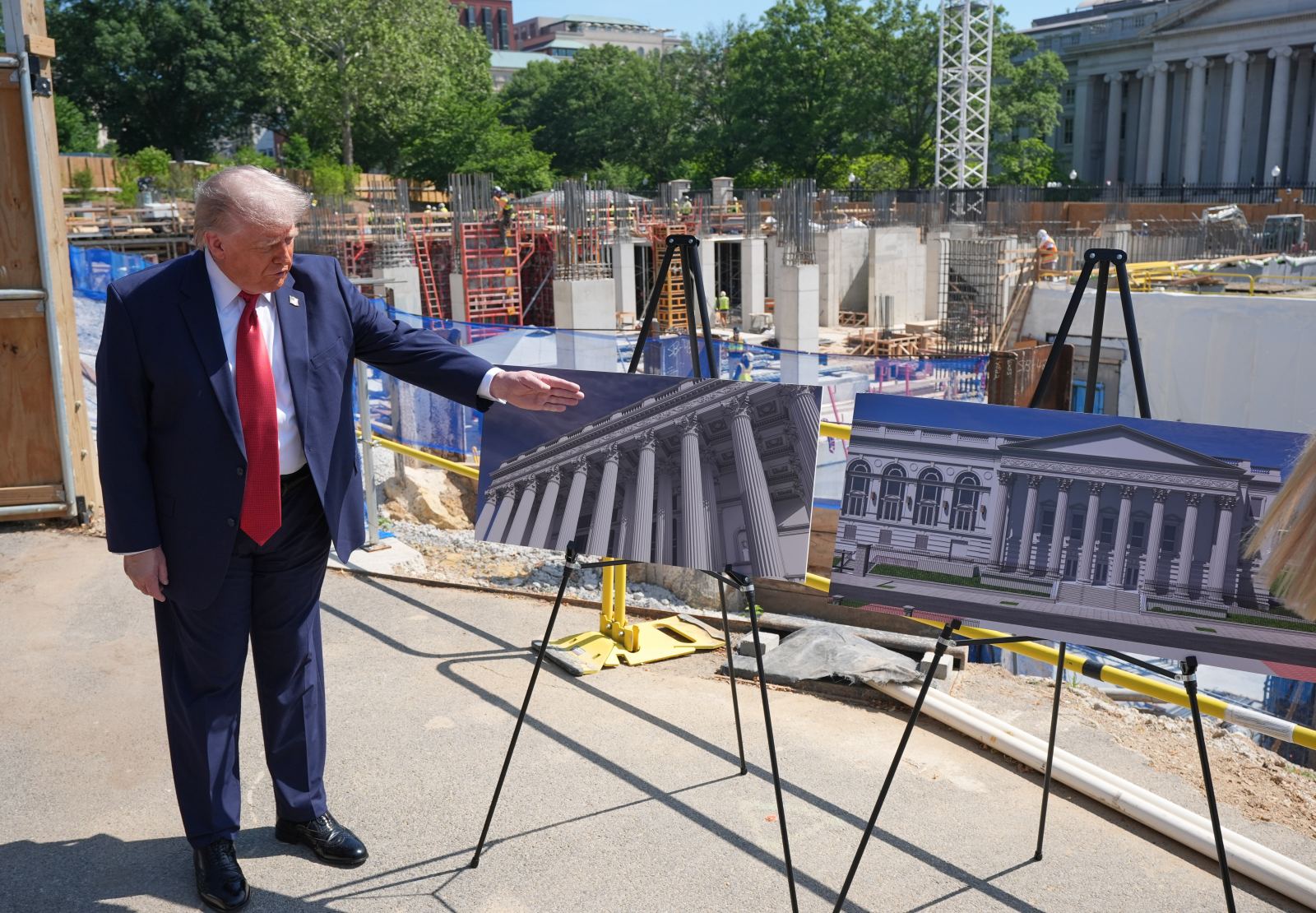
President Donald Trump accused a historic preservation group of revealing military secrets amidst a dispute over a White House ballroom project. He labeled its members as ‘treasonists’ as his administration escalated the matter to the Supreme Court. Trump’s comments referred to the National Trust for Historic Preservation, which he claimed exposed top military secrets.
Trump suggested the nonprofit had received detailed plans for the project from senior military and Secret Service officials but pursued its lawsuit regardless of warnings about the project’s classified nature. However, Trump did not present evidence to back up these claims.
Ballroom and Security Infrastructure
The president described the proposed new East Wing complex, which would include a rooftop drone port. He emphasized the ballroom and security infrastructure as forming an integrated structure crucial for the protection of presidents, their families, and senior officials. The administration’s public Supreme Court filing outlined comprehensive security features like bomb shelters, sniper positions, and missile-resistant construction, spanning five stories underground.
National Trust for Historic Preservation’s Position
The National Trust for Historic Preservation has not directly responded to Trump’s recent accusations of treason. In earlier disputes with the administration, the Trust contested similar claims. After the Justice Department alleged the Trust had seen detailed plans of a secret facility beneath the ballroom, the Trust stated to U.S. District Judge Richard Leon they were not privy to such details.
Gregory Craig, an attorney for the Trust, denied claims that their lawsuit endangered Trump’s life, calling these accusations ‘incorrect and irresponsible.’ Newsweek reached out to the Trust for comments.
Legal Proceedings and Supreme Court Involvement
The Trust filed a lawsuit in December, challenging the administration for proceeding without the required congressional authorization and reviews. A federal appeals court had issued a preliminary injunction blocking work on the aboveground ballroom; however, it allowed necessary underground security construction to continue.
On Thursday, the administration asked the Supreme Court to suspend the injunction while the appeal process proceeds. They argued the development is crucial for national security. The administration sought an urgent decision before the injunction takes effect on August 21.
The Trust countered, asserting that the courts considered national security arguments but still permitted ongoing work on the underground bunker. They accused the administration of trying to circumvent the courts by hastening ballroom construction.
The administration requested the Supreme Court to temporarily halt the lower court’s injunction as it prepares for a thorough review. This action seeks suspension rather than a final decision on legality.
The government asserted it would likely prevail and claimed irreparable harm if construction halted. They challenged the Trust’s legal standing, arguing Congress had authorized improvements within President’s Park.
The administration reported that the project was 65% complete and stressed that pausing construction would result in an incomplete structure, creating security issues.
Court Deliberations
The D.C. Circuit dismissed the administration’s extended view of presidential authority, emphasizing congressional oversight over significant White House alterations. Judges Patricia Millett and Bradley Garcia argued substantial White House changes require congressional involvement.
Judge Neomi Rao dissented, supporting the administration’s view for the president’s authority. Her reasoning underpins the administration’s Supreme Court request.
Chief Justice John Roberts gave the Trust until Tuesday to respond to the emergency application. The Trust urged the court to reject the request, accusing the administration of undermining judicial authority.
Trump’s Social Media Response
In a Truth Social post, Trump criticized the National Trust for Historic Preservation and accused its former president, Carol Quillen, of lacking expertise. He connected her lawsuit involvement to broader political issues, citing detriment to national security.
He challenged the standing of individuals involved in the lawsuit, drawing attention to a woman described as an ‘activist’ without clearance or expertise. Trump questioned her motivation and involvement in various legal actions, depicting it as undermining judicial confidence.
He criticized what he perceived as abuse of courts, asserting this leads to diminishing public trust in the justice system.