
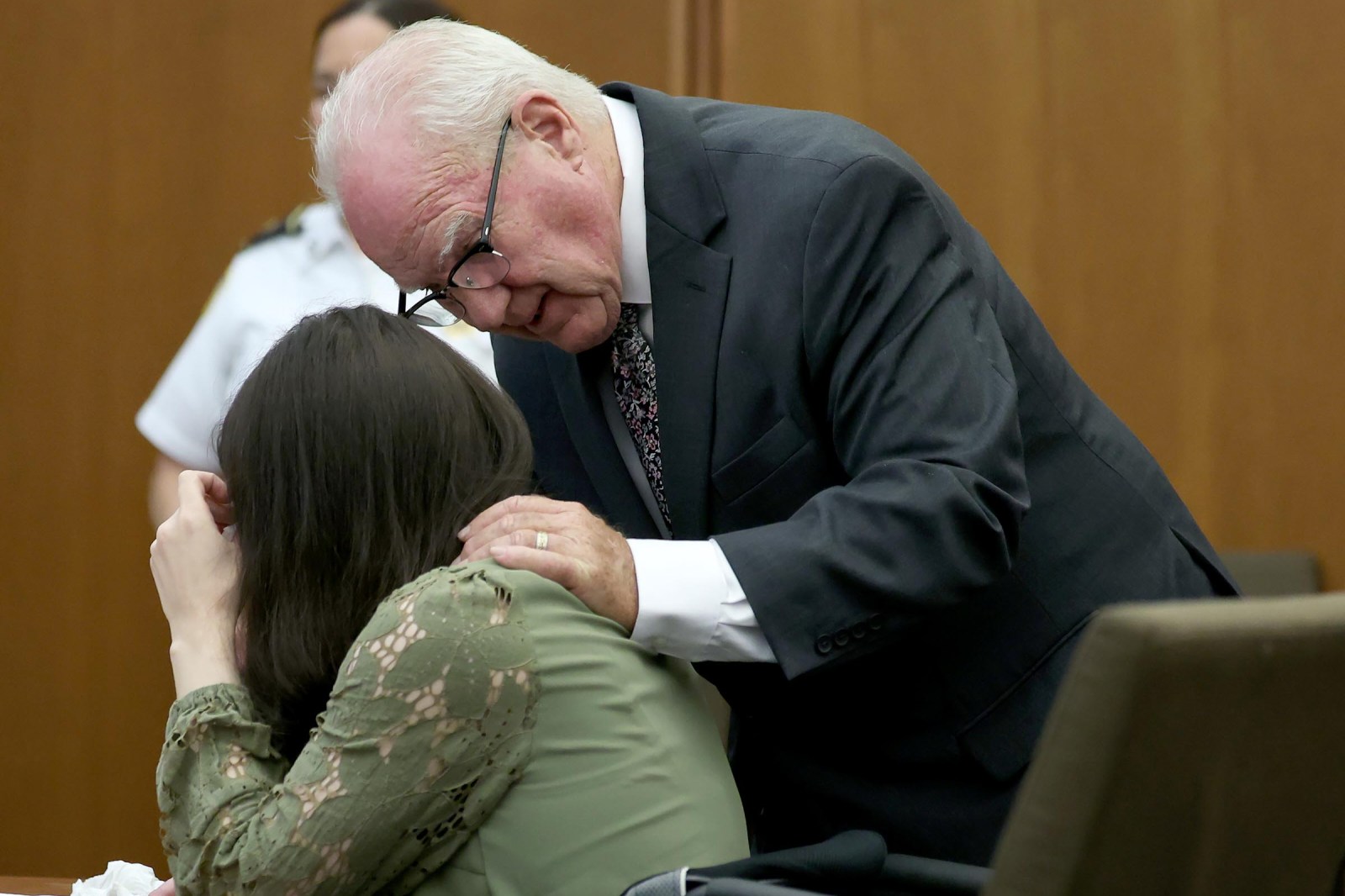
Lindsay Clancy Breaks Down During Testimony About Her Children’s Injuries
During the court proceedings, Lindsay Clancy became visibly emotional as the medical examiner, Dr. Renee Stonebridge, provided details on the injuries observed during the autopsies of her children. This led Judge William Sullivan to call a recess due to Clancy’s distress. Upon resuming, jurors were reminded by Judge Sullivan to focus solely on the evidence, avoiding emotions. Clancy continued to display visible distress throughout the testimonies.
Medical Examiner Describes Fatal Injuries to Her Children
Dr. Stonebridge’s testimony provided forensic evidence of strangulation, confirmed by symptoms like eye hemorrhages in Clancy’s children, Cora and Dawson. The examination of Callan, the youngest, revealed brain injuries linked to insufficient oxygen supply. This evidence is crucial for the jury to understand the circumstances leading to the children’s deaths as they consider the defense’s claims regarding Clancy’s mental health.
Therapist Had Not Read Another Provider’s Notes
Latiesha Dukes, a mental health counselor, admitted to not reviewing notes from another provider treating Clancy. This became a key point as testimony from a psychiatric nurse practitioner, Rebecca Jollotta, indicated concerns that Dukes had not noted. The defense argues that this lack of communication contributed to an incomplete understanding of Clancy’s mental state.
Trooper Admits There Was No Investigative Basis for ‘Voices’ Theory
Testimony from Massachusetts State Police Sergeant Dan Lawlor revealed no investigative backing for the claim that psychologist Paul Zeizel prompted Clancy to say she heard voices. This point, scrutinized during the trial, questions the integrity of the claims surrounding Clancy’s statements and supports the defense’s argument of Clancy experiencing psychosis.
Clancy Had Reported Suicidal Thoughts But No Plan
During testimony, Dukes shared that Clancy had expressed suicidal thoughts but lacked a specific plan. Despite earlier concerns, Dukes believed Clancy was improving, based on her activities and family interactions. This disparity highlights differing assessments of Clancy’s psychological state leading up to the incident.
What Happens Next
The trial progresses with further testimonies related to Clancy’s mental health and the circumstances surrounding the children’s deaths. The jury will need to determine whether Clancy is criminally responsible or if her actions were due to severe mental illness, which may alter her sentencing outcome.