
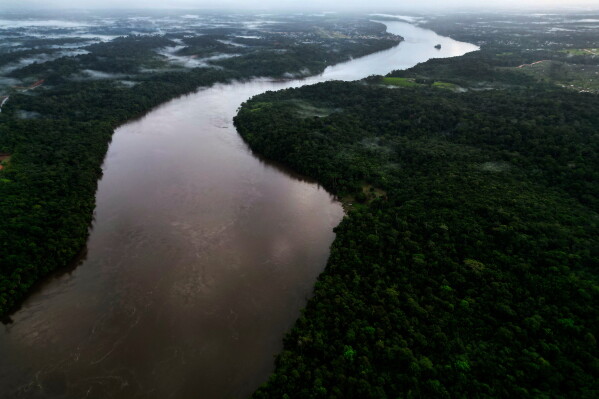
The Brazilian Supreme Court recently upheld state laws denying tax incentives to farmers adhering to the soy moratorium, which restricts the purchase of soy grown on deforested Amazon land. This decision, affirming the constitutionality of the pact, represents a significant moment for Brazil’s environmental and agricultural sectors.
Earlier this year, many major grain traders exited the soy moratorium after key soy-producing states passed legislation removing tax benefits for participants. Brazil is a leading global producer of soybeans, responsible for around 40% of the worldwide supply. Much of Brazil’s soy is cultivated in central and northern states, including parts of the Amazon biome like Mato Grosso, Para, and Rondonia.
The Amazon rainforest is crucial for climate regulation. Scientists warn that its deforestation could speed up global warming, affecting agriculture even in distant regions like the U.S. Midwest and parts of Europe. According to the U.S. Department of Agriculture, Brazil produced 171.5 million metric tons of soybeans for the 2024-25 season, predominantly exporting to China.
The soy moratorium, initiated in 2006, was a response to pressure from environmental groups and international buyers. Despite not being a formal law, it banned purchasing soy from Amazon land deforested post-July 2008. The Brazilian government later supported it. However, soy producers opposed it, citing that it exceeded Brazil’s environmental laws. National laws require Amazon farmers to keep 80% of their land as forest, whereas the moratorium forbids any deforestation, even legally permissible clearing.
Research published in Science shows the moratorium cut deforestation in risk areas by 35% in its first decade without harming productivity. Its cessation might lead to 1.4 million hectares of deforestation in the next decade, leaving a Portugal-sized area open to legal deforestation.
Although deforestation in Brazil had decreased after peaking in the 1990s and 2000s, it rose under former President Jair Bolsonaro, criticized for relaxing environmental protections. Current President Luiz Inácio Lula da Silva’s leadership has seen a decrease to the lowest levels in a decade.
Greenpeace Brazil’s Angela Barbarulo emphasized the ruling’s importance in affirming the moratorium’s constitutionality. Yet, she noted concerns about state laws weakening its impact by penalizing those adopting higher environmental standards.
The Brazilian Association of Vegetable Oil Industries (ABIOVE) acknowledged the ruling as ending legal uncertainty and supporting sustainability commitments. Despite suggesting the moratorium’s end, ABIOVE anticipates renewed dialogue focusing on legal certainty, competitiveness, and sustainability.
The Mato Grosso Soy Producers Association welcomed the ruling, citing it as an affirmation of state authority over private environmental measures. They committed to opposing future agreements reinstating the moratorium’s restrictions.