
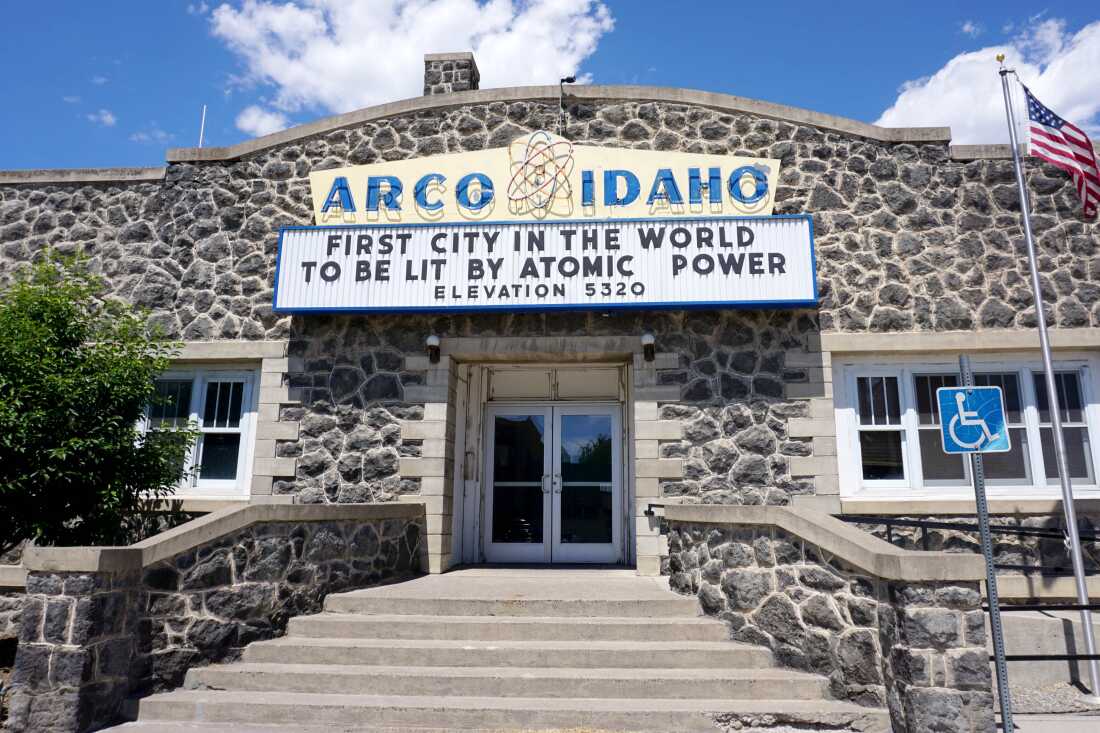
Arco, Idaho is situated among several small towns near the Idaho National Laboratory (INL). These towns have a longstanding relationship with nuclear energy. In Atomic City, Idaho, which has a population of 52, indoor smoking at the bar is common. The decor includes one dollar bills and a ‘Don’t Tread On Me’ flag.
Vickie O’Haro, the owner of the bar and nearby race track, engages personally with her patrons, who primarily work at INL. This facility has been a focal point for American nuclear energy testing since 1949. Although a March Gallup poll reveals that most Americans do not want a nuclear plant nearby, the local sentiment is different. ‘I live 10 miles away, and I’m fine,’ O’Haro remarked. ‘I’m not glowing in the dark, you know? There’s nothing to be scared of.’
O’Haro owns the Atomic City Bar & Store and the Atomic Motor Raceway. Both are in close proximity to INL. After years of stagnation, nuclear power is gaining momentum again. Former President Donald Trump expedited new projects, and several small nuclear reactors are expected to be operational soon. This summer, three companies at INL and one in central Utah activated new reactor types.
‘I think it’s actually pretty cool to be happening in my backyard,’ O’Haro added. INL covers 900 square miles of sagebrush-filled desert, roughly the size of Rhode Island. Within an unassuming building on this site, a company named Deployable Energy successfully took its test reactor ‘critical,’ meaning the design proved functional. Lance Maul, chief operating officer, described this as a ‘real moment in history for the nation.’ He emphasized the importance of micro reactors, which differ from traditional massive nuclear plants as they can be transported on a truck and serve smaller communities.
Nuclear proponents, like Maul, foresee these reactors as key to meeting rising energy demands without carbon emissions, powering remote communities, military bases, and data centers. The Trump administration supported this vision by accelerating reactor permitting via the Department of Energy.
Regulatory Concerns
Edwin Lyman, Director of Nuclear Power Safety at the Union of Concerned Scientists, criticized relaxed federal regulations. He fears reduced standards for radiation, security, and environmental protection. According to ProPublica, the national commission overseeing commercial nuclear development experienced significant staff reductions, impacting its safety oversight capabilities. Companies testing reactors now require approval from this commission.
‘I don’t think cutting corners when you’re talking about nuclear safety is a good idea,’ Lyman stated, expressing concern for INL’s surrounding communities. Despite these concerns, bar owner O’Haro remains unworried. ‘If we weren’t safe, my guys would tell me that we weren’t safe,’ she said, confident in her patrons’ judgments.
While most Americans oppose new local nuclear plants, polling indicates growing support for the U.S. to place more emphasis on nuclear power overall.