
Haiti frequently reports negative news, especially following the earthquake 16 years ago that killed 200,000 people and left over a million homeless. The government has nearly collapsed with gangs fighting for Port-au-Prince’s control. However, amidst this, there exists a beacon of hope. Have Faith Haiti, an orphanage, is run by bestselling author Mitch Albom and his wife, Janine. They’ve been offering shelter to vulnerable children: abandoned infants, disabled toddlers, and children from the streets. Through love, education, and faith, they have achieved remarkable results.
Due to the danger, international flights avoid Haiti’s capital. Mitch Albom travels monthly from Florida to Cap-Haïtien, flying by helicopter to Port-au-Prince. The landscape shows dry riverbeds and deforested mountains, leading to the densely-packed city with rundown buildings.
Upon landing, Albom travels to the orphanage with armed guards in bulletproof vehicles. Anderson Cooper notes the extreme security measures necessary for Albom’s visits. Albom admits security has grown; from two guards previously, they now have 24.
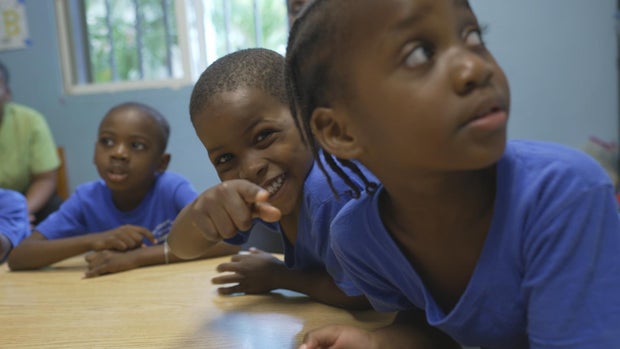
The orphanage, resembling a fortress, contrasts starkly with the struggle outside. High concrete walls, barbed wire, and guard towers secure the facility. Inside, children greet Albom with enthusiasm. Sixty-three children live here, supported by over 50 staff. Children range from infants to teenagers, seldom leaving the compound.
Education is core. The children attend school eight hours daily, learning in both French and English, preparing for college. Albom emphasizes every child deserves a future, and at-risk kids outside face hunger and uncertainty. Albom’s and Janine’s mission is to help, even if it seems small.
Selecting children is challenging, based on their needs. Most children lack basic language skills upon arrival due to their dire situations. Albom explains how providing a nurturing environment fosters remarkable growth in the children.
Many children have families unable to care for them. Albom faces the heartbreaking task of deciding admissions, hearing dire stories of hunger and abandonment. This has deeply connected him to Haiti, continuing his commitment initiated after the 2010 earthquake.
Examples include children like Bettinie, Lorvens, and Gina, who arrived with troubled pasts. They now aspire to careers like law, reflecting possibilities nurtured at the orphanage.
Yonel, the orphanage director, knows the pain of abandonment. Left at five, his experiences drive him to support the children, all of whom refer to him as “father.” For these children, each other is all they have.
The surrounding environment remains perilous; 90% of Port-au-Prince is gang-controlled. The children rehearse emergency drills against potential threats. Security challenges persist, impacting daily operations and the budget, largely funded by Albom, Janine, and donors.
Efforts ensure a proper childhood for the children, focusing on educational success. Upon graduating, the students secure scholarships for study abroad, with the expectation they return to pay forward their learning by working at the orphanage.
Alumni, residing with the Alboms during winter breaks, voice their commitment to Haiti. They aspire to return with education to initiate governmental, educational, and political reforms.
Despite the uncertain future for Haiti, the orphanage’s mission endures. Additional graduates this spring await scholarships to study in the U.S. Visa challenges loom, yet their commitment to Haiti persists.
Ultimately, Albom underscores each child’s inherent potential, needing only an opportunity to thrive. This orphanage exemplifies that hope and opportunity can inspire remarkable transformations.