
In Santiago, Chile, anticipation buzzes as BTS arrives in October for their comeback world tour. This event is part of Latin America’s growing interest in Korean culture. Fans have already filled venues in Mexico, and upcoming shows in Colombia, Peru, Argentina, and Brazil show similar enthusiasm. In Mexico, demand even prompted President Claudia Sheinbaum to talk with South Korean officials about adding more shows.
The appeal of Korean culture in Latin America, known as Hallyu or the “Korean wave,” started in the 1990s. It has grown from niche pursuits to mainstream interests, affecting various areas like music, television, beauty, and fashion.
Chile’s Unique Take on K-pop
In Chile, young people aren’t simply following the Korean wave. They’re reshaping it. By incorporating K-pop’s elements like dynamic choreography and vibrant aesthetics, they’re crafting a unique cultural twist. This has led to Chilean pop stars inspired by K-pop.
Meet Q_ARE
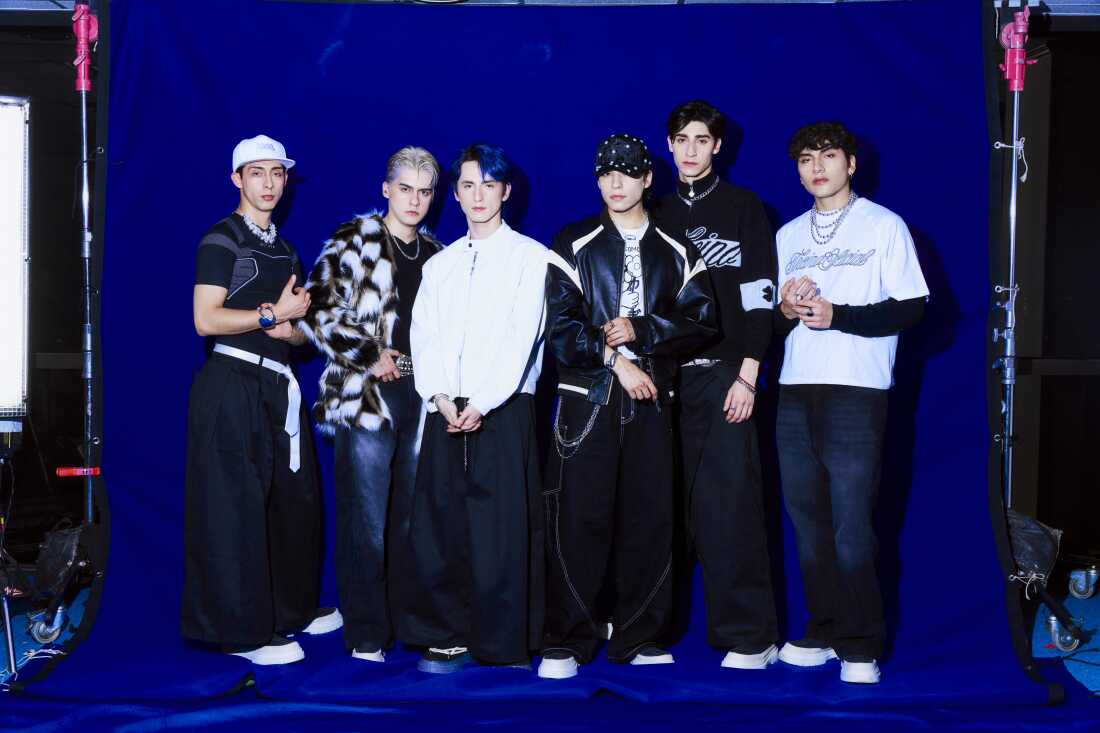
Q_ARE, a Chilean boy band with six members, merges English, Spanish, and Chilean slang lyrics with a K-pop flair. Their videos feature retro gaming themes, quick scene changes, and bold makeup, attracting a significant fan base. Ahead of releasing their single “FÚ” in May, they practiced complex dance routines in Santiago’s studios.
The group members—Seba, Jamin, Jota, Bin, Aiden, and Fabi—explained that K-pop initially drew them into the arts. However, they emphasize their distinct identity as a Latino group influenced by K-pop. Q_ARE formed after answering a casting call and completing a rigorous selection process. Their debut came with the 2024 single “Try Again.” The group oversees everything from songwriting to video design and connects with fans globally, forming a community named “Qniverse.”
Chilean fans sometimes translate the band’s Chilean slang for other Latin Americans. Q_ARE’s reach is extensive, pulling in fans from places like Japan, Singapore, and across the Americas. This connection highlights the deepening interest in Korean culture in Chile.
Local Influence and Cultural Exchange
In Patronato, a neighborhood in Santiago, Korean culture thrives. Over 50 Korean restaurants exist, many owned by Chileans capitalizing on Korean culture’s popularity. Establishments often play K-pop videos, adding to the cultural fusion.
Among those promoting Korean culture in Chile is Valeria Vivar. She heads the Rey Sejong Institute in Santiago, a Korean cultural center funded by the Korean government. The institute has seen a significant increase in students learning Korean for various reasons, including an interest in K-pop, K-dramas, and Korean literature.
This enthusiasm is mirrored by Q_ARE’s excitement. Fabi notes that Asian cultural influences help Chile innovate in music and arts. The growing presence of Chilean boy and girl bands reflects a shift, showing that embracing global influences can lead to new creative opportunities.